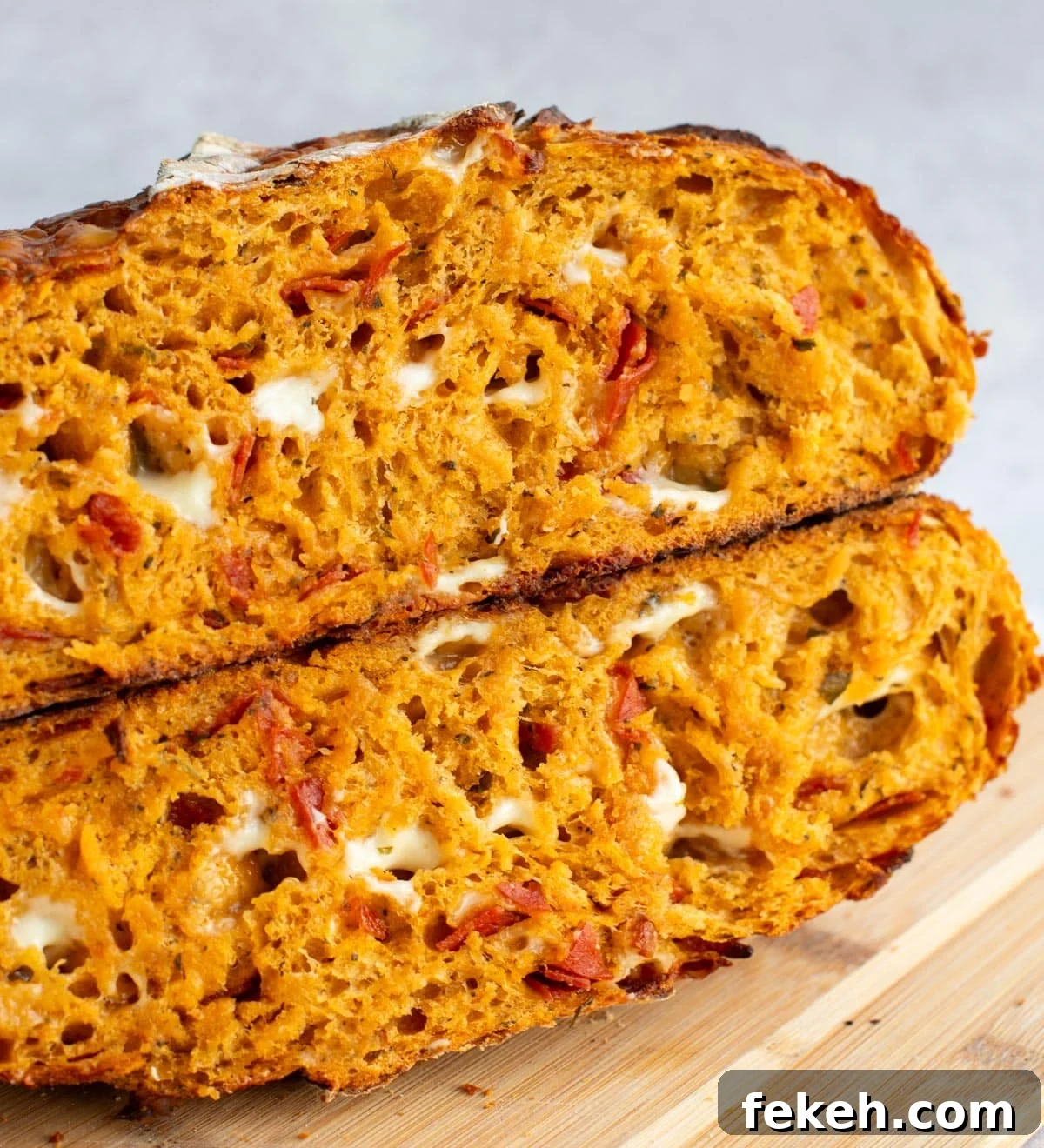
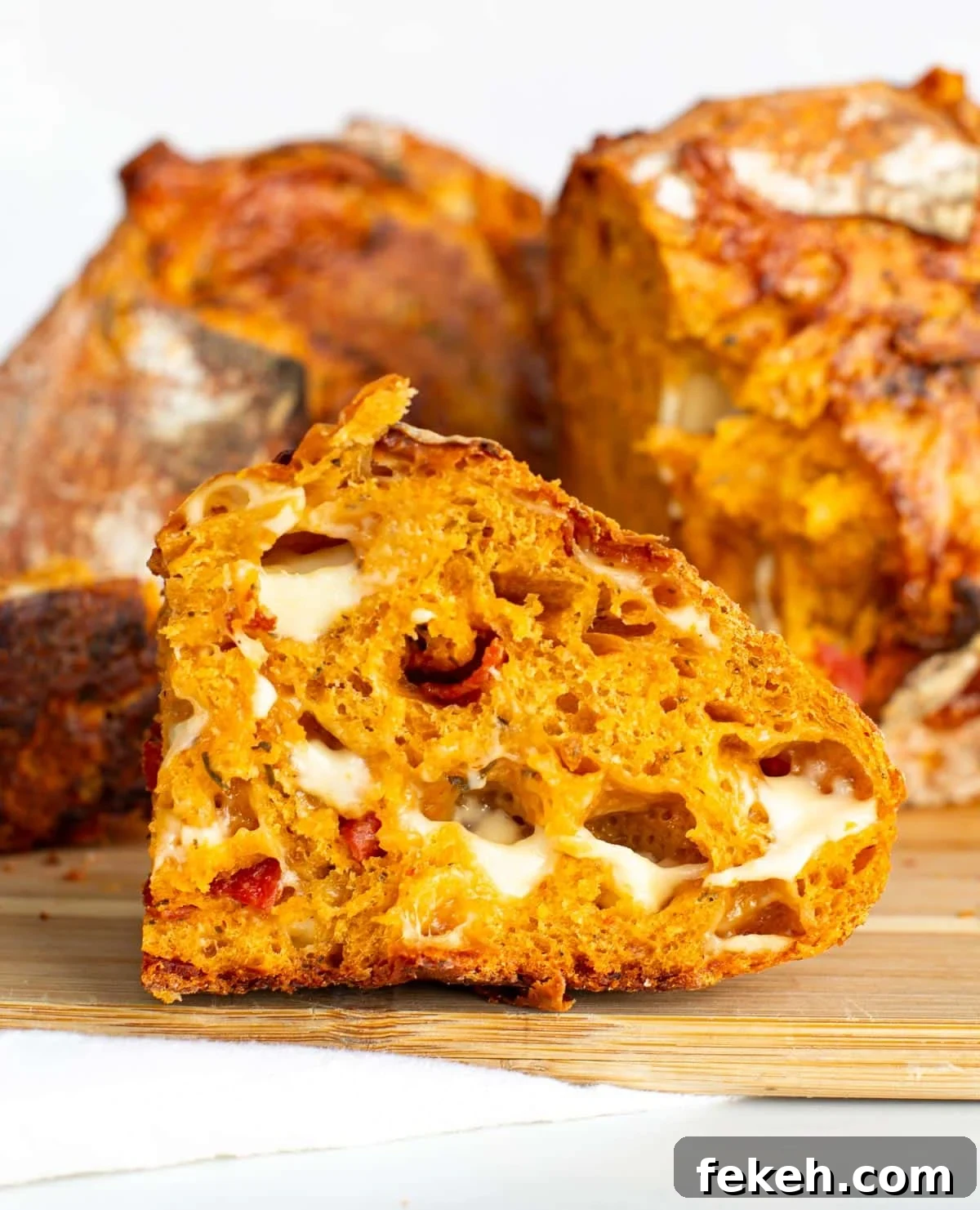
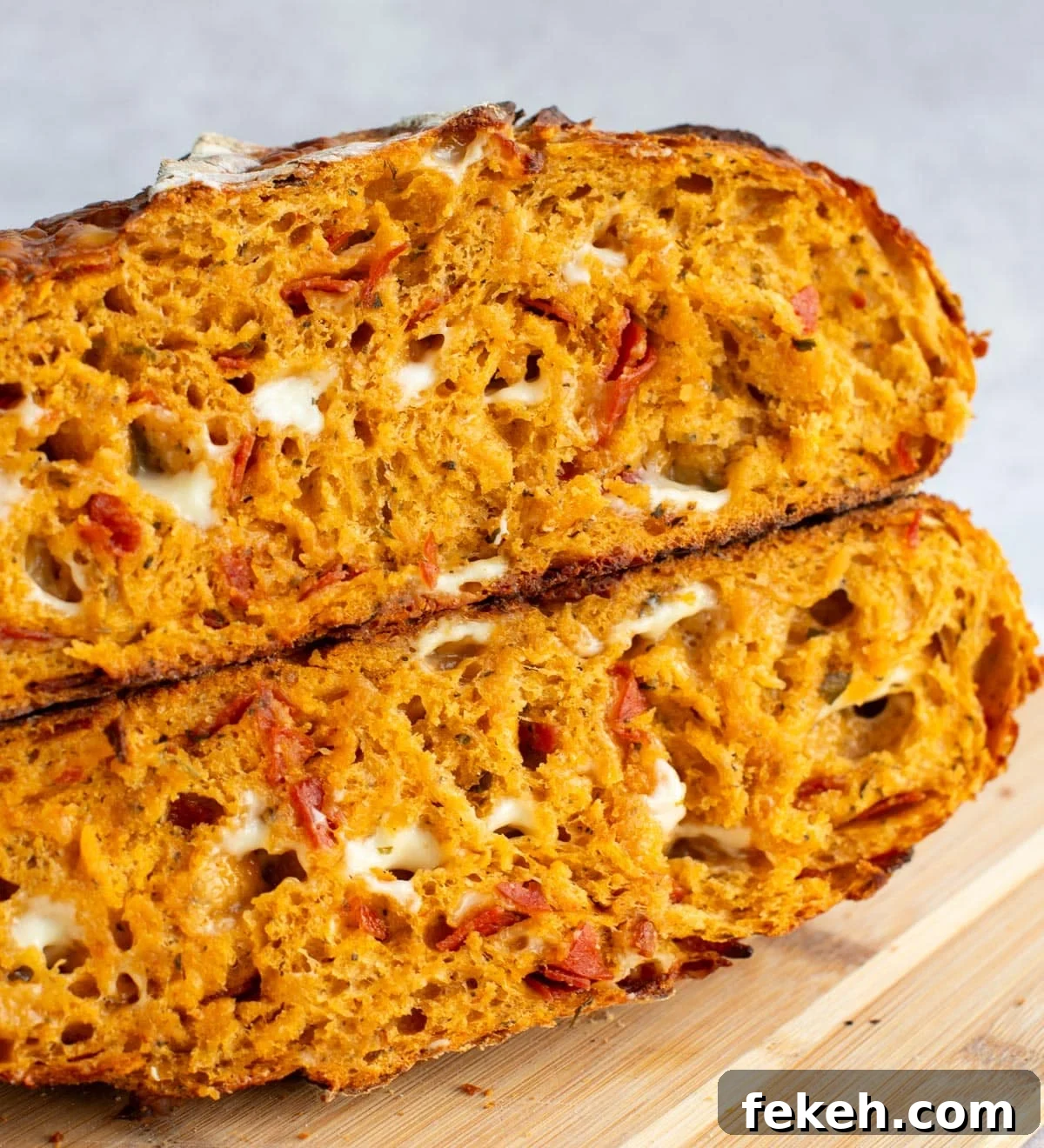
We’re big fans of sourdough pizza and crusty artisan loaves. This Pizza Sourdough Bread blends both into a savory loaf stuffed with marinara, melty cheese, herbs, and pepperoni. It’s ideal for snacking, serving with soup, or making an extra-special sandwich. Each slice delivers classic pizza flavors with the tang and texture of naturally fermented sourdough.
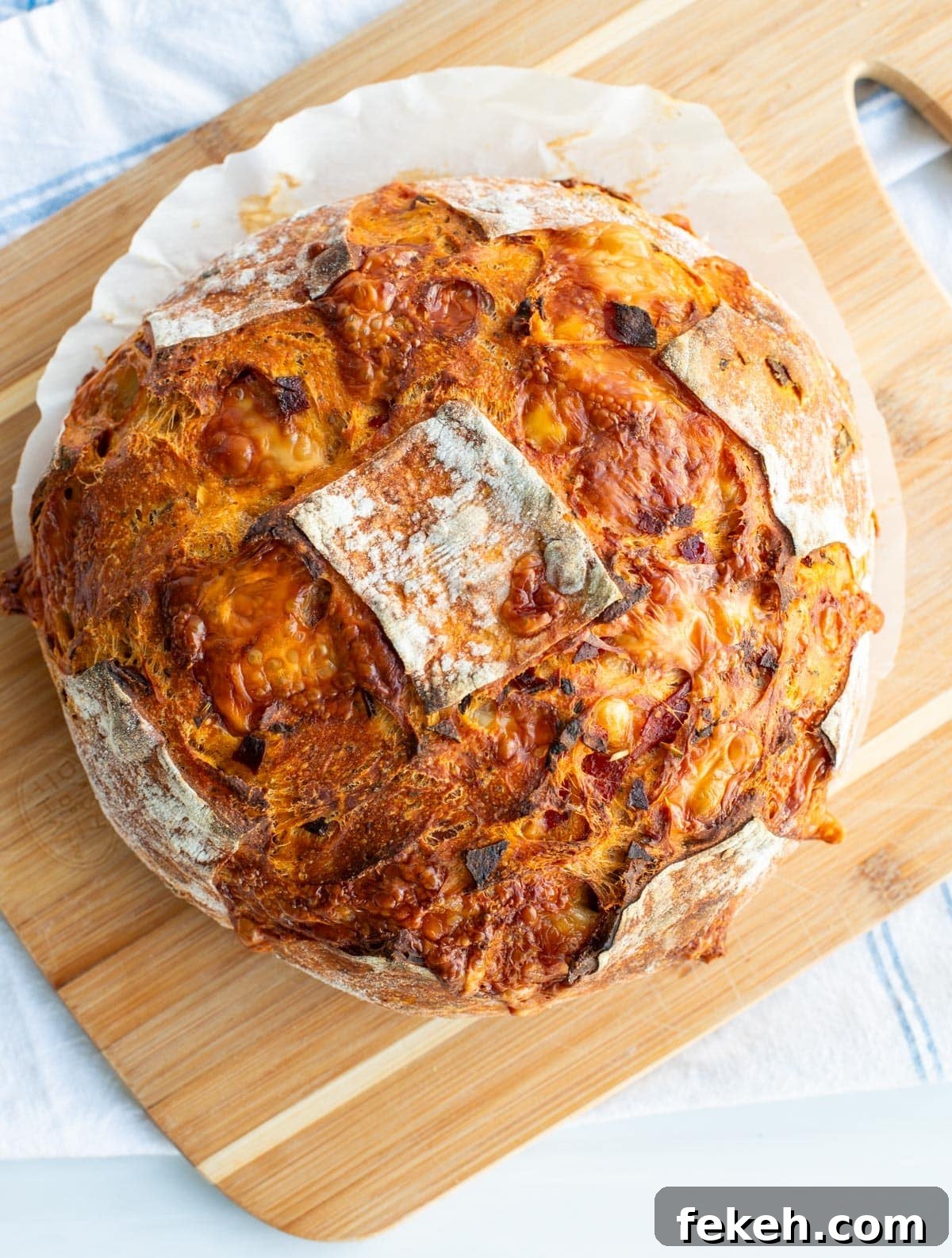
Why You’ll Love Pizza Sourdough Bread
- Easy tomato flavor – Store-bought marinara infuses the dough with savory tomato flavor for a quick boost. For a homemade touch, use a tomato purée in place of store sauce.
- Customizable mix-ins – Fold in your favorite pizza toppings like cheese and pepperoni for big flavor. Avoid very wet mix-ins (for example, fresh pineapple) that might add excess moisture to the dough.
- Pizza in every slice – Tangy tomato, melty cheese, and savory herbs are wrapped in chewy, crusty sourdough for an unmistakable pizza-loaf experience.
New to sourdough? Learn how to make a sourdough starter and consult a beginner sourdough guide. Naturally fermented sourdough takes more time, but the fermentation benefits and flavor are worth it.
Important Ingredients
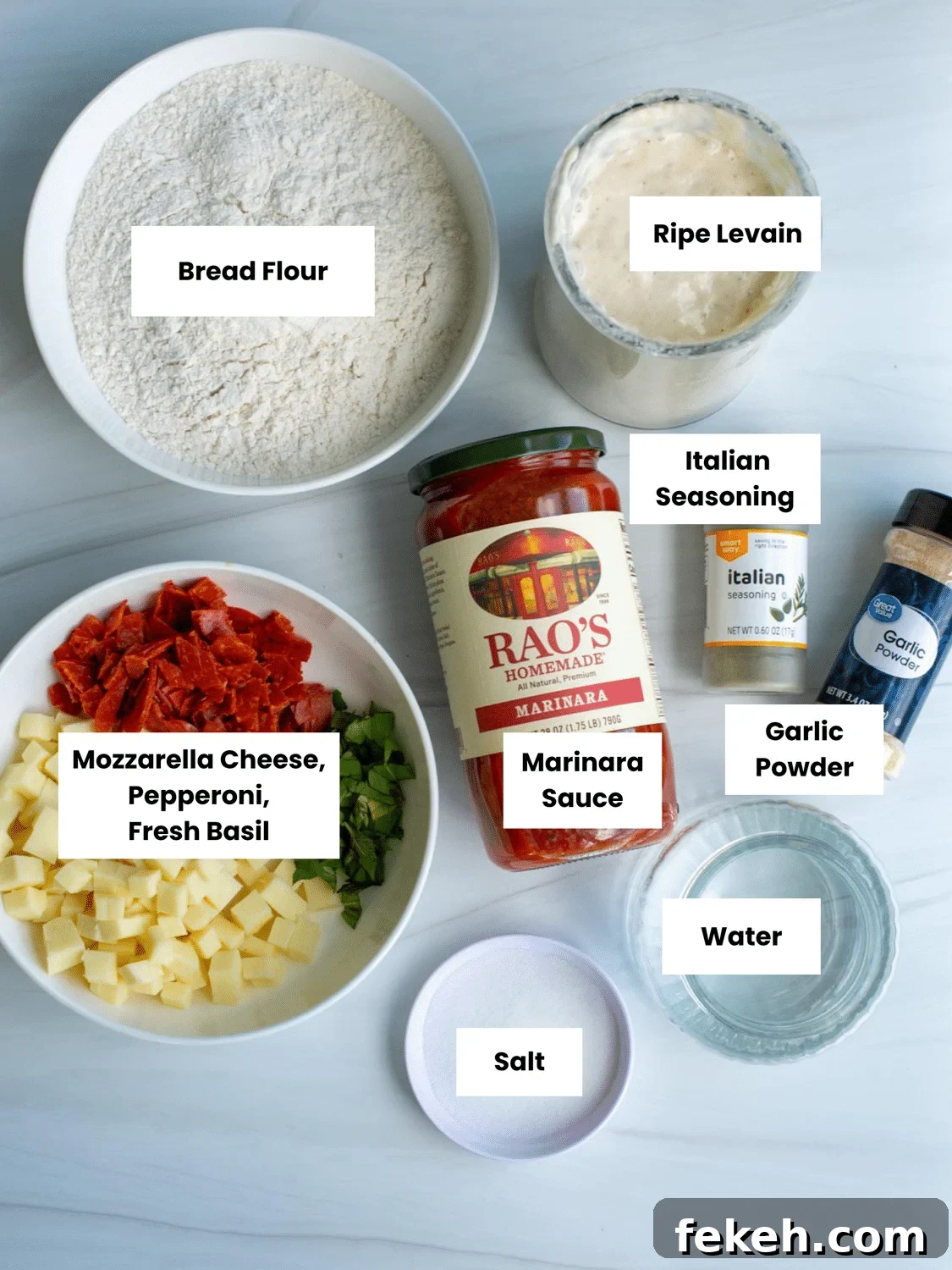
- Sourdough starter – Use an active, ripe starter (bubbly, doubled, mild aroma) to build the levain. If you already have a ripe starter, it can substitute for the levain in equal weight.
- Marinara sauce – A thicker marinara works best; thinner sauces may require reducing the added water in the dough to avoid a too-wet mix.
- Herbs – A mix of fresh and dried herbs adds bright pizza flavor.
- Mozzarella – Fresh mozzarella cut into cubes melts best. Avoid pre-shredded cheese, which often contains anti-caking agents that affect texture.
See the recipe card below for full ingredient amounts and details
Substitutions
- Starter: Use ripe starter instead of levain in the same amount by weight.
- Cheese: Mozzarella is classic, but provolone, fontina, or cheddar are good alternatives, or omit cheese entirely.
- Pepperoni: A shelf-stable pepperoni is convenient. If you use refrigerated meats, laminate them into the dough at shaping for food safety.
- Herbs: Fresh basil is ideal; substitute 1 tsp dried basil or Italian seasoning if needed.
- Marinara: Thicker sauces are preferable; if your sauce is thinner, reduce the added water slightly.
Sourdough Baker’s Timeline
Sourdough requires more time than commercial yeast bread. The sample schedule below helps plan the bake, assuming a dough temperature of about 78°F. If you prefer a same-day bake, skip the cold fermentation and proof at room temperature before baking.
| Day 1 | Levain/Mixing/Bulk Fermentation/Shaping/Cold Fermentation |
| 8:00 AM – 12:00 PM | Mix levain and let it become doubled and bubbly (about 3–4 hours). |
| 12:00 PM | Mix the dough. |
| 12:30 – 2:00 PM | Perform stretch-and-folds every ~30 minutes and add inclusions during the second fold. |
| 2:00 – 4:30 PM | Continue bulk fermentation until the dough shows activity. |
| 4:30 PM | Pre-shape the dough. |
| 5:00 PM | Shape and begin cold fermentation. |
| Day 2 | Bake |
| 9:00 AM | Preheat Dutch oven to 450°F. |
| 9:15 AM | Score and bake. |
How to Make Pizza Sourdough Bread
Mix the Levain
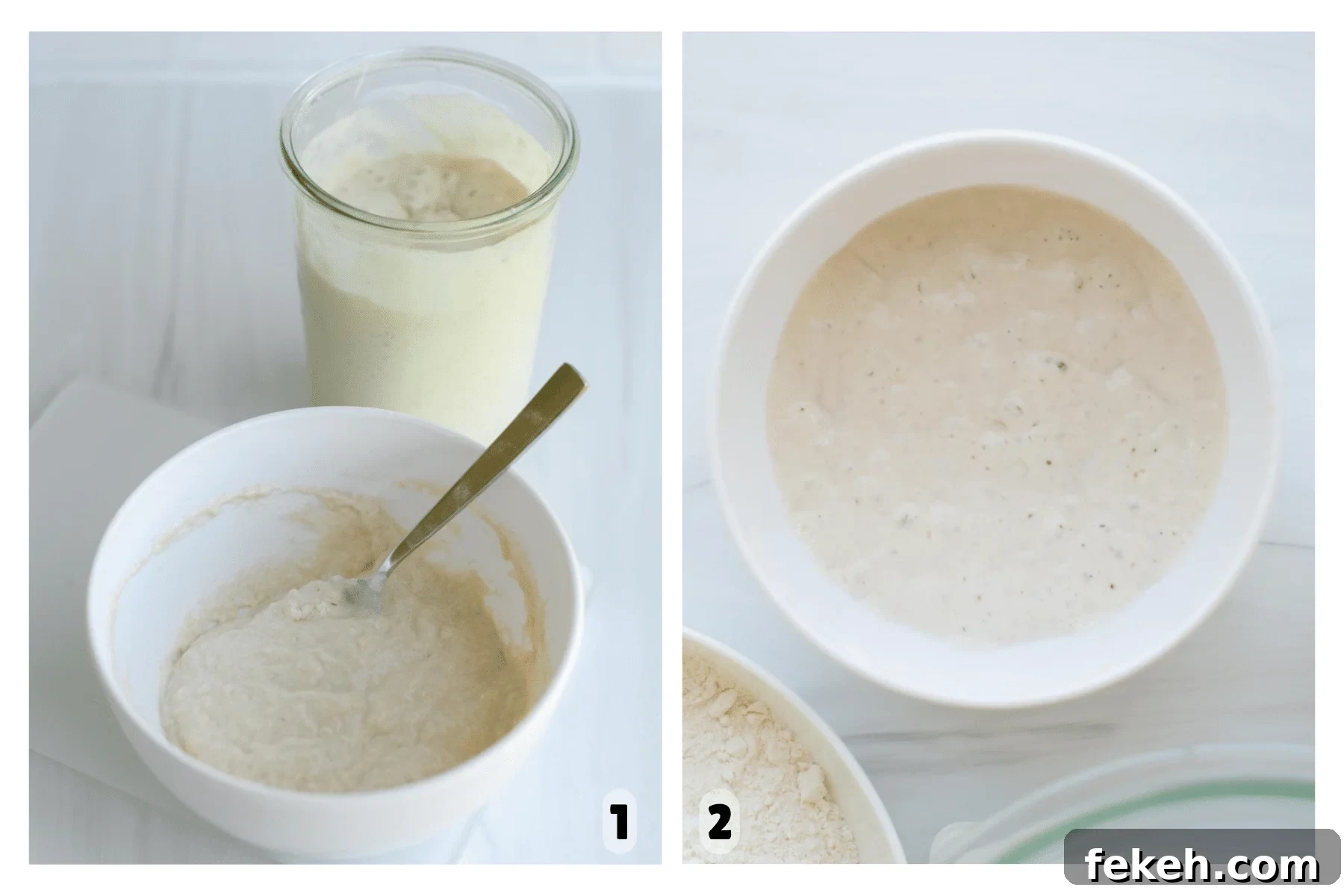
Step 1 — Mix levain: Combine ripe starter, water, and flour. Let it rise in a warm place (around 78°F) for 3–4 hours until doubled, peaked, and bubbly. If you already have a ripe, equal-fed starter, you can substitute it for the levain by weight.
Mixing the Dough
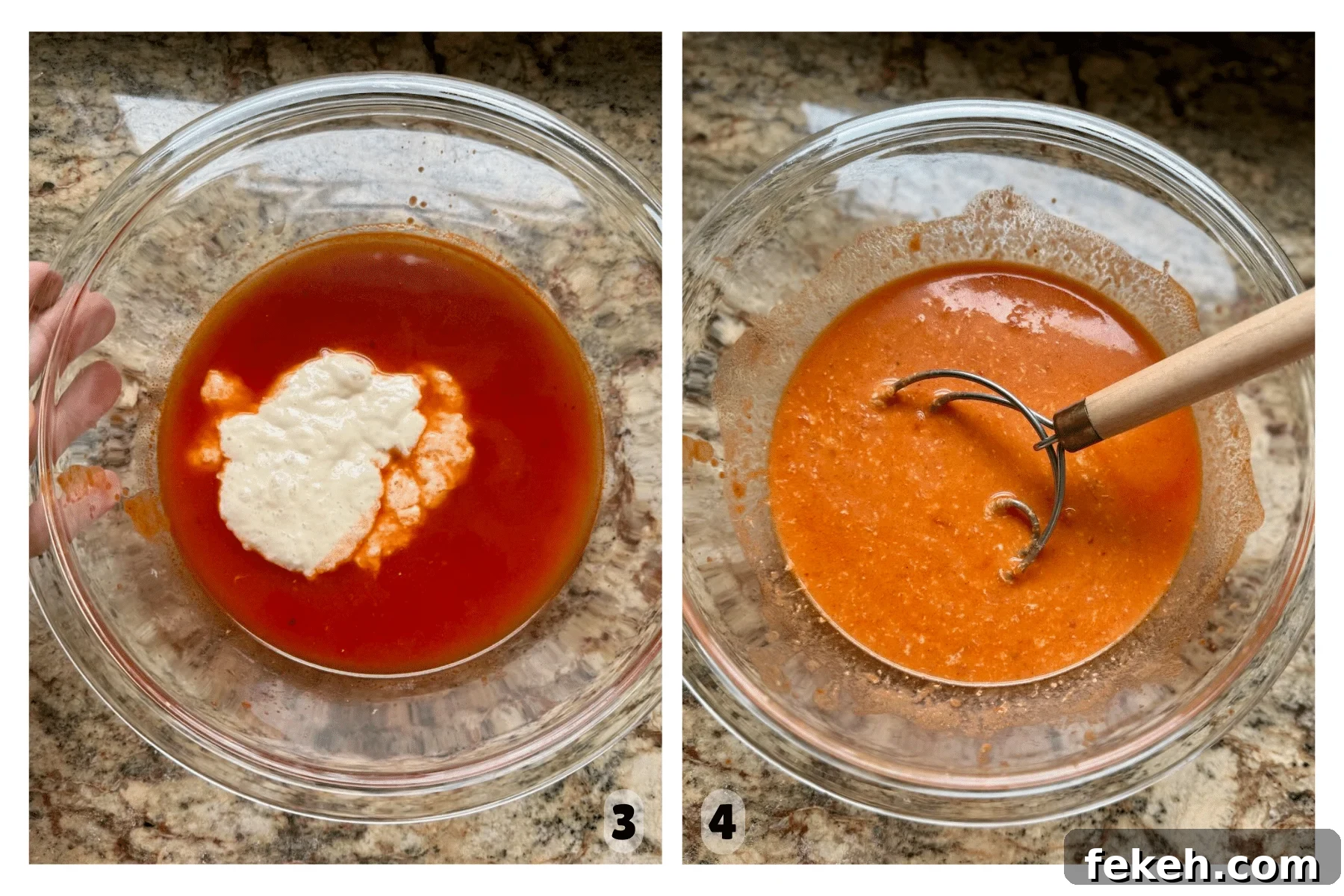
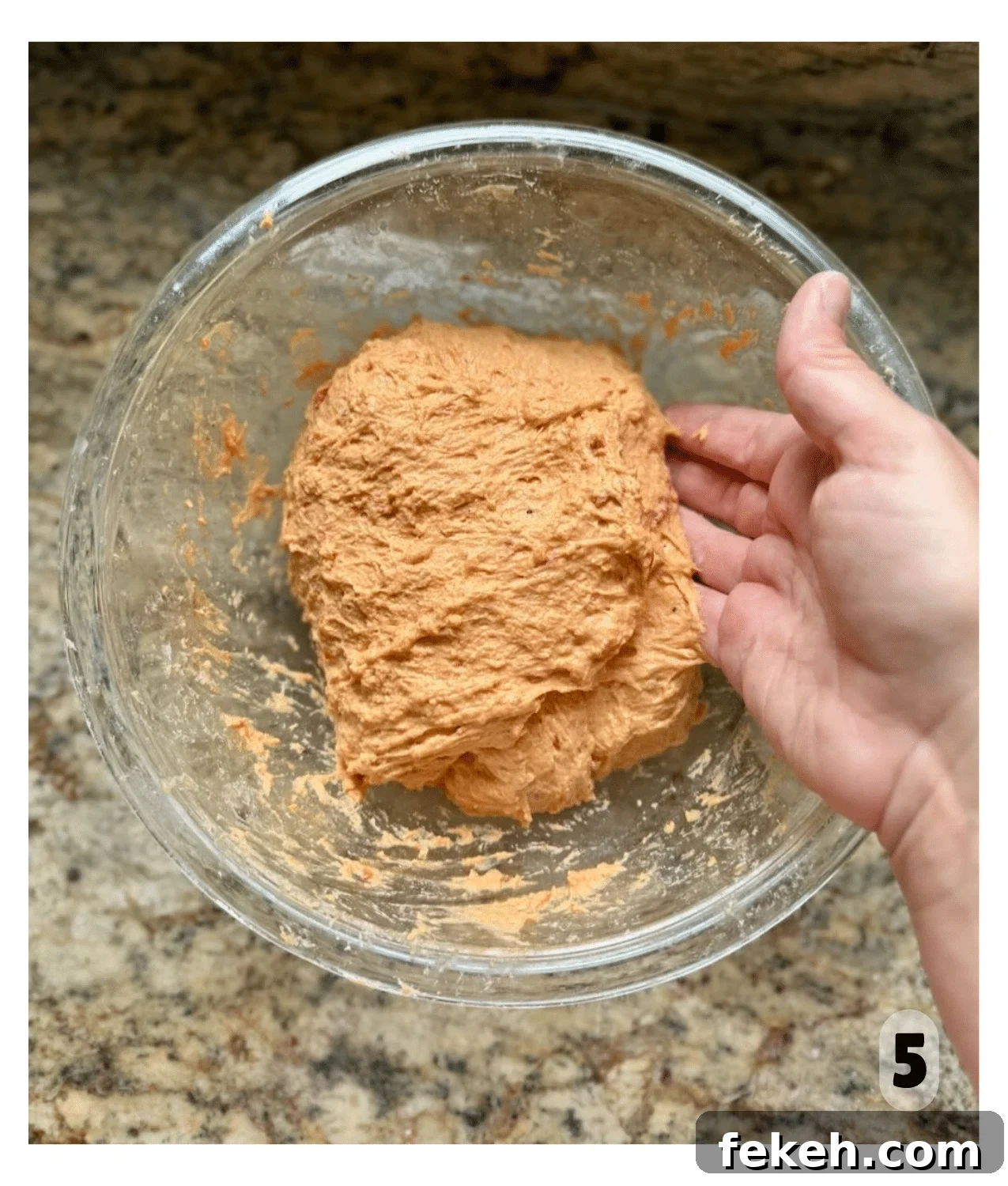
Step 2 — Mix dough: Use a dough whisk or spoon to combine the levain, water, and marinara sauce. Add salt, seasoning, garlic powder, and flour, and mix until a wet, sticky dough forms. Cover and rest for 30 minutes. If your marinara is thin, reduce the added water slightly to keep the dough manageable.
Bulk Fermentation
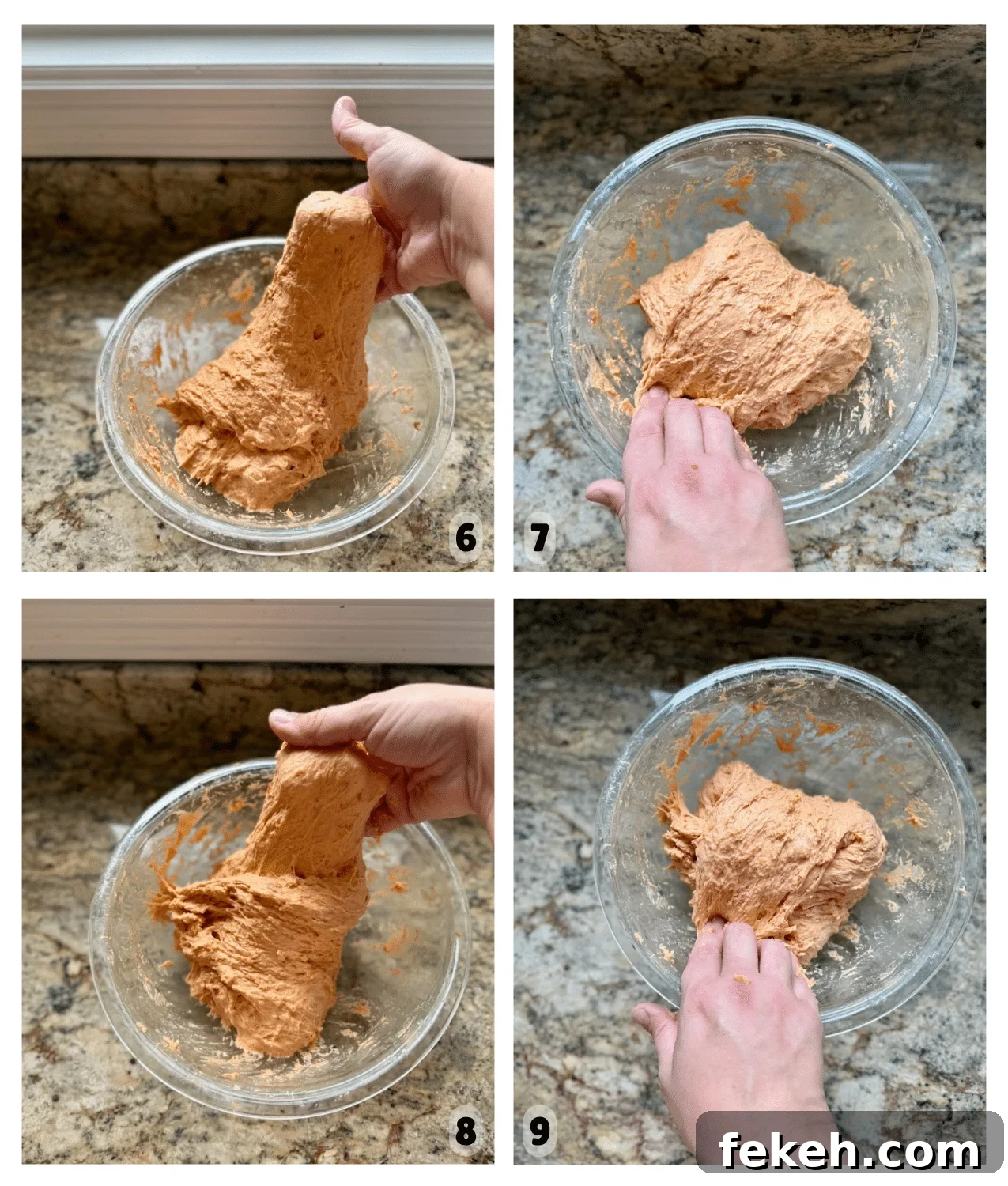
Step 3 — Stretch and folds: Strengthen the dough with gentle stretch-and-folds instead of traditional kneading. Perform about 3–4 sets of folds over roughly 2 hours at 78°F. Wet your hand to prevent sticking and pull the dough up from the bowl bottom, fold it over, then rotate and repeat. Over time the dough will become less sticky and more cohesive.
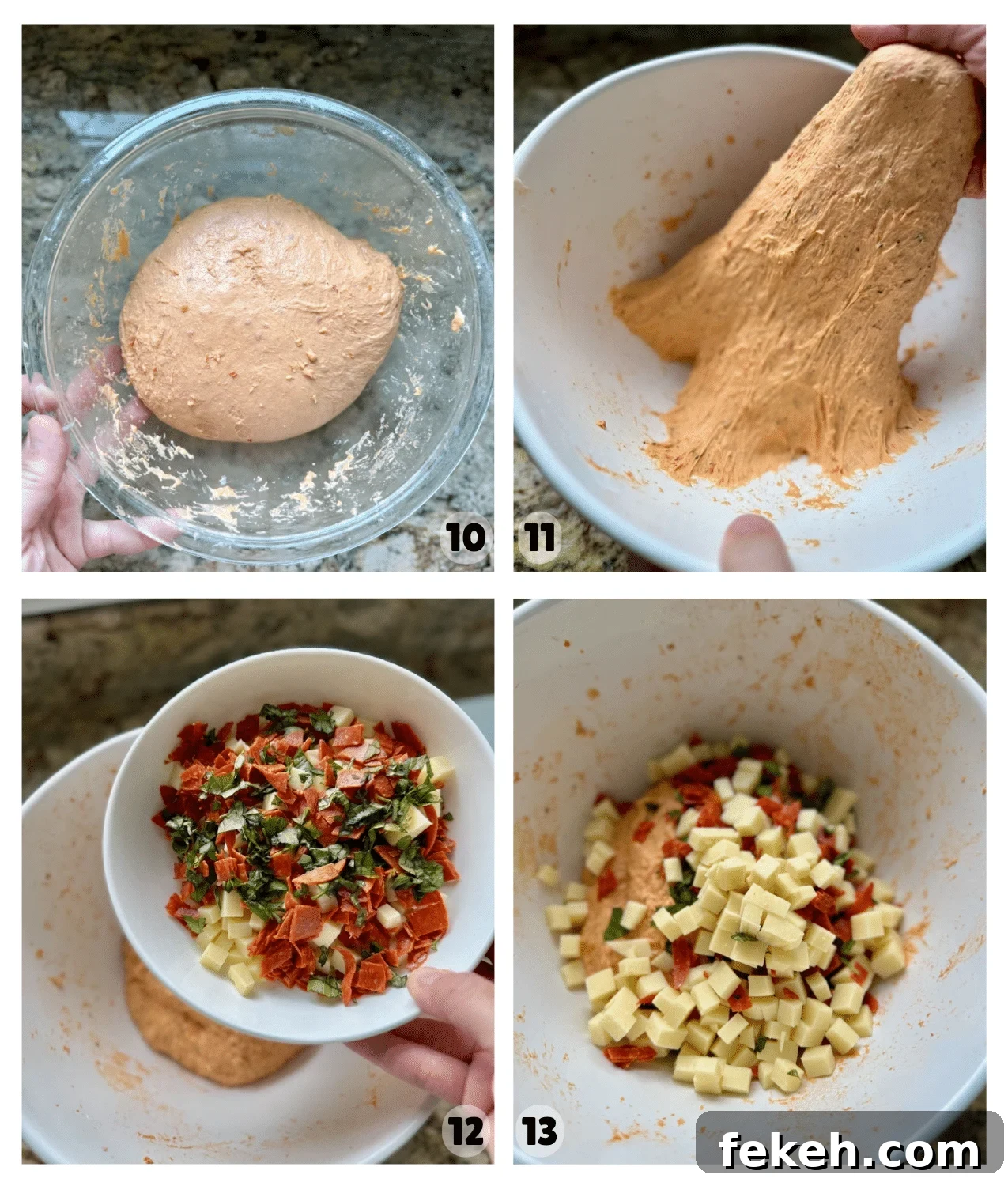
Prepare the mozzarella, pepperoni, and basil before the second fold. Add them after the first rest and incorporate during the remaining stretch-and-folds. Some inclusions may pop through the surface; that’s normal with a heavily filled dough.
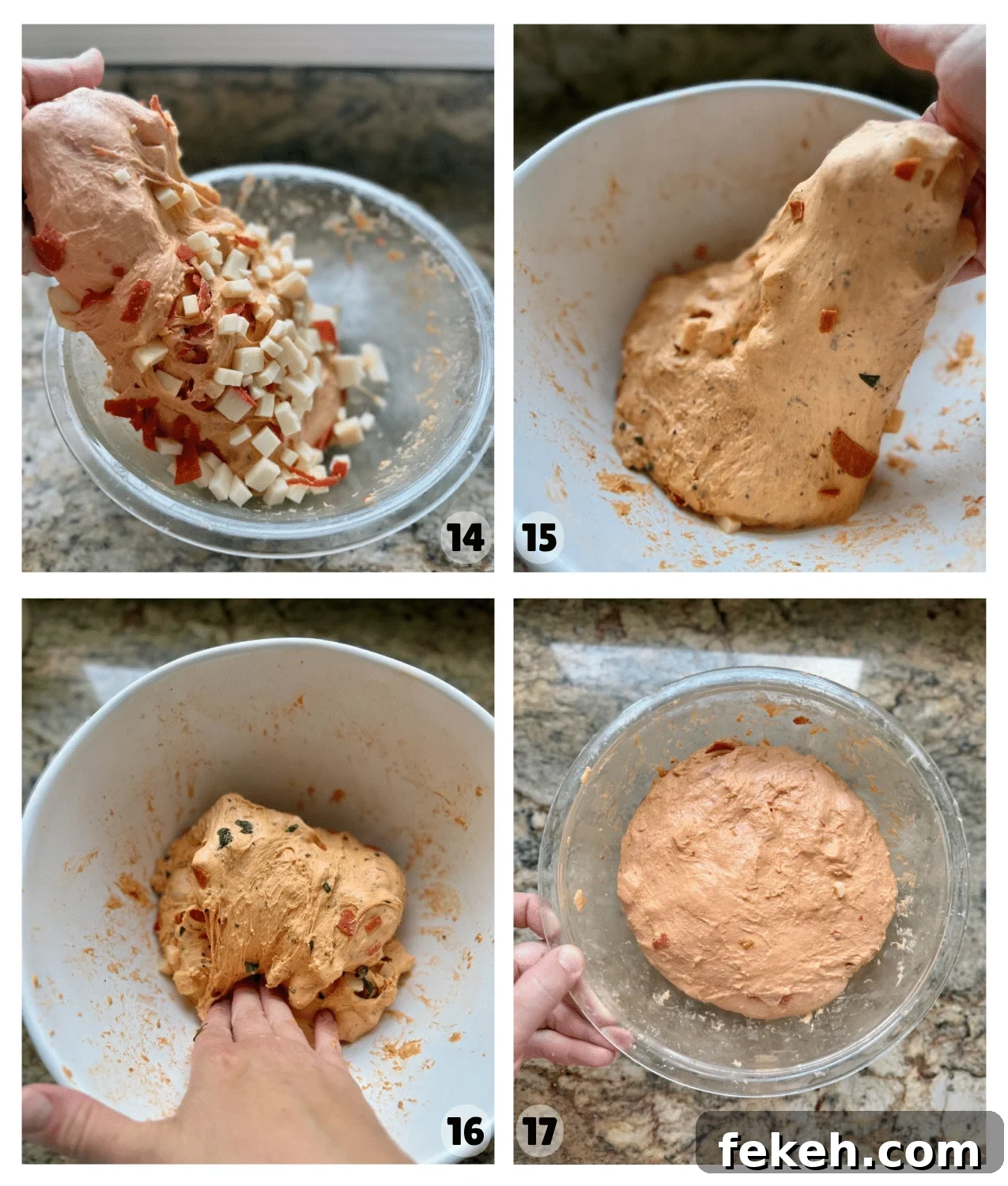
Step 4 — Rest: After the final fold, cover and rest the dough for 2–2.5 hours at 78°F until it has puffed about 40% and jiggles gently when the bowl is shaken. If the dough still feels weak, add an extra set of folds.
Pre-shape and Bench Rest
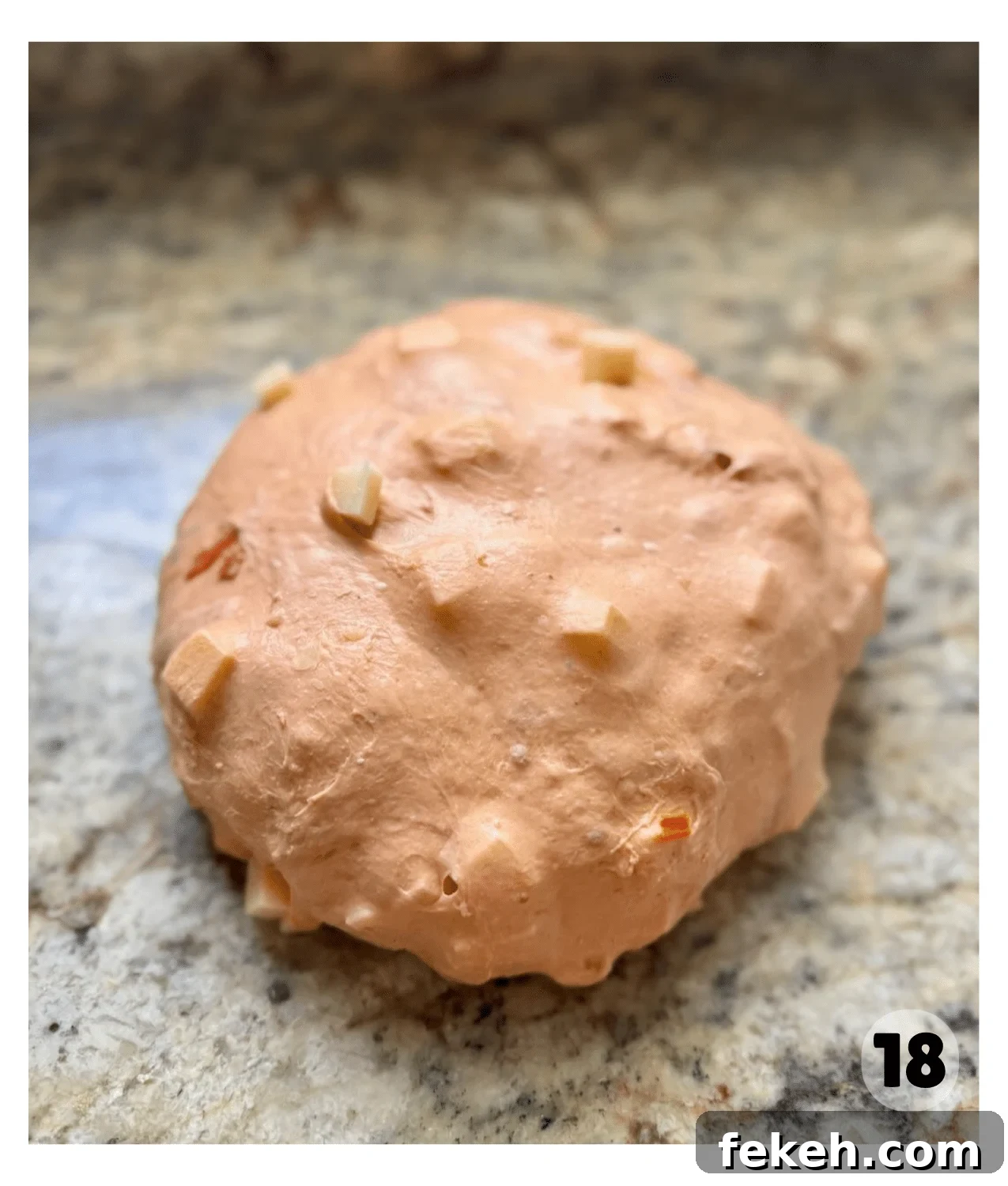
Step 5 — Pre-shape: Turn the dough onto a clean surface and use wet hands and a bench knife to gently tuck the dough into a round, pushing any surfaced inclusions back under to create tension.
Step 6 — Bench rest: Let the dough rest uncovered for about 30 minutes at room temperature to relax the gluten and flatten slightly. If the dough seems overly airy and warm, skip the bench rest and proceed to shaping.
Shaping the Dough
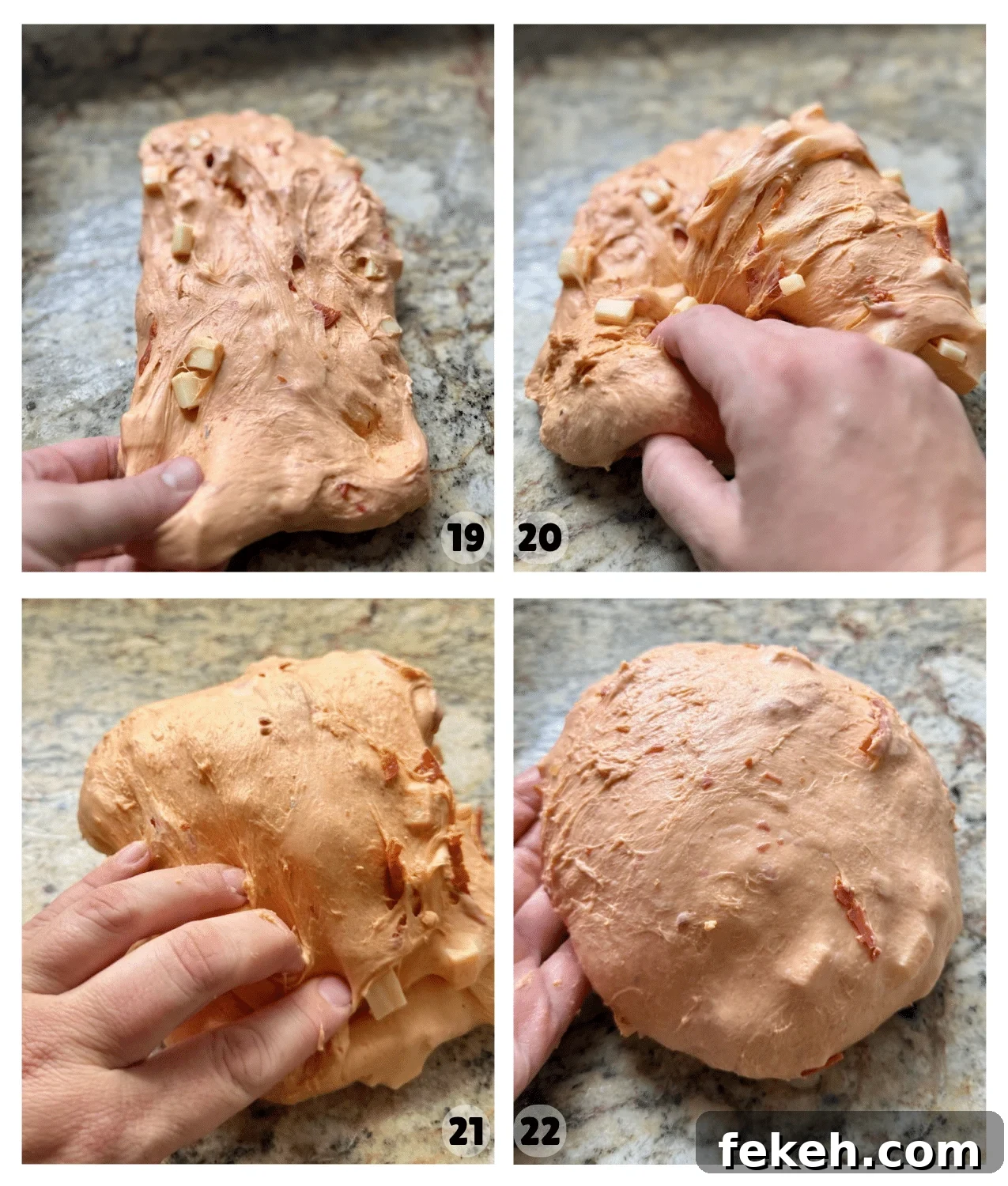
Step 7 — Shape: Prepare a banneton or a lined bowl. Pull the dough toward you and fold it in a circle to create a taut surface. Place the shaped dough in the banneton, seam-side up. If you don’t have a Dutch oven, you can shape and bake in a greased loaf pan for a taller, sandwich-friendly loaf.
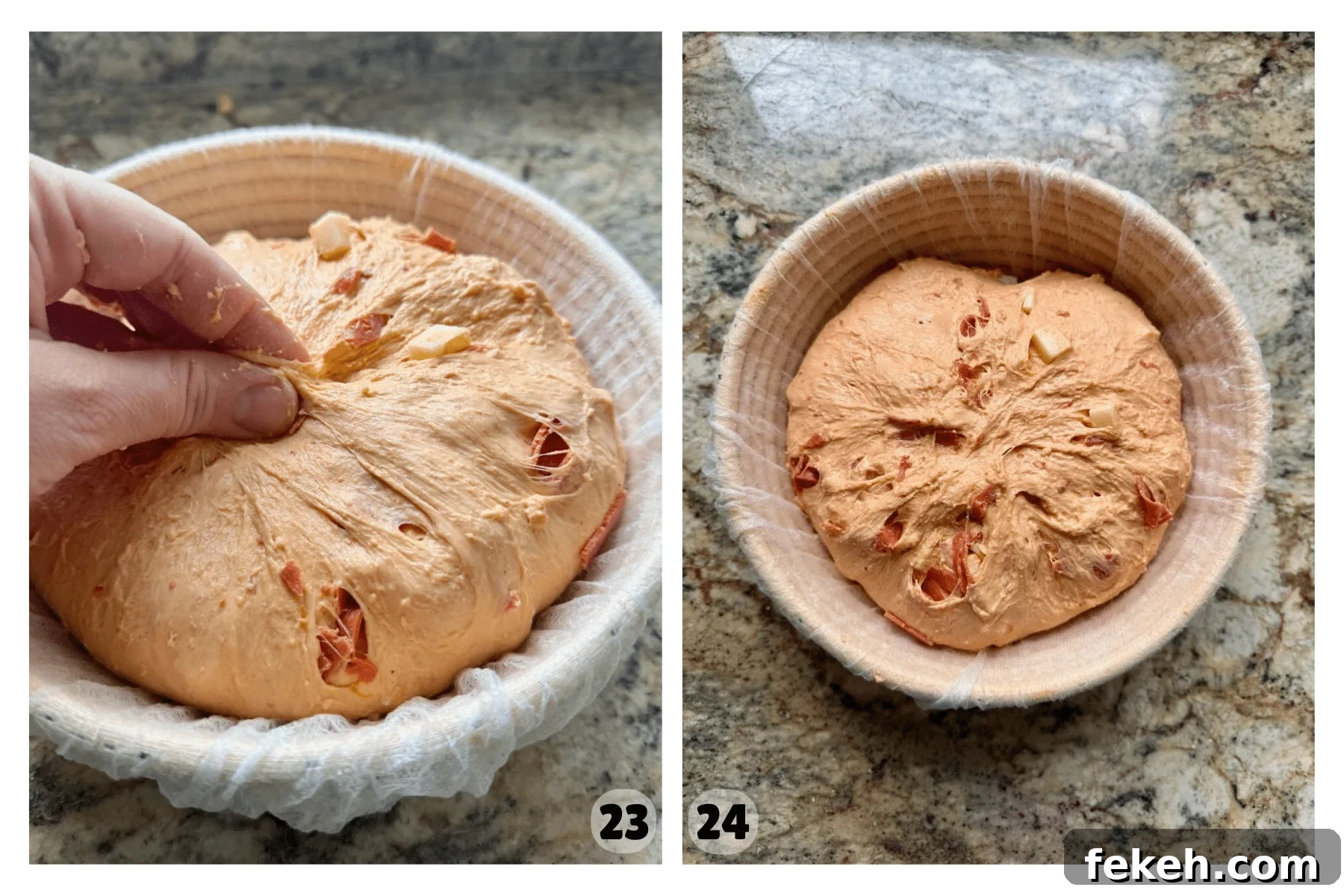
Cold Ferment & Proofing
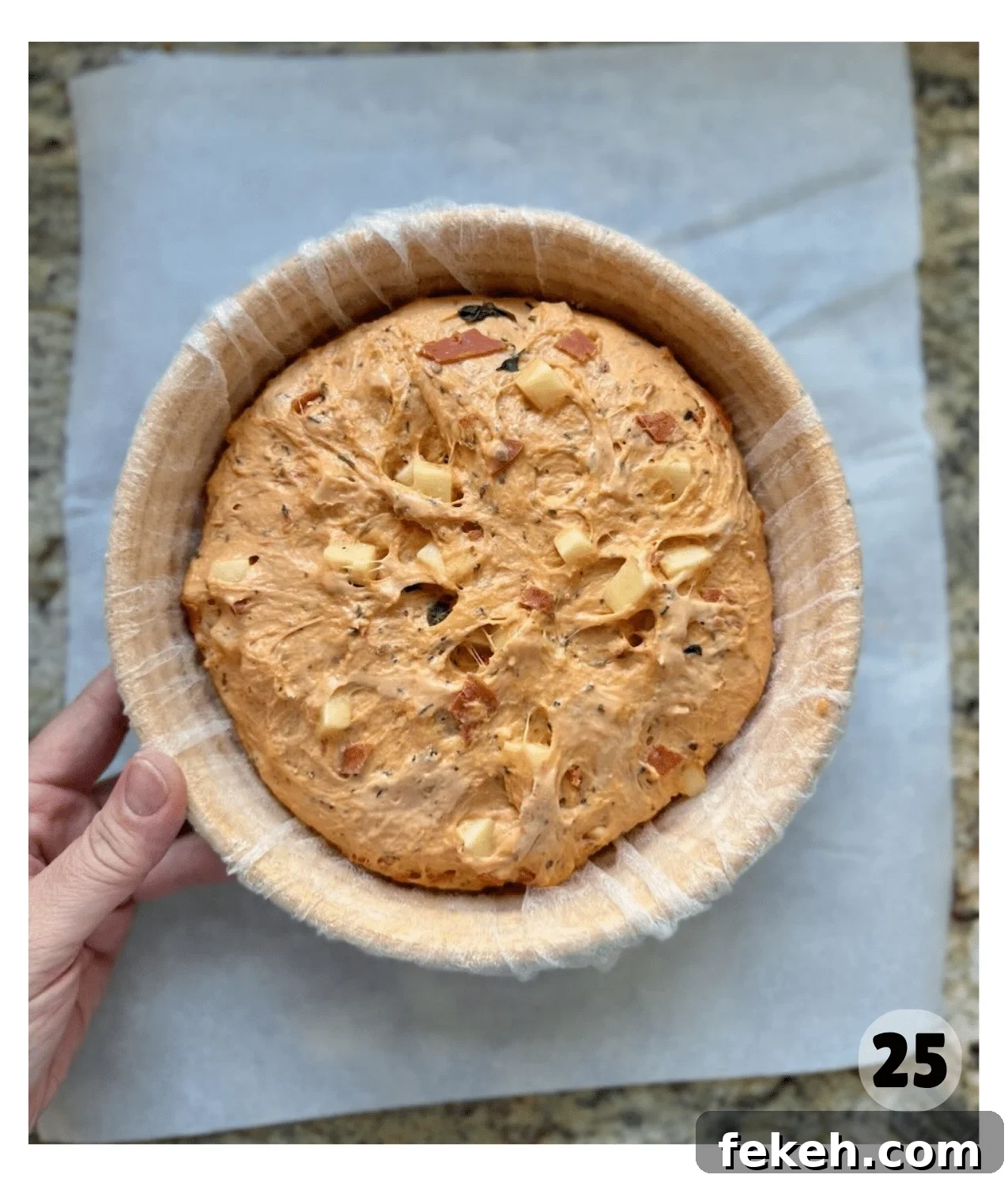
Step 8 — Cold fermentation: Cover and refrigerate the dough for 14–20 hours (overnight). Alternatively, proof at room temperature for 2–3 hours until puffed and risen if baking the same day.
Baking the bread
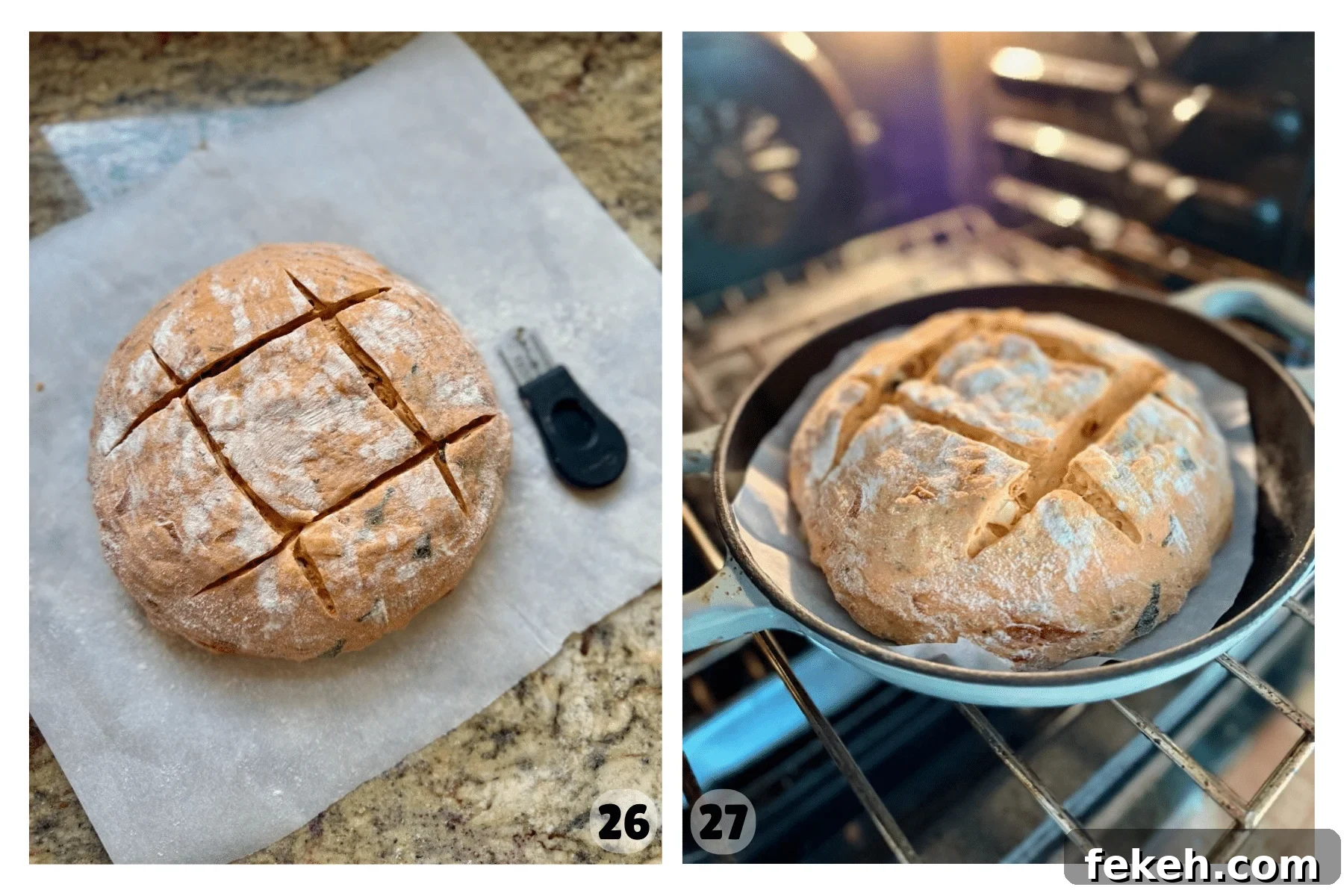
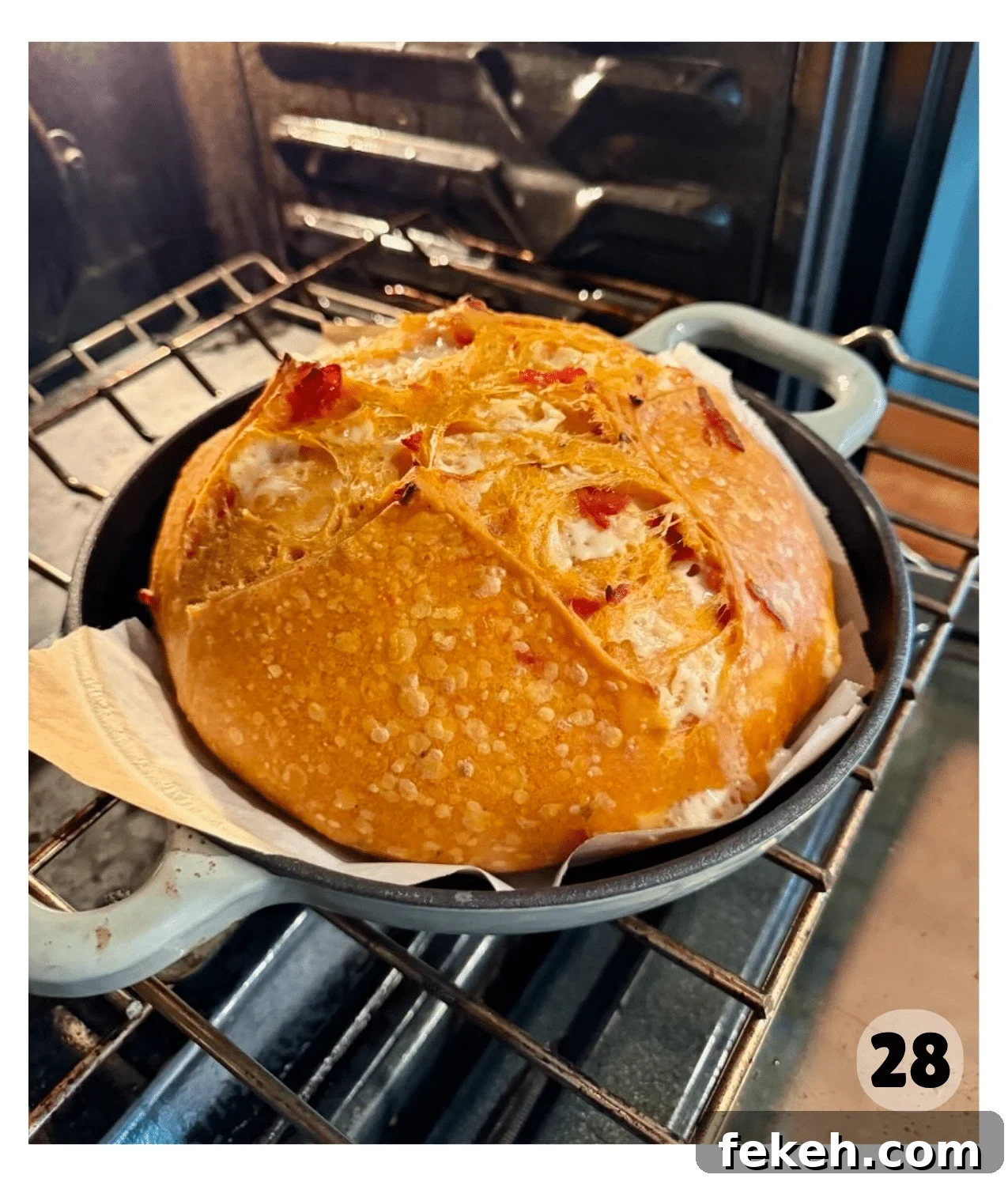
Step 9 — Bake: Preheat a Dutch oven (lid on) in the oven to 450°F for about 20 minutes to trap steam for oven spring. Remove the chilled dough from the fridge, flip it onto parchment, dust lightly with flour, and score with a sharp blade. Carefully transfer the loaf into the hot Dutch oven (parchment and all), cover, and bake for 25 minutes. Remove the lid and continue baking another 20 minutes or until the loaf reaches an internal temperature of 205–210°F and is deep golden brown. Cool completely before slicing.
How to Store Leftovers
Cool the loaf completely, slice, and freeze in an airtight bag for longer storage. You can also freeze the whole loaf and reheat or thaw in the oven before serving.
Amy’s Recipe Tip
Because the loaf is loaded with cheese, pepperoni, and herbs, the dough can feel messy to shape. That’s normal—reduce the inclusions by half if you prefer a tidier, easier-to-handle dough while retaining pizza flavor.
Frequently Asked Questions
Yes. You can open-bake the loaf in a home oven using steam (for example, add a tray of hot water or use a metal pan to create steam) to encourage a good crust.
Not recommended as written because the dough can over-proof. For an overnight counter proof, reduce the levain or starter and monitor fermentation closely, or use a cooler spot for a slower overnight bulk fermentation before shaping and chilling.
If the dough feels too wet, reduce the water next time. Marinara brands vary in water content, so adjust accordingly if you are not using a thicker sauce.
Gummy crumb usually results from excess moisture, under-proofing, or under-baking. Ensure the dough is well fermented before shaping and that the loaf reaches an internal temperature of about 205–210°F when baked.
Sourdough Pizza recipes
Sourdough Discard Pizza
Sourdough Focaccia Pizza
Sourdough Pizza Dough Recipe
Sourdough Flatbread
If you tried this Pizza Sourdough Bread or another recipe, leave a star rating and let me know how it went in the comments. Happy baking!

Pizza Sourdough Bread
Rate Recipe
Print Recipe
Equipment
-
Dutch oven
-
Kitchen scale
-
Banneton or bowl
-
Sourdough tools
Ingredients
Mix Levain (1:1:1 ratio, ready in 3-4 hours at 78-80ºF)
- 35 grams sourdough starter (about 2 Tbsp)
- 35 grams all-purpose flour (scant 1/4 cup)
- 35 grams water (about 2 Tbsp)
Pizza Sourdough Loaf
- 100 grams levain (about 1/2 cup)
- 175 grams water (about 3/4 cup)
- 250 grams marinara sauce (about 1 cup)
- 10 grams salt (about 1.5 tsp)
- 3–4 grams Italian seasoning (about 2 tsp)
- 2 grams garlic powder (about 1/2 tsp)
- 500 grams flour (about 3 3/4 cups)
Inclusions
- 225 grams mozzarella, cubed into 1/2″ pieces (8 oz)
- 60 grams pepperoni, chopped 1/4–1/2″ (about 1/2 cup)
- 10 grams fresh basil, finely chopped (about 1 Tbsp)
Instructions
Levain (1:1:1 ratio, 3-4 hours peak at 78-80ºF)
- Mix ripe starter with flour and water. Cover and let sit 3–4 hours at 78–80°F until doubled, bubbly, and peaked. Note: 120 grams of mature equal-fed starter can substitute for the levain.
Sourdough Pizza Loaf
- Mix dough: In a large bowl, whisk levain with water and marinara. Add salt, Italian seasoning, garlic powder, and flour. Mix until a wet, sticky dough forms. Cover and rest 30 minutes.
- Stretch and folds: Over the next 1½–2 hours perform 3–4 stretch-and-fold cycles about every 30 minutes, using wet hands to avoid sticking. Prepare inclusions before the second fold and add them then so they incorporate over subsequent folds.
- Rest: After folding, cover and let rise 2–2.5 hours at 78°F until puffed about 40% with visible bubbles and a gentle jiggle.
- Pre-shape: Turn dough onto a clean surface and gently tuck into a round ball to build surface tension, tucking exposed cheese back under if possible.
- Bench rest: Let rest uncovered about 30 minutes at room temperature to relax the gluten.
- Shape: Shape into a taut round and place seam-side up in a lined banneton or bowl. If cheese or pepperoni pops out, tuck or remove them to avoid burning.
- Cold fermentation: Cover and refrigerate overnight or up to 14–20 hours. For same-day baking, proof at room temperature 2–3 hours until puffed.
- Preheat oven: Preheat a Dutch oven (lid on) to 450°F for 20 minutes. Remove chilled loaf, place on parchment, and flip so it sits on the paper. Score the chilled dough with a sharp blade at a shallow angle.
- Bake: Transfer the loaf (with parchment) into the hot Dutch oven, cover, and bake 25 minutes. Remove the lid and bake another 20 minutes or until the internal temperature reaches 205–210°F. Cool completely before slicing.
Notes
Dough temperature: Fermentation timing depends on dough temperature. Cooler dough needs more time; warmer dough needs less. Ensure the dough is active before shaping and refrigerating.
Pepperoni: Use non-refrigerated pepperoni for convenience; refrigerate meats should be laminated into the dough at shaping for food safety.
Nutrition
Carbohydrates: 27 g,
Protein: 7 g,
Fat: 5 g
Nutrition information is an approximation.
Like this? Leave a comment below!