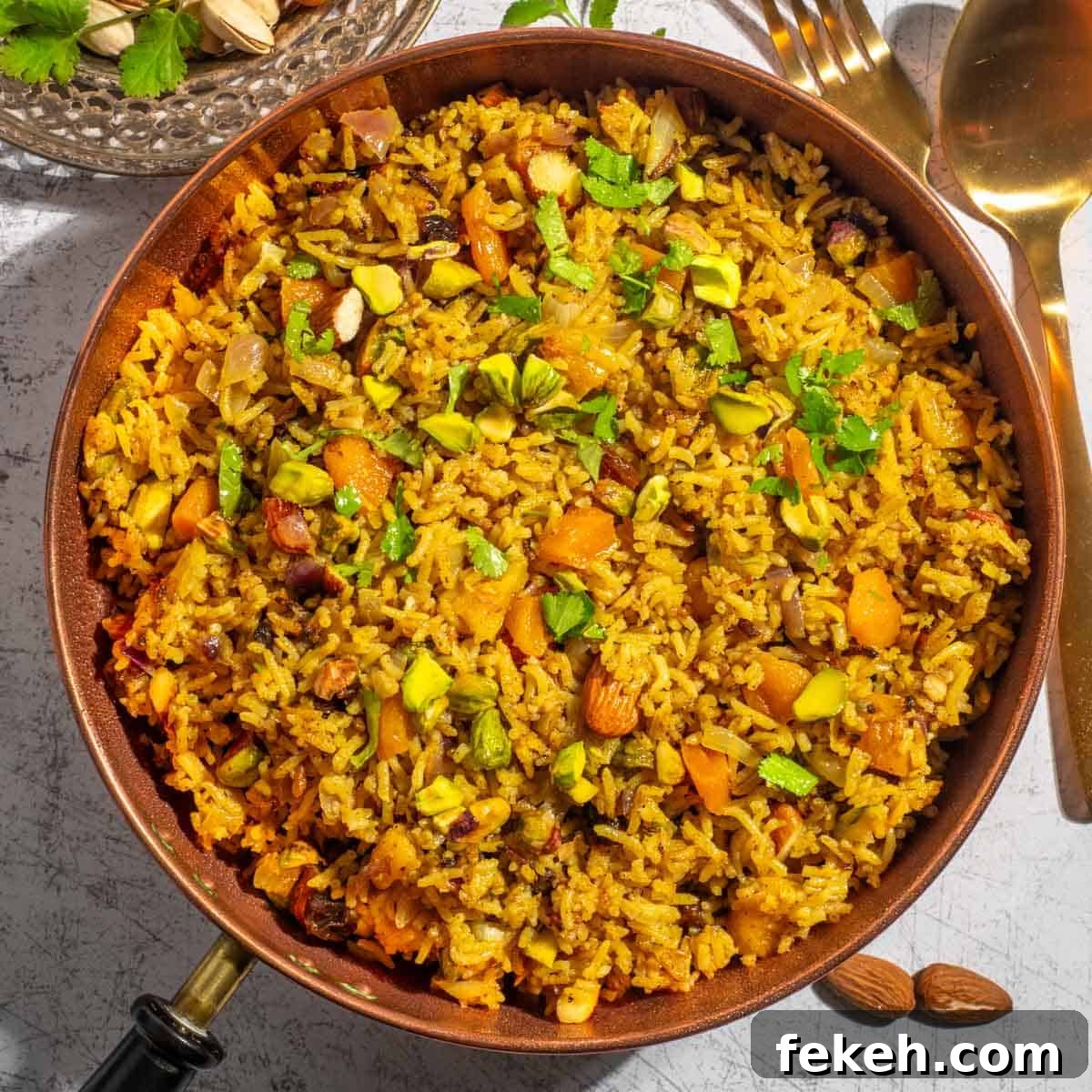
An epicurean adventure to: Morocco
Morocco unfolds in a riot of color and scent — bustling souks filled with spices and jewels, labyrinthine medinas steeped in history and the vast golden desert where the wind seems to tell stories. This Moroccan rice pilaf brings a touch of that magic to your table in one comforting, aromatic dish.
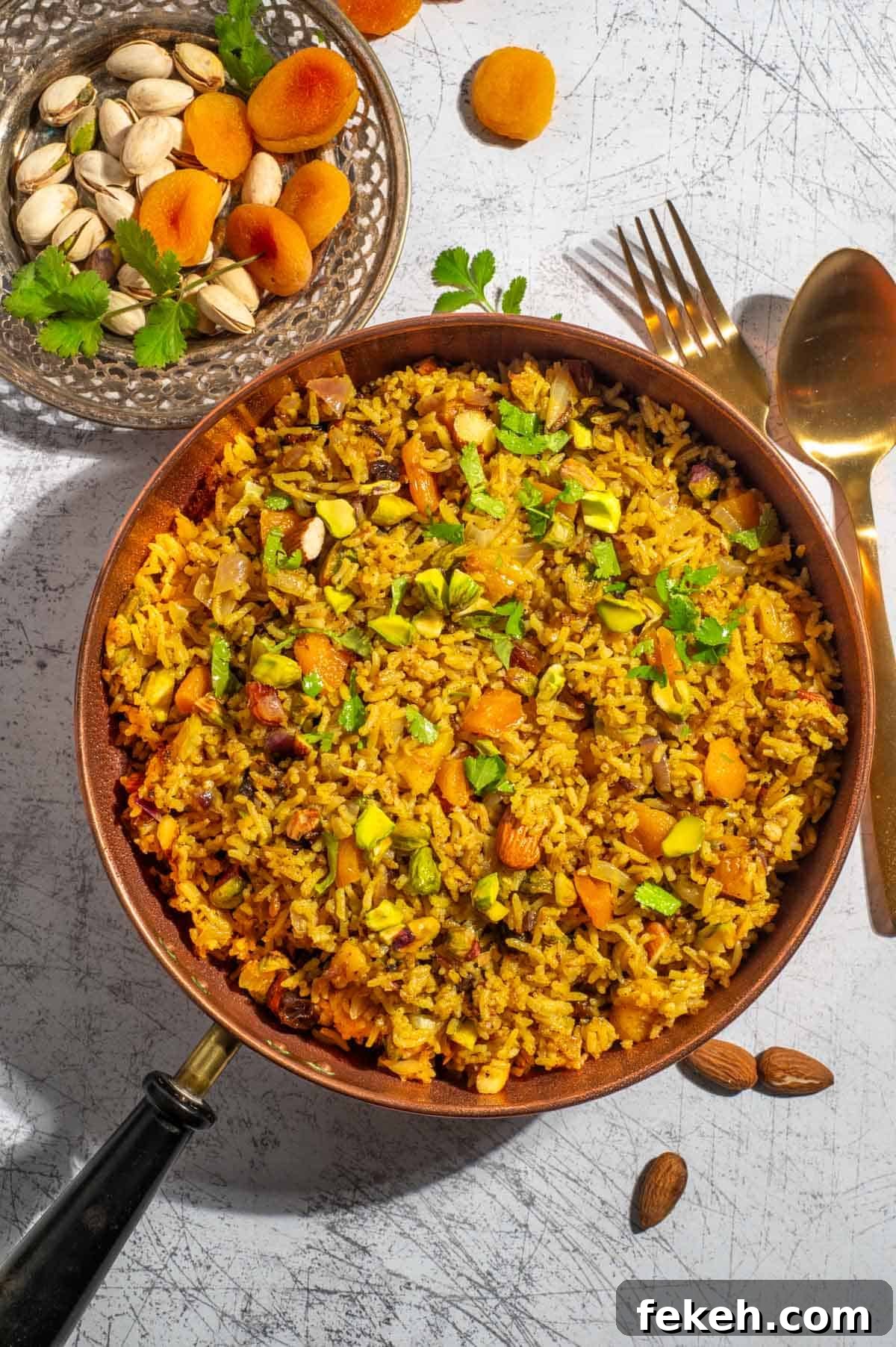
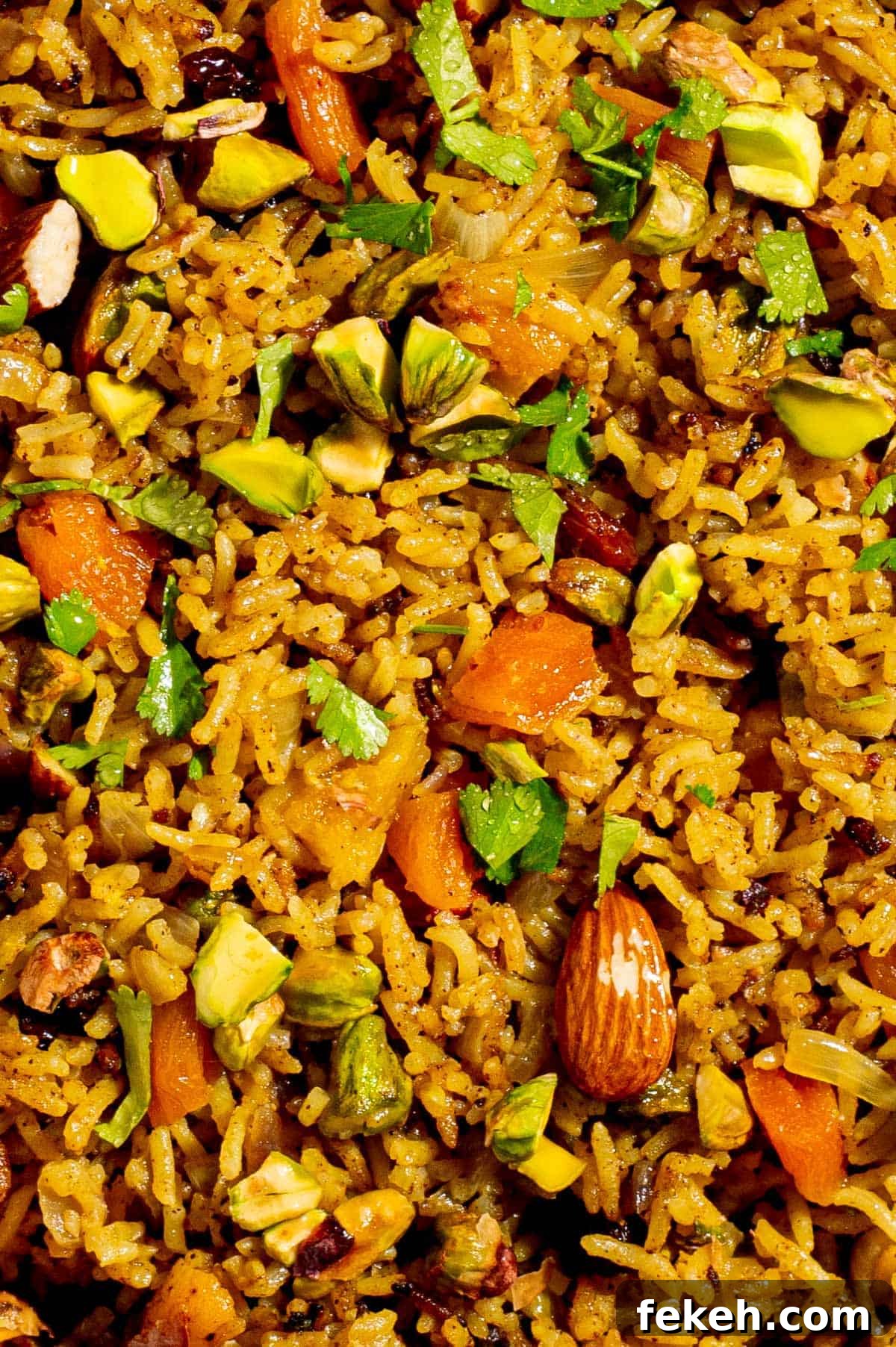
Originating in North Africa, this pilaf balances warm spices with the gentle sweetness of dried fruit, the crunch of toasted nuts and the fragrant, separate grains of perfectly cooked rice. It’s an easy, one-pot recipe — you’ll likely spend more time measuring spices than actually cooking.
Serve it alongside a tagine, grilled meats, fish or roasted vegetables, or enjoy it as a satisfying vegetarian main. The result is beautiful, jewel-like rice that captures the spirit of Morocco.
What’s to love about this recipe
- Warm, aromatic spices combined with sweet dried fruit and crunchy nuts.
- Simple, one-pot preparation with minimal fuss.
- Versatile: pairs beautifully with tagines, grilled meats or stands alone as a main.
If you enjoy elevated rice dishes, consider trying other recipes with similar flair such as sunshine-yellow basmati rice, Egyptian rice with vermicelli, or a spicy rice inspired by popular restaurant blends.
Key ingredient notes and substitutions
Please see the recipe card below for the full ingredient list and measurements.
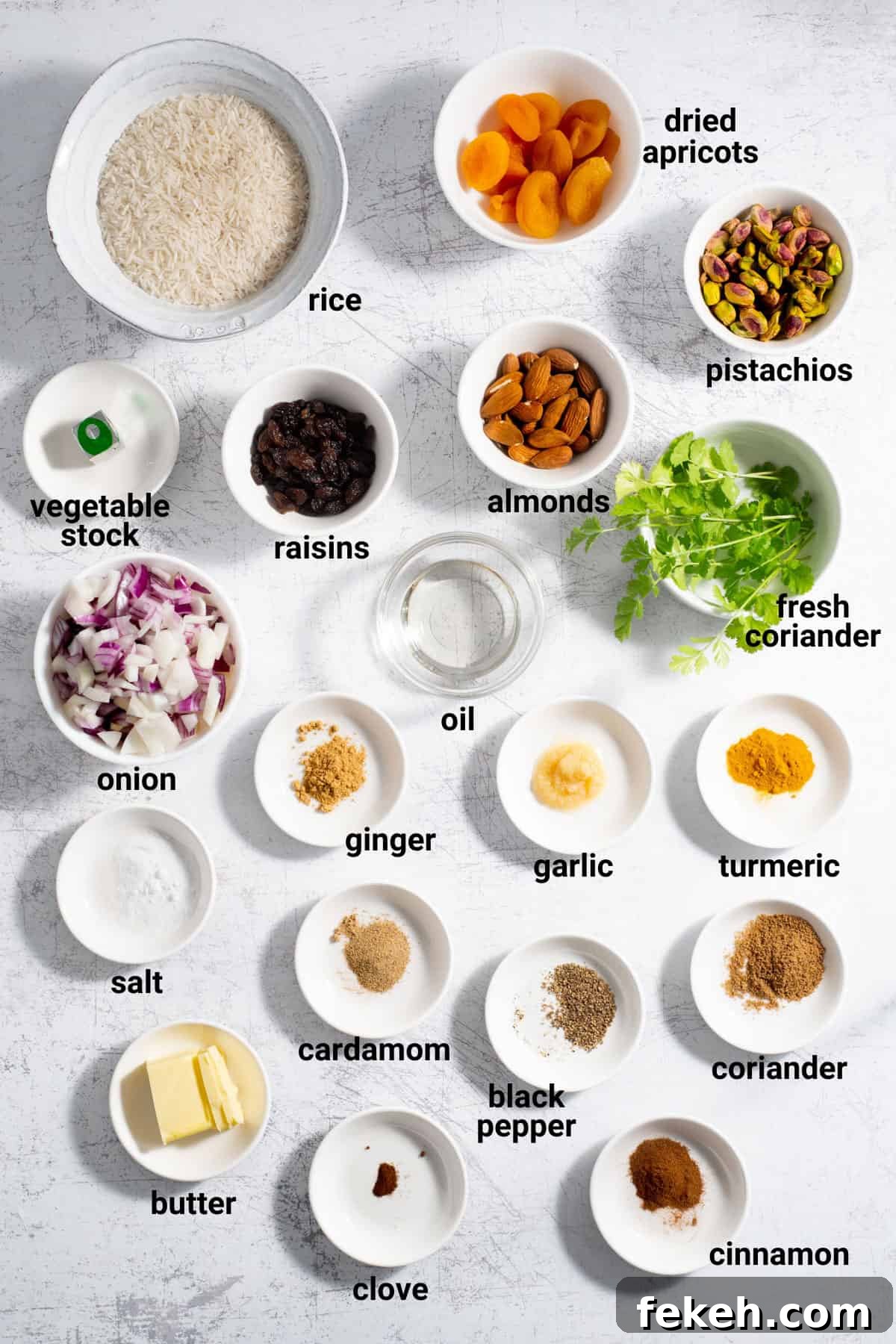
Rice
Basmati is preferred here for its fragrant aroma and light, separate grains ideal for pilafs. Any long-grain white rice will also work. If you choose brown rice, soak it first and expect longer cook time and adjusted liquid ratios.
Top tip: Rinse and drain the rice to remove excess starch; this helps keep the grains separate and prevents clumping.
Dried fruit
Traditional choices include dried apricots and raisins. You can substitute sultanas, golden raisins, dried cranberries, cherries, figs, dates or prunes depending on what you have and how sweet you want the dish.
Nuts
Pistachios add a sweet, green pop of color while toasted almonds contribute a pleasant crunch. Other good options are cashews, walnuts, toasted pine nuts or hazelnuts.
You may also enjoy…
- How to Make Couscous – A Basic Recipe for Perfect Couscous
- Cypriot Grain Salad
- Easy Egyptian rice with vermicelli
- Yellow Rice for Bobotie (Geelrys)
Step-by-step instructions
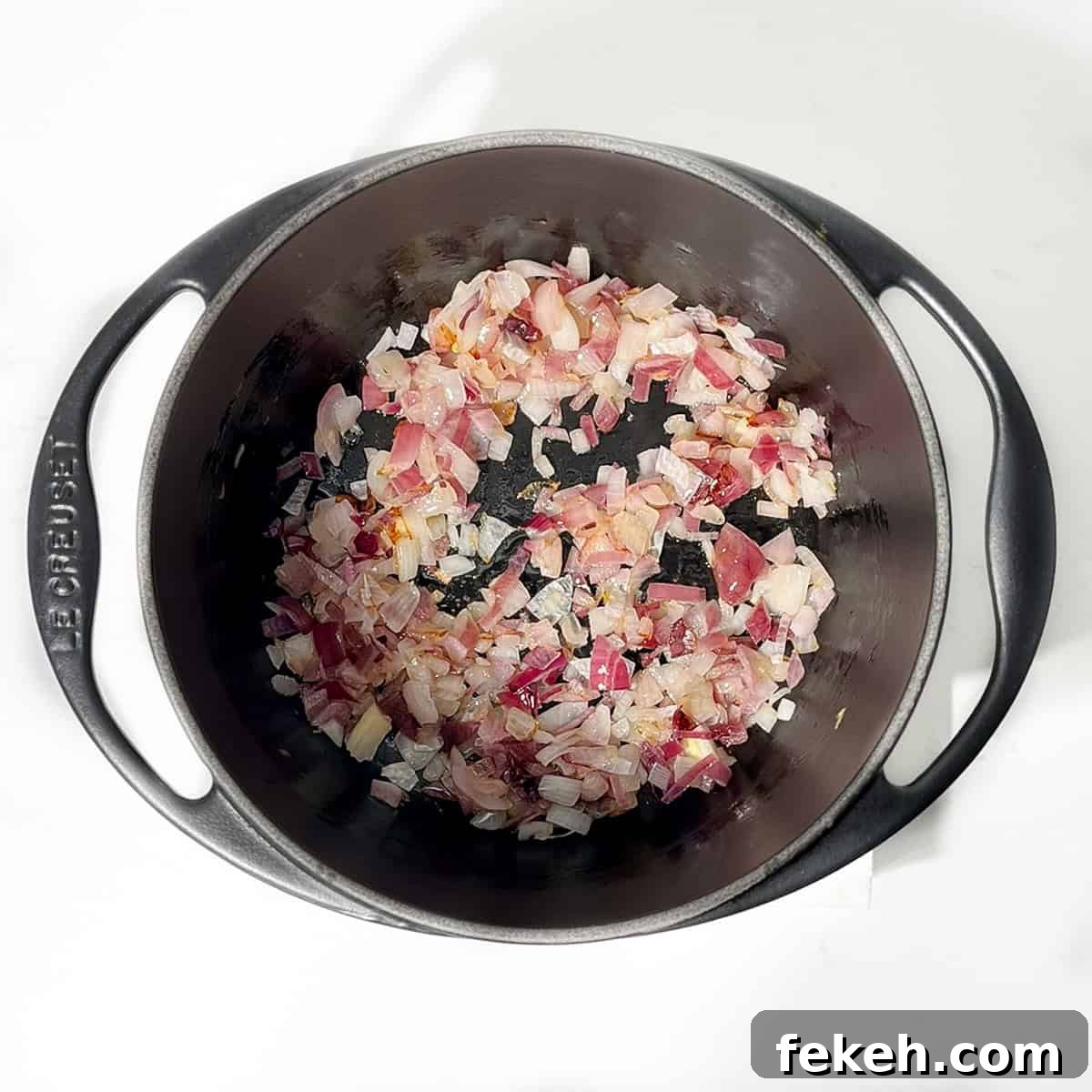
1. Heat the oil in a large saucepan over medium-low heat. Add the chopped onion and sauté for about 5 minutes, until soft and translucent. Avoid browning — reduce the heat if needed.
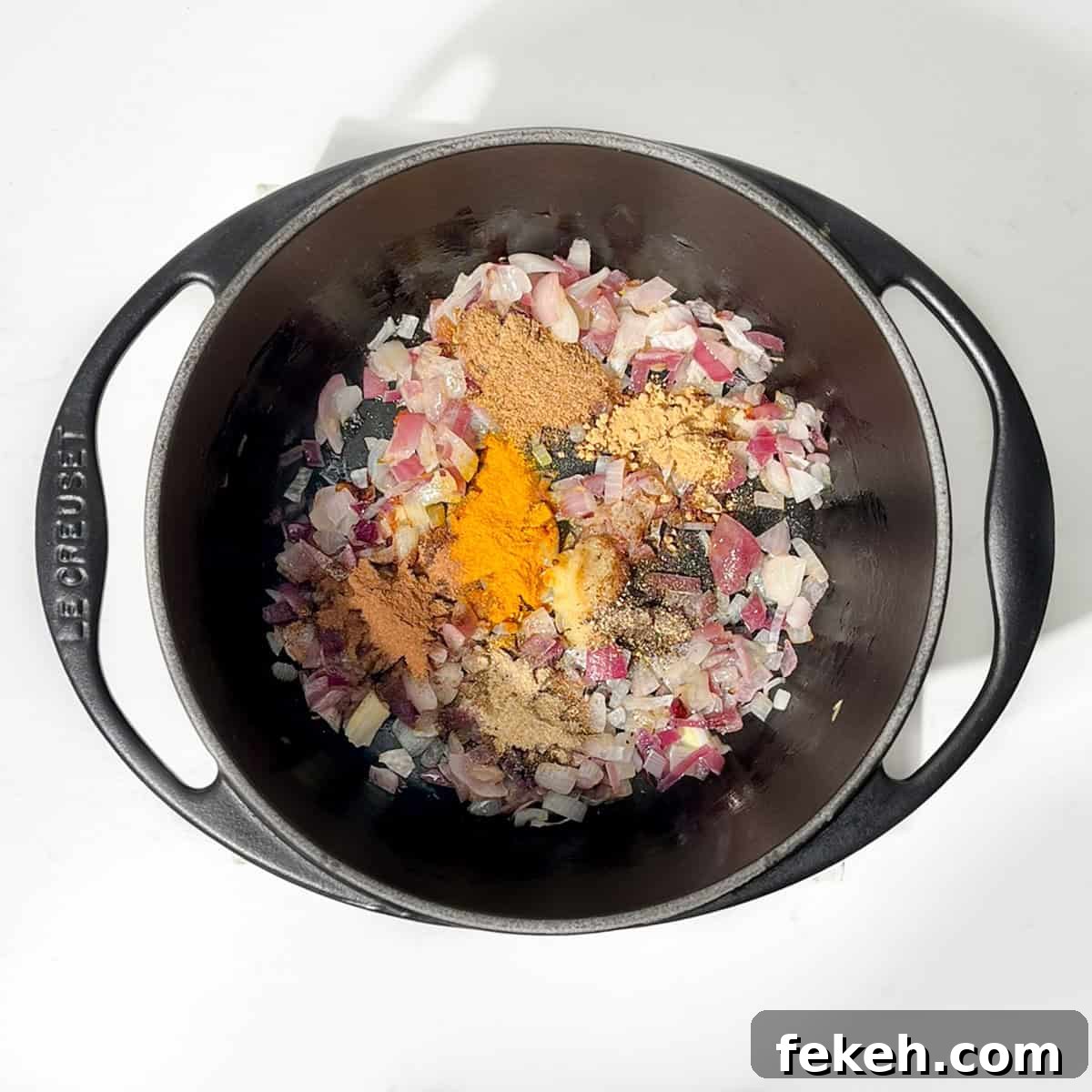
2. Stir in the garlic, ground coriander, turmeric, cinnamon, cardamom, ginger, black pepper and a pinch of cloves. Cook, stirring constantly, for 1–2 minutes until the spices release their aroma.
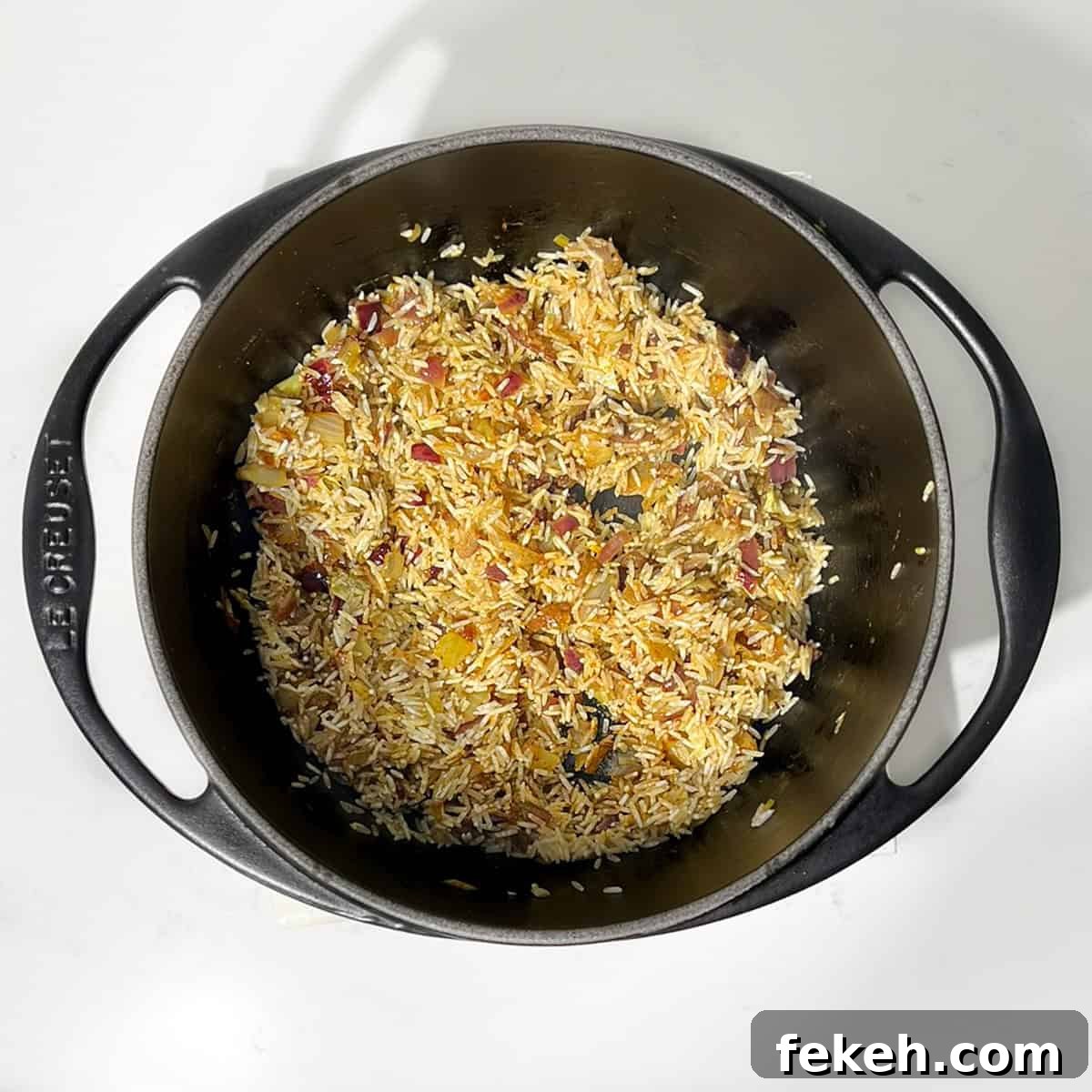
3. Add the rinsed, drained rice and stir for 1–2 minutes so each grain is coated in the spiced oil.
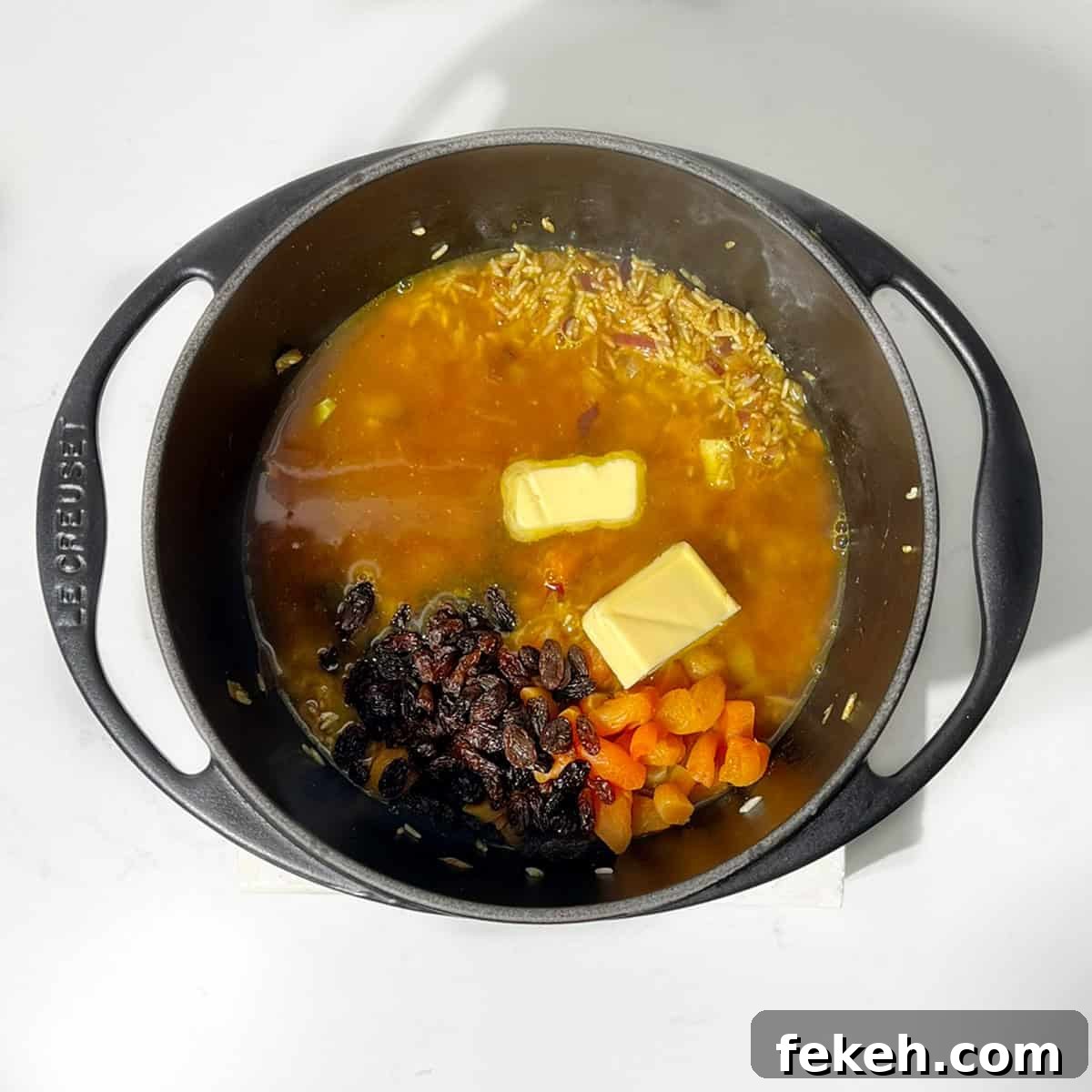
4. Pour in hot vegetable stock, add the butter, salt, raisins and chopped apricots. Stir to combine and bring to a gentle simmer. Cover tightly and cook undisturbed over low heat for 15–18 minutes, until the liquid is absorbed and the rice is tender.
5. Remove from heat and keep the lid on. Let the rice rest for 10 minutes, then fluff gently with a fork.
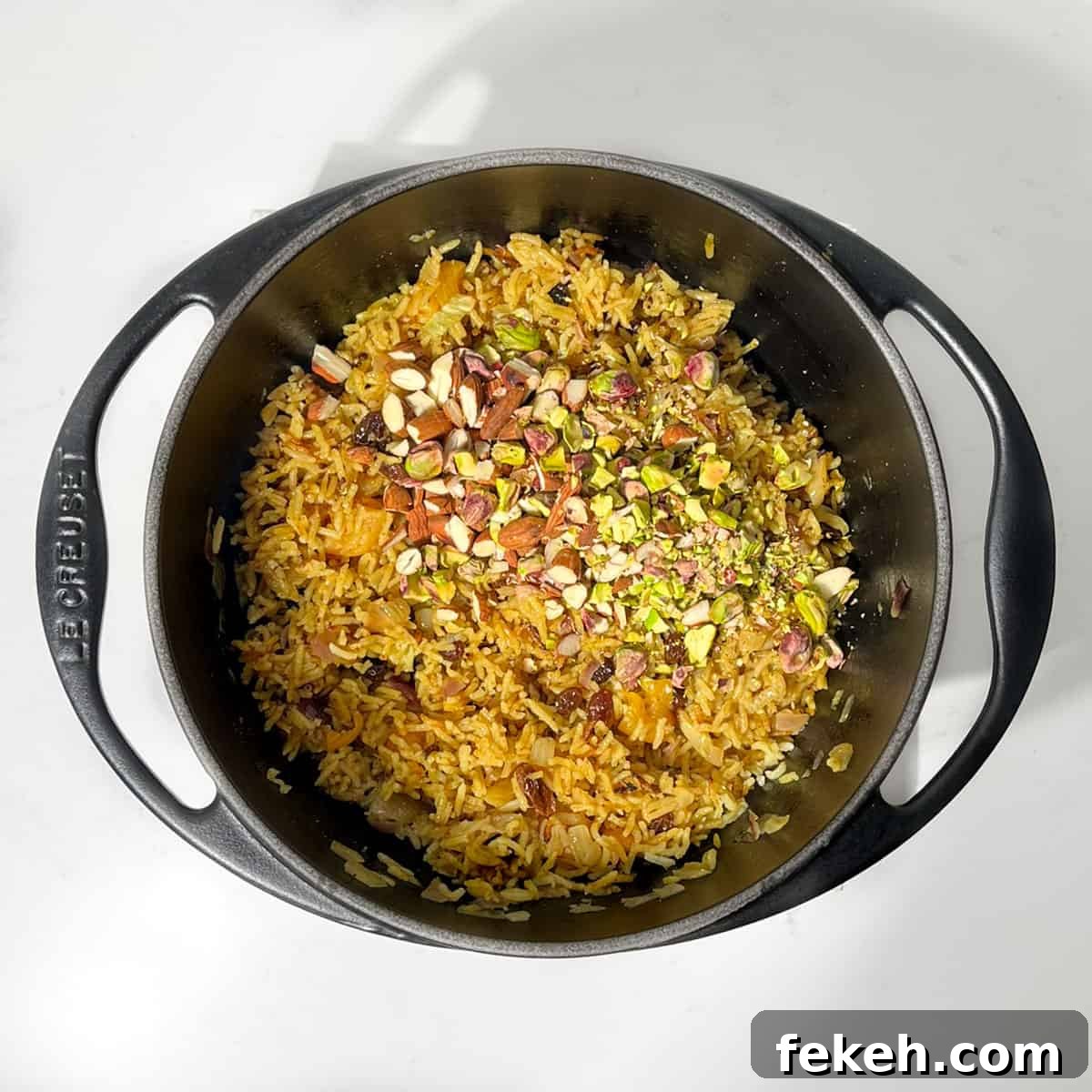
6. Fold in the chopped pistachios and toasted almonds, taste and adjust seasoning. Finish with chopped fresh coriander and, if you like, extra nuts or dried fruit.
Top Tips
Rinse the rice: Removes excess starch so the grains stay separate.
Keep nuts chunky: Aim for a noticeable crunch — don’t over-finely chop.
Use a snug lid: A tight seal traps steam for even cooking; weigh the lid if it’s loose.
Rest before serving: Let the rice sit 10 minutes to finish steaming and fluff up.
Serving suggestions
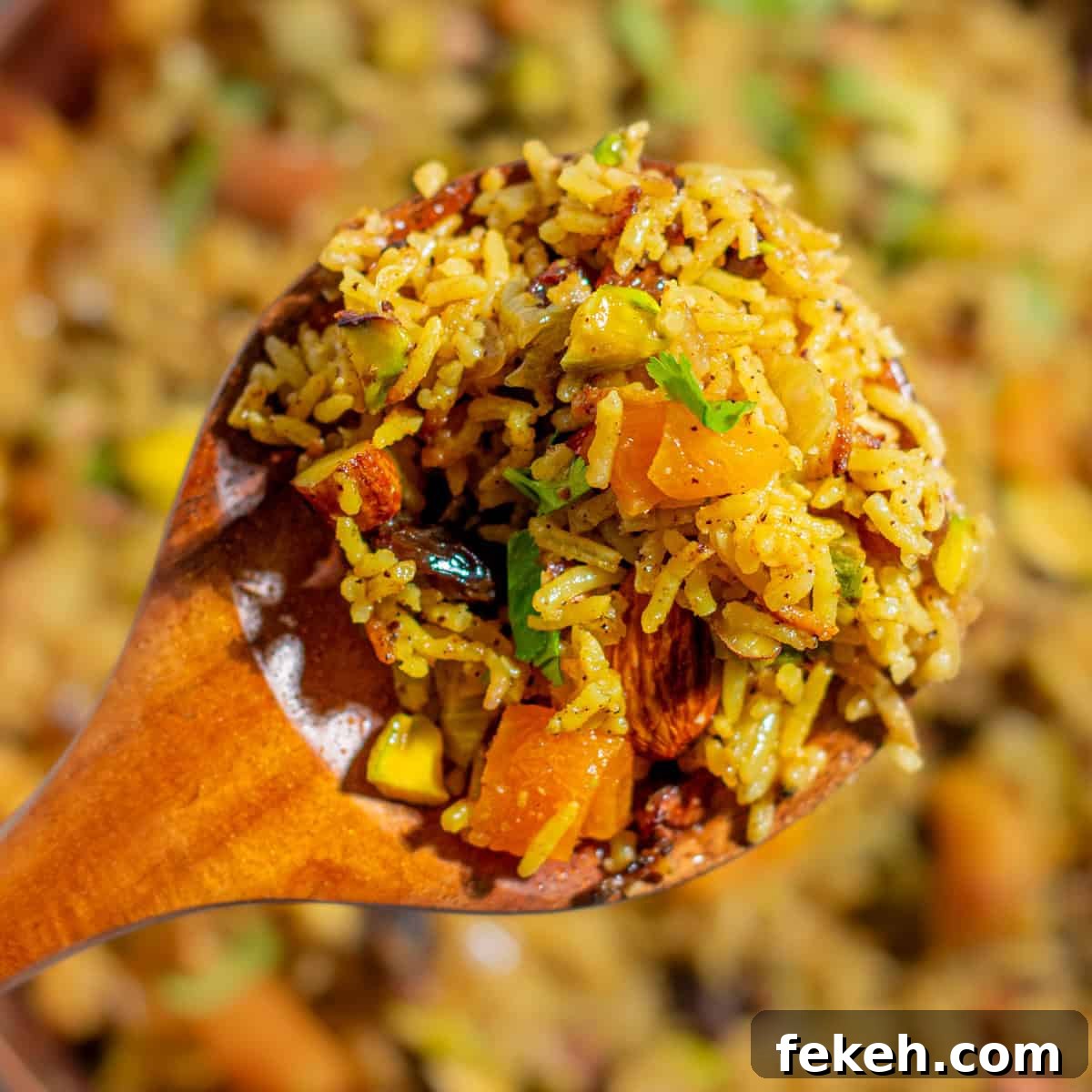
- A fragrant chicken or lamb tagine.
- Grilled meats such as chicken, lamb chops or beef kebabs.
- Grilled or spiced fish like salmon or white fish.
- Roasted vegetables — carrots, squash or cauliflower work well.
- A dollop of Greek yoghurt or a tangy cucumber salad for freshness.
It also makes a hearty vegetarian main when served with a salad or roasted vegetables.
Storage
Enjoy this rice fresh for best texture. Store leftovers in an airtight container in the fridge and use within 1 day. Cool quickly before refrigerating and reheat thoroughly before serving. Because cooked rice can spoil, avoid keeping it longer than a day for safety.
Recipe

Moroccan Rice
Equipment
-
1 large lidded saucepan – cast iron works great!
Ingredients
- 2 tablespoons olive oil – or other cooking oil
- 1 medium onion, finely diced
- 1 teaspoon minced garlic – or garlic paste
- 1 teaspoon ground coriander
- ½ teaspoon ground turmeric
- ½ teaspoon ground cinnamon
- ½ teaspoon ground cardamom
- ½ teaspoon ground ginger
- ½ teaspoon coarse black pepper
- pinch of ground cloves
- 1 cup basmati rice, rinsed and drained
- 1¾ cups (420ml) hot vegetable stock – made from one stock cube
- 2 tablespoons butter – 30g/1oz
- 1 teaspoon salt
- 3 tablespoons raisins
- ½ cup dried apricots, chopped
- ¼ cup pistachios, roughly chopped
- ¼ cup almonds, toasted and roughly chopped
- coriander for garnish
Instructions
-
Heat the oil in a large saucepan over medium-low heat and add the chopped onions. Sauté for about 5 minutes until the onions are soft and translucent. Be careful not to brown them.
-
Add the garlic, coriander, turmeric, cinnamon, cardamom, ginger, black pepper, and a pinch of cloves. Stir constantly for 1–2 minutes until fragrant.
-
Stir in the rinsed rice and coat the grains in the spiced oil for 1–2 minutes.
-
Add the hot stock, butter, salt, raisins and apricots. Bring to a simmer, cover tightly and cook over low heat for 15–18 minutes until the liquid is absorbed.
-
Remove from heat, keep the lid on and let rest for 10 minutes. Fluff with a fork.
-
Fold in pistachios and almonds, adjust seasoning and finish with chopped coriander and extra nuts or fruit if desired.
Notes
Top Tips
Nutritional data disclaimer
Nutritional information is provided by a third party and is an estimate only. Values may vary based on brands and exact ingredients used. Consult a qualified professional for personalised dietary advice.
Nutrition
For food safety advice, including guidance on food allergies, consult official food safety resources or a qualified professional.