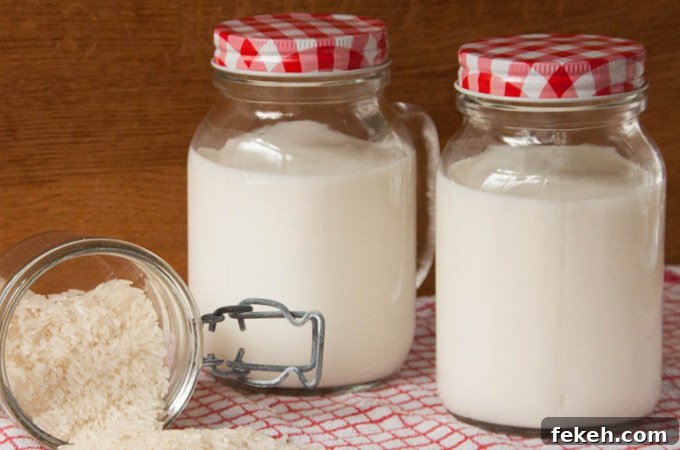
For full transparency, I’ve never been a fan of commercial rice milk. It often tasted either overly sweet or flat and cardboard-like. After sampling many brands, I never found one I liked.
Still, I enjoy rice in almost every other form—sushi, risotto, fried rice, rice cakes—so it felt odd that rice milk was the one preparation I didn’t enjoy. That curiosity pushed me to make my own, and I was pleasantly surprised: homemade rice milk captures the gentle, familiar flavor of rice and invites many easy ways to customize it.
Types of homemade rice milk
I usually make three versions at home: a simple raw overnight rice milk, a toasted (roasted) rice milk, and a creamy milk made from cooked rice. Each has a slightly different texture and flavor profile, so you can choose the one that best suits how you plan to use it.
Raw rice milk
Raw rice milk is the easiest to make: soak rice overnight, then blend it with fresh water and strain if you prefer a smoother result. This version is light and subtly sweet, great for smoothies or as a neutral dairy-free option. If you want step-by-step guidance, follow a trusted recipe for raw rice milk.
Roasted rice milk
To make roasted rice milk, briefly toast dry rice in a skillet until it develops a light golden aroma, let it cool, then soak and blend. Toasting the grains adds a warm, nutty depth to the milk that pairs especially well with coffee, chai, or cereal.
Creamy rice milk
Creamy rice milk uses cooked rice, which yields a smoother, richer texture compared with the raw varieties. The cooked grains blend more uniformly, reducing the gritty mouthfeel that raw or lightly processed versions sometimes have. This makes the creamy variation ideal for hot drinks, lattes, cereal, or any recipe where a velvety texture is preferred. You can cook rice specifically for this purpose or repurpose leftover rice for a quick batch.
Homemade rice milk is inexpensive, easy to customize, and free of the additives and excessive sweetness often found in store-bought alternatives. By trying these three methods—raw, roasted, and creamy—you can find the style and flavor that works best for your taste and the recipes you enjoy.