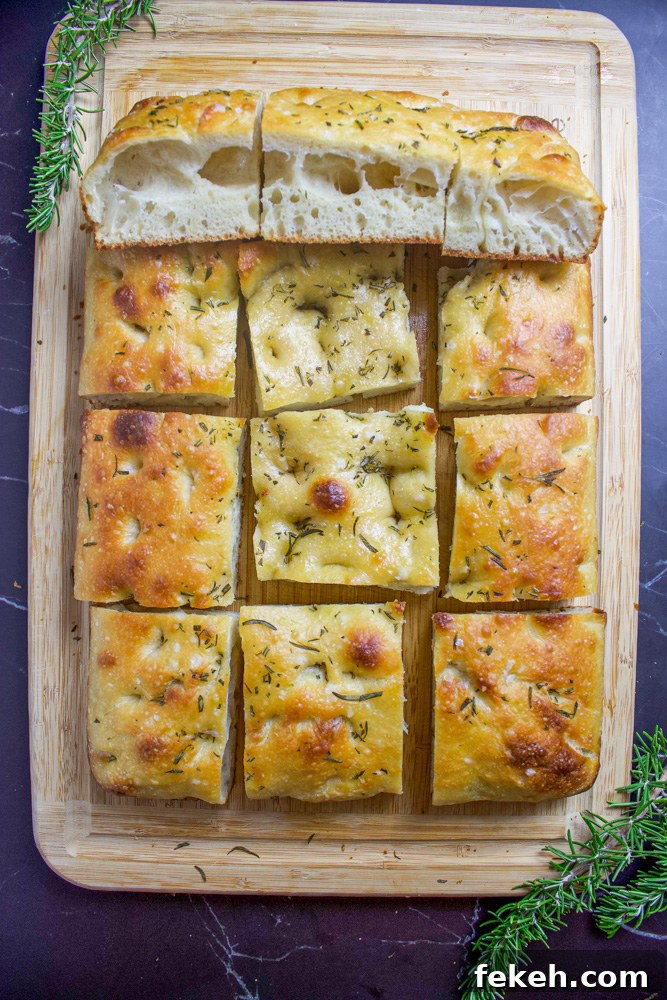
When we were children, our parents took us to the same restaurant for special occasions. It was a favorite spot largely because of the croquet court outside — though the food was excellent, as kids we were more excited about playing on the grass than about the menu. Still, one item from those meals stands out clearly: the bread. While our parents remember the many delicious dishes, the four kids in our family all recall the rosemary focaccia. It arrived warm with a small dish of olive oil and balsamic, and the combination of rosemary sourdough focaccia dipped in olive oil and balsamic remains one of our most vivid food memories.
Creating our own sourdough focaccia:
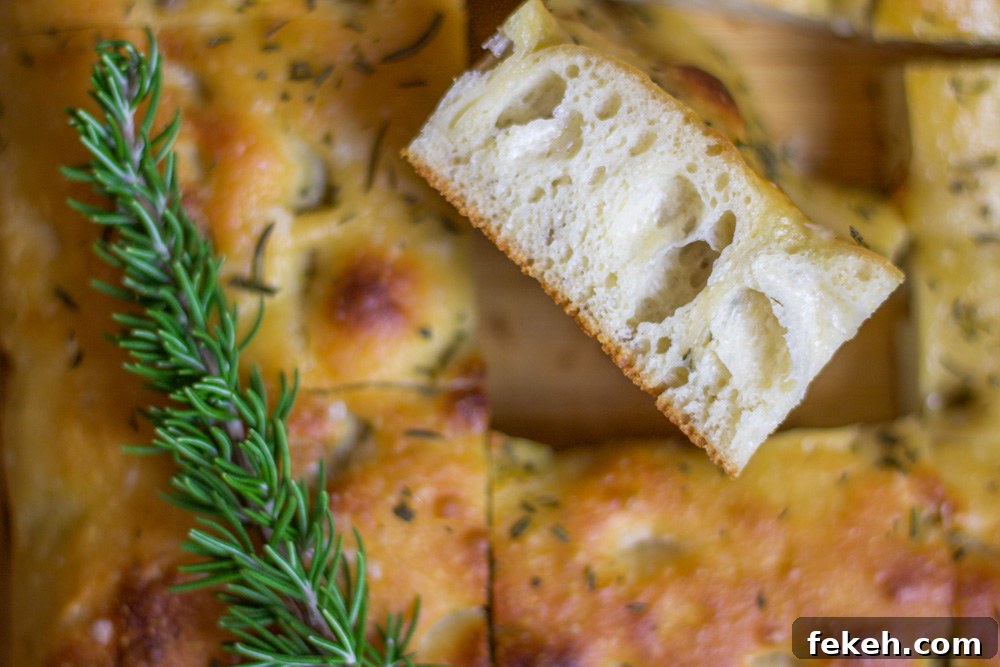
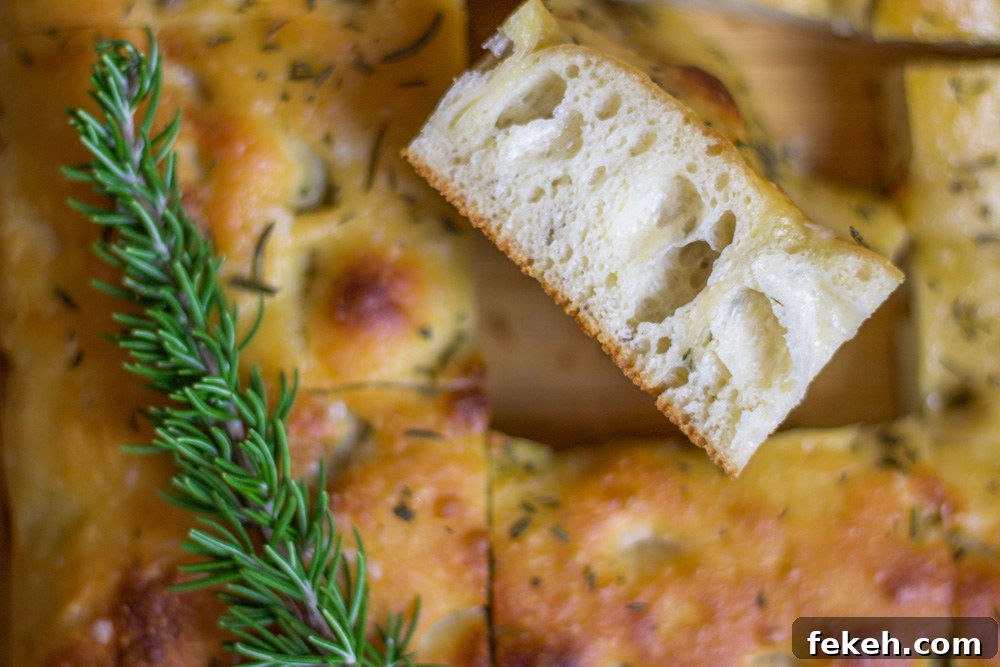
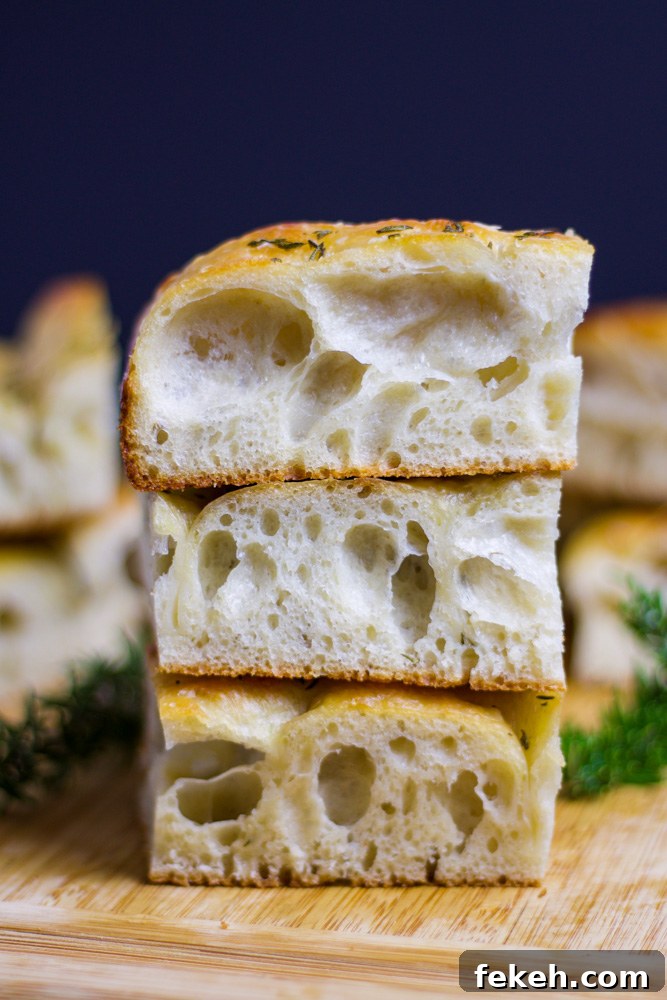
Over the years we worked to recreate that exact focaccia. The interior was pillowy and soft with edges that were crisp and uniquely caramelized from a generous slick of olive oil in the pan. Through trial and error we’ve developed what we consider the perfect sourdough focaccia: an open, bubbly crumb, pronounced olive oil flavor from both the pan and the topping, and a scattering of fresh rosemary and flaky sea salt for bright, savory contrast.
We prefer sourdough starter for this recipe because the wild yeast delivers deeper flavor than instant yeast. The ingredient list is simple: active sourdough leaven, a mix of flours, water, salt, good olive oil, and fresh rosemary. The technique — folding, gentle handling, and a long, cool proof — is what builds the texture and flavor you remember from that restaurant loaf.
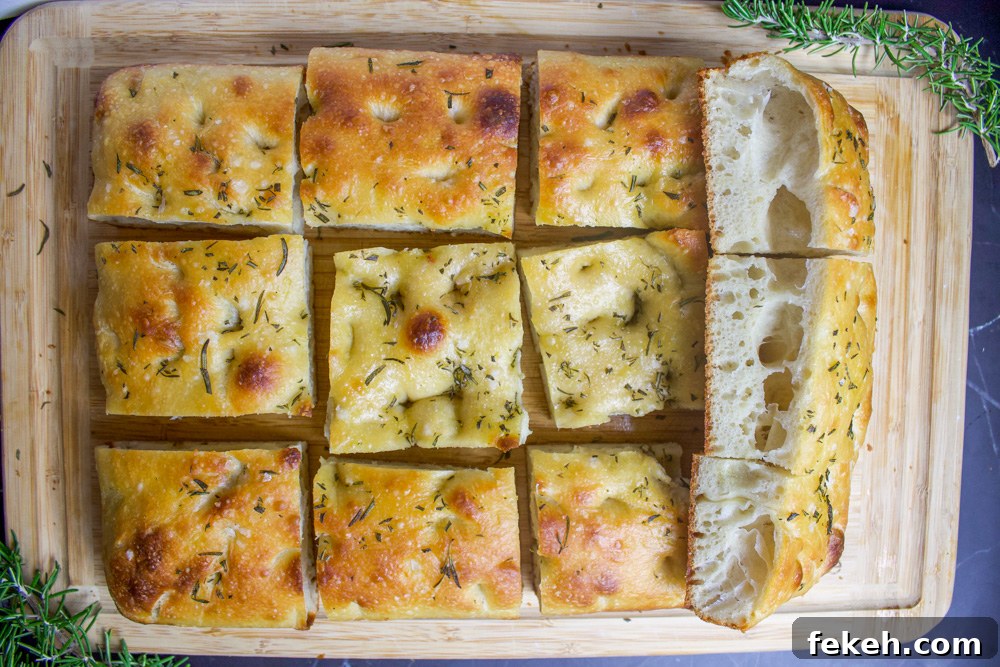
Our goal is a bread with a buttery, olive oil–kissed crust that still has a satisfying crispness; a center that is light, airy, and chewy; and a topping that is fragrant with rosemary and crunchy with flaky sea salt. When you tear off a piece and dip it in olive oil and balsamic, the combination of textures and flavors — soft interior, caramelized edge, bright rosemary, and briny salt — makes it irresistible. We often find ourselves finishing a whole pan and wishing for more.
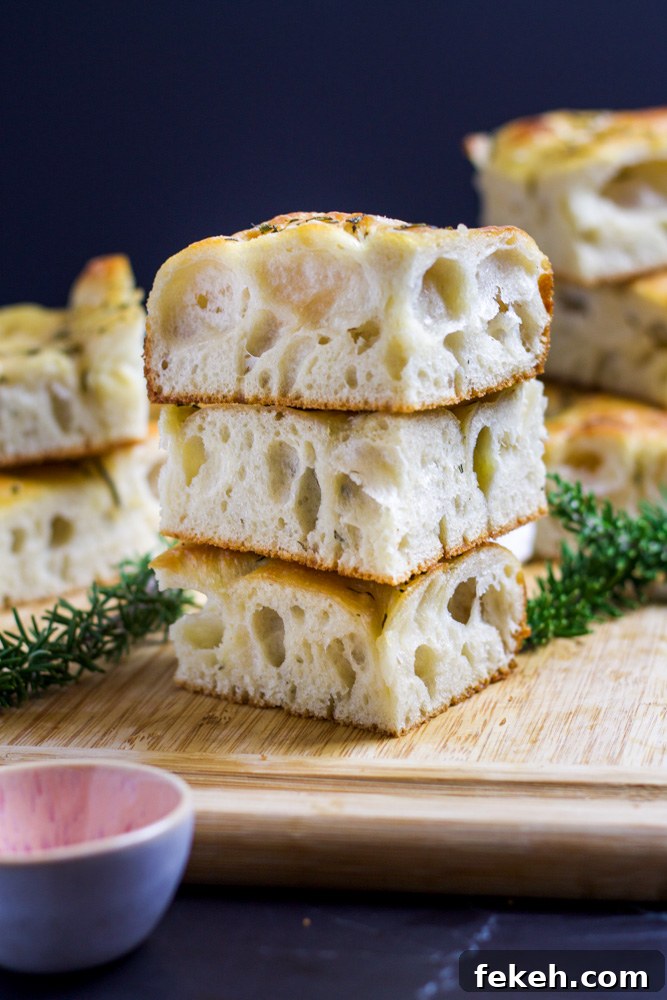
How to make the sourdough focaccia:
Begin with an active, bubbly leaven. Once it is ready, combine the leaven with bread flour, all-purpose flour, water, and salt. Mix by hand until combined, then rest the dough for 10–20 minutes before adding the olive oil and incorporating it fully.
Next comes bulk fermentation, which mirrors sourdough bread methods. Over two hours perform a set of gentle folds every 30 minutes — typically 2–3 pulls each time — to strengthen the dough and build structure without deflating the air bubbles.
For the first proof, generously oil a 9×13-inch metal pan with olive oil and transfer the fermented dough into it. Cover and proof at room temperature for about two hours, gently stretching the dough into the pan’s corners every 30 minutes. After this period, cover the pan and chill it in the refrigerator overnight to develop flavor and texture.
The following morning allow the pan to come back to room temperature and finish the final two hours of proofing, continuing to coax the dough gently into the corners if needed. When the dough is bubbly and warmed through, wet your hands and create the characteristic dimples by pressing lightly across the surface. Drizzle generously with olive oil, scatter chopped rosemary and flaky sea salt on top, and bake at 450°F until golden brown. For a better oven spring, place a fitting pan lid or another pan over the focaccia for the first 15 minutes, then bake uncovered for another 15–20 minutes until deeply colored and crisp at the edges.
Notes:
- Sourdough Starter: We use an active sourdough starter for the best flavor. Feed the starter the night before so the leaven is bubbly and ready the next morning. If you prefer, this focaccia can also be made with active dry yeast, though the taste will be milder.
- Toppings: Olive oil, fresh rosemary, and flaky sea salt are our favorites and give the classic flavor profile. You can experiment with other toppings, but don’t skip the olive oil — it’s essential for the crust and flavor.

Sourdough Rosemary Focaccia
Ingredients
- 100 grams leaven mixed the night before
- 420 g all-purpose Flour
- 180 grams bread flour
- 456 grams water
- 10 grams salt
- 12 grams extra virgin olive oil
- Rosemary olive oil, and flaky sea salt to top
Instructions
-
The morning after mixing the leaven (when it is bubbly and active), mix the flours, water, leaven, and salt by hand. Let the dough rest for 10–20 minutes.
-
Add the extra virgin olive oil and mix until the dough is well combined.
Bulk fermentation:
-
Over the next two hours perform a set of folds every 30 minutes for a total of four turns. With slightly damp hands, gently pull the underside of the dough up and fold it over, then rotate the container and repeat. These gentle turns build strength without deflating the dough.
Proof:
-
After bulk fermentation, transfer the dough to a generously oiled 9×13” metal pan using a bench scraper. Cover with a towel and proof the dough in the pan for two hours before refrigerating overnight.
-
During the first hour of proofing uncover the pan every 30 minutes, wet your hands, and gently stretch the dough into the sides of the pan to encourage even spreading. Avoid aggressive pulling to preserve the dough’s airiness.
-
After two hours, cover and place the pan in the refrigerator overnight to develop flavor and texture.
-
The next morning remove the pan from the fridge and finish the final two hours of proofing at room temperature, stretching gently into the corners as needed.
Baking:
-
When proofing is complete the dough should be bubbly and at room temperature.
-
Preheat the oven to 450°F (232°C).
-
Wet your hands and gently press dimples into the dough with your fingertips, taking care to retain as much air as possible.
-
Drizzle a generous amount of olive oil over the surface, sprinkle chopped rosemary and flaky sea salt, and bake. If possible, cover the pan for the first 15 minutes to boost oven spring, then bake uncovered for an additional 15–20 minutes until golden and crisp at the edges.
Entertainer’s Note for Sourdough Focaccia:
This focaccia is perfect alongside pasta dinners or served as an appetizer. It’s straightforward to prepare, impressive to present, and incredibly flavorful — a reliable crowd-pleaser whenever you want simple, delicious bread.