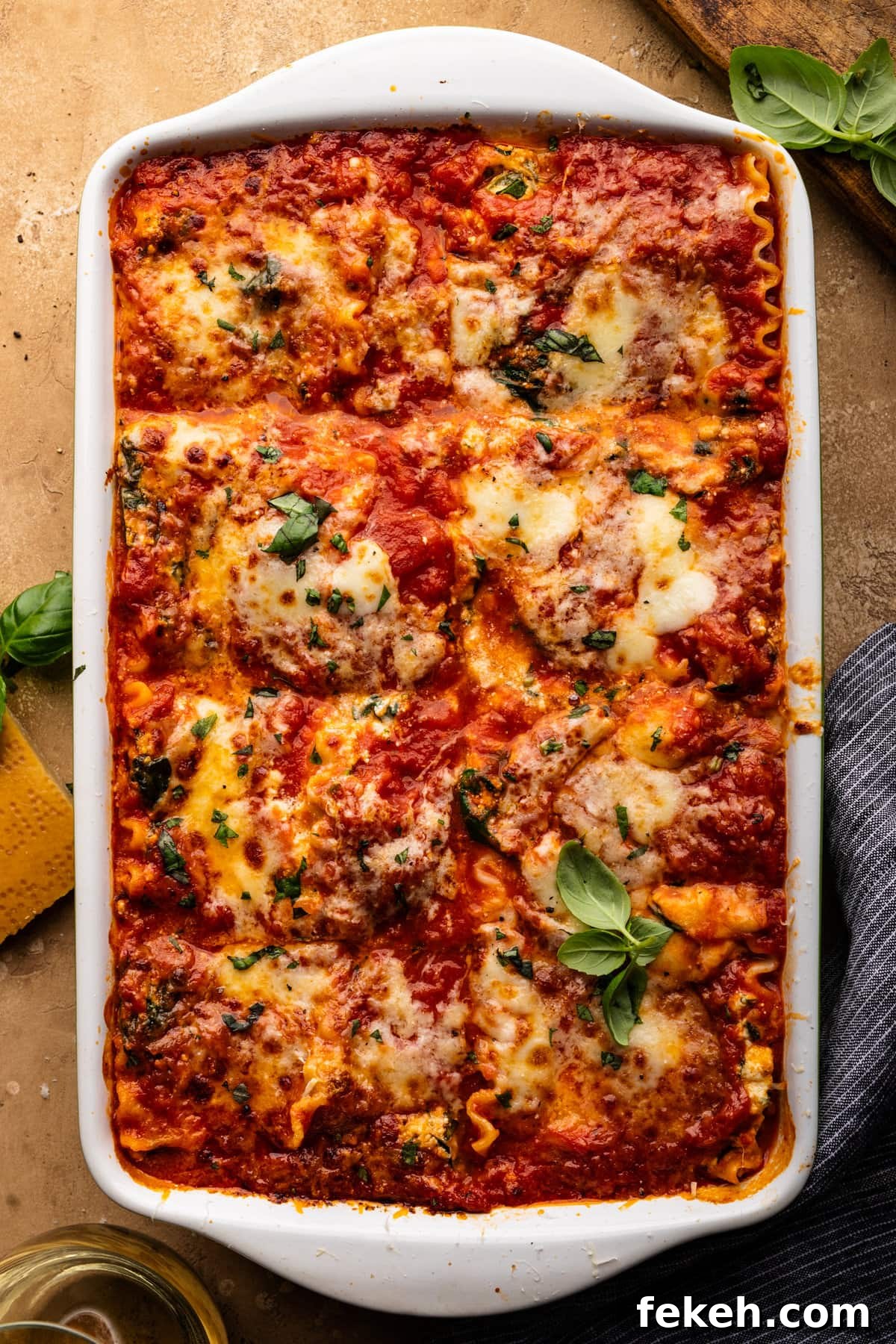
Learn how to make a classic spinach lasagna with a creamy ricotta filling. Layers of tender lasagne noodles combine with fresh herbs, melty Italian cheeses, and cooked spinach for a comforting, family-friendly meal. The flavors are rich, cheesy, and even picky eaters approve.
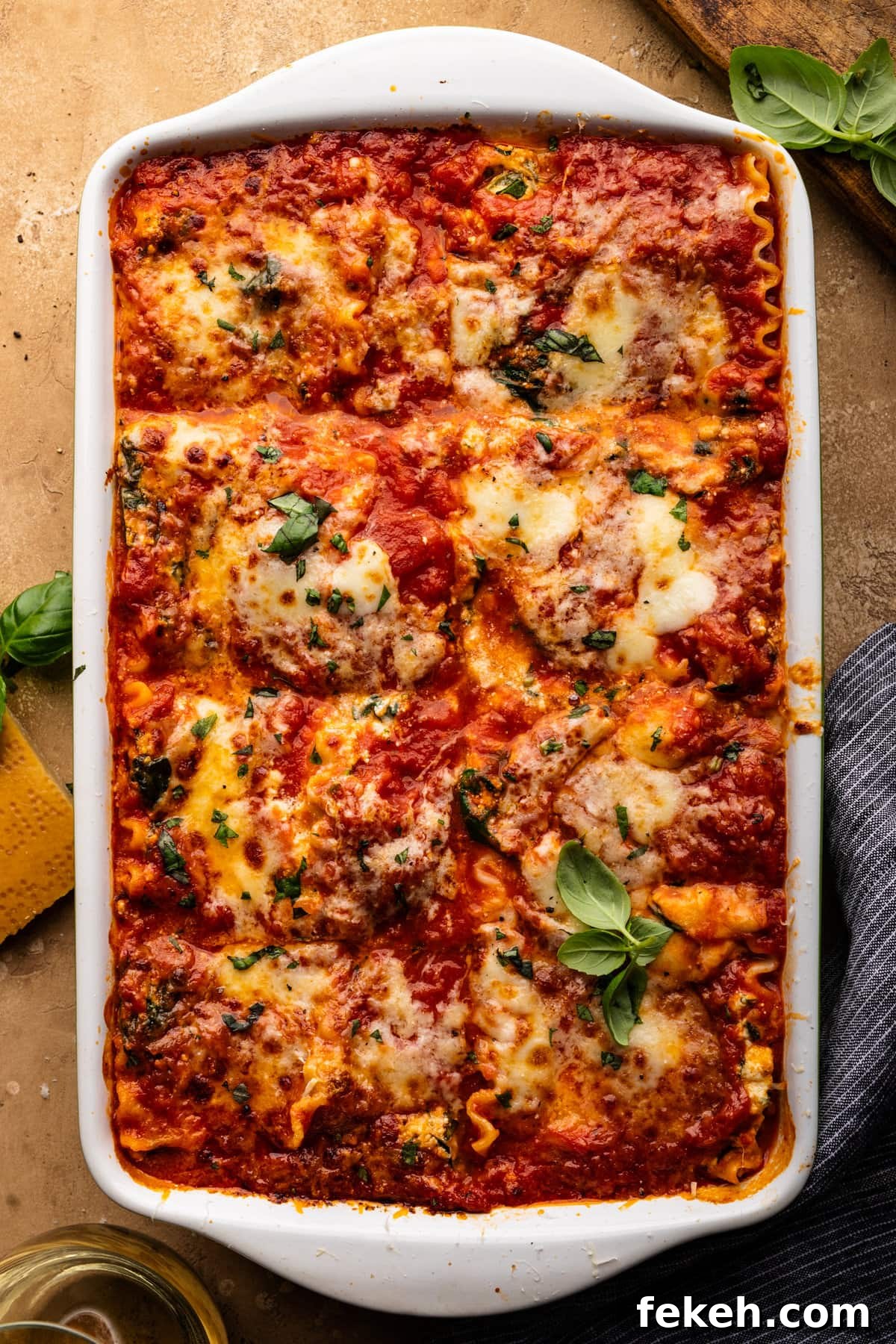
Lasagna is a beloved, comforting dish that’s perfect for weeknight dinners or special occasions. This spinach lasagna keeps the classic cheese lasagna profile but folds in cooked spinach for added color and nutrients without overpowering the creamy ricotta and tomato sauce. It’s a great way to sneak greens into meals for kids and adults alike.
The key to a memorable lasagna is using quality ingredients and balancing proportions: a flavorful marinara, fresh herbs, real Parmigiano-Reggiano, creamy ricotta, and plenty of mozzarella for that perfect melt. Below you’ll find ingredient highlights, step-by-step instructions, helpful tips, and variations so you can make this lasagna your own.
Key Ingredients
Lasagna doesn’t require many complicated components. If you’re missing an item, there are simple substitutions you can use.
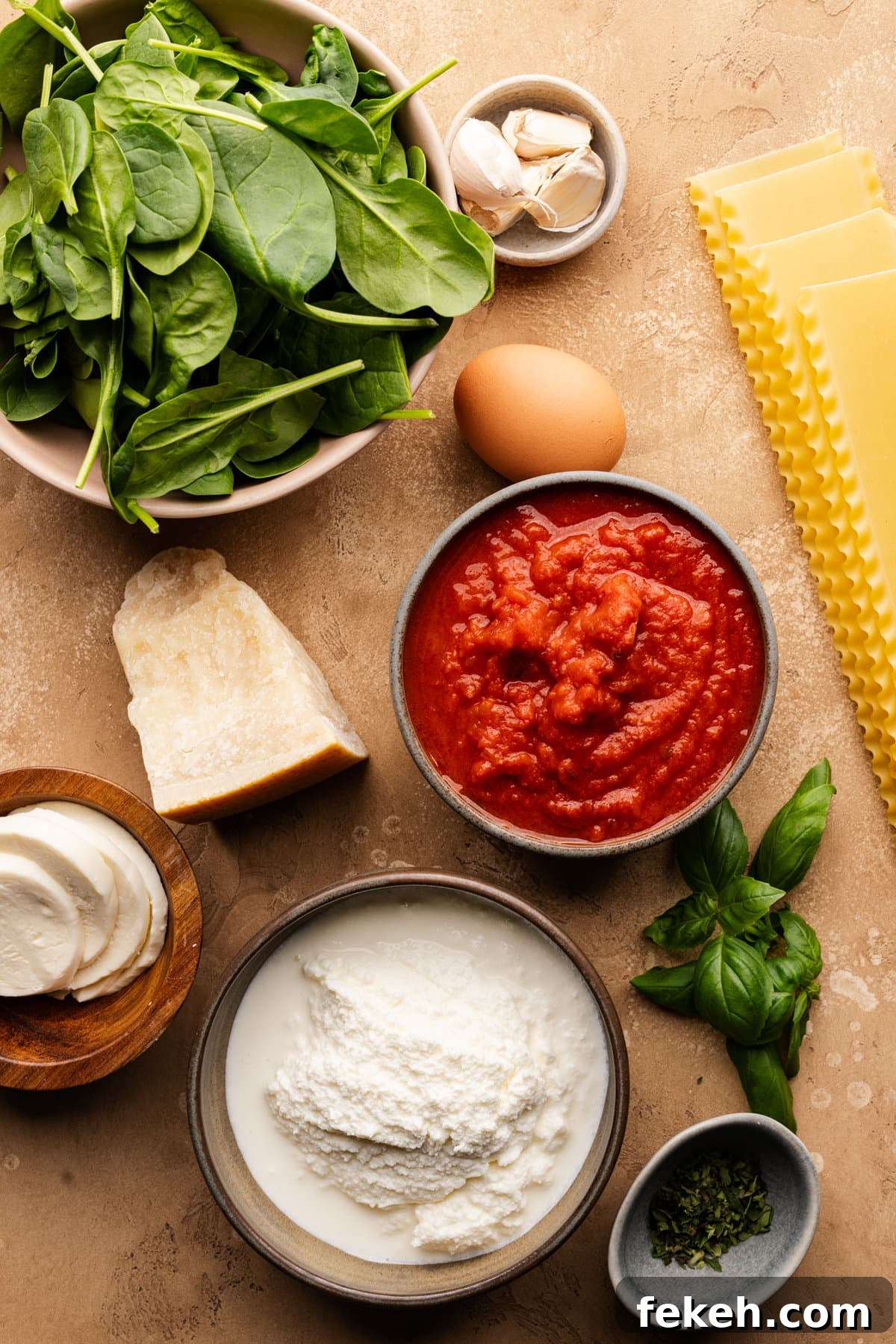
Besides olive oil and salt & pepper, here’s what you’ll need for a flavorful lasagna:
- Lasagne noodles: Traditional boiled noodles give the best texture. For convenience, you can use oven-ready/no-boil noodles — just be sure they are thoroughly covered in sauce while baking.
- Spinach: Fresh spinach is recommended, but frozen spinach (thawed and well-drained) or frozen kale can be used. Cook and squeeze out excess liquid before mixing with the ricotta.
- Marinara/tomato sauce: A good quality marinara is essential. Use a homemade or high-quality store-bought sauce for the best results.
- Ricotta: Creamy ricotta forms the base of the spinach filling. You can substitute mascarpone for extra richness or cottage cheese for more protein if desired.
- Egg: One egg helps bind the ricotta filling so it slices cleanly.
- Garlic: Fresh garlic brightens the ricotta filling; garlic powder can work in a pinch.
- Parmesan: Freshly grated Parmigiano-Reggiano adds salty, savory depth; freshly shredded cheese melts better than pre-shredded varieties.
- Mozzarella: Use shreddable mozzarella for a creamy, melty top layer.
- Fresh basil & oregano: Fresh herbs add vibrant flavor. If fresh aren’t available, use dried but reduce the amount to avoid an overpowering taste.
How to Make Spinach Lasagna (Step-by-Step)
Prep the Pasta and Filling
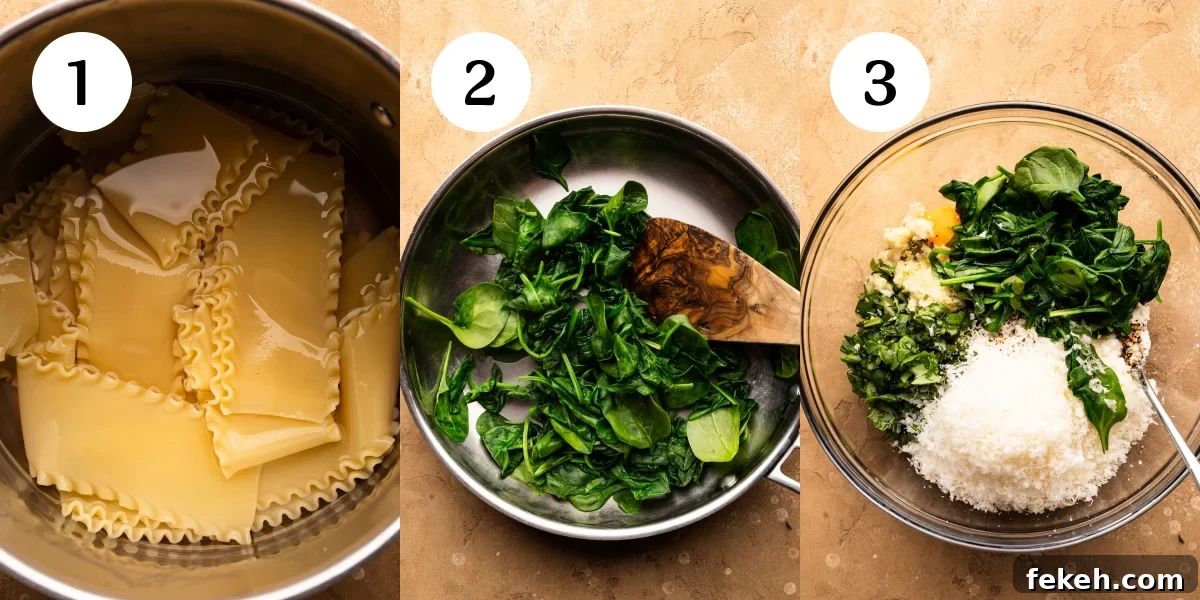
- Boil the lasagna noodles. Bring a large pot of water to a boil and season generously with salt (about 2–3 tablespoons). Cook the noodles to al dente according to package instructions. Drain and, if not using immediately, place them in cold water to prevent sticking.
- Cook the spinach. While the pasta cooks, heat 2 teaspoons of olive oil in a skillet and cook the spinach in batches until fully wilted. Remove from heat, let cool, and squeeze out any excess liquid.
- Mix the ricotta filling. In a bowl, combine the cooled spinach with ricotta, grated Parmesan, minced garlic, chopped fresh basil and oregano, the egg, and salt and pepper to taste. Mix until well combined.
How to Layer Lasagna
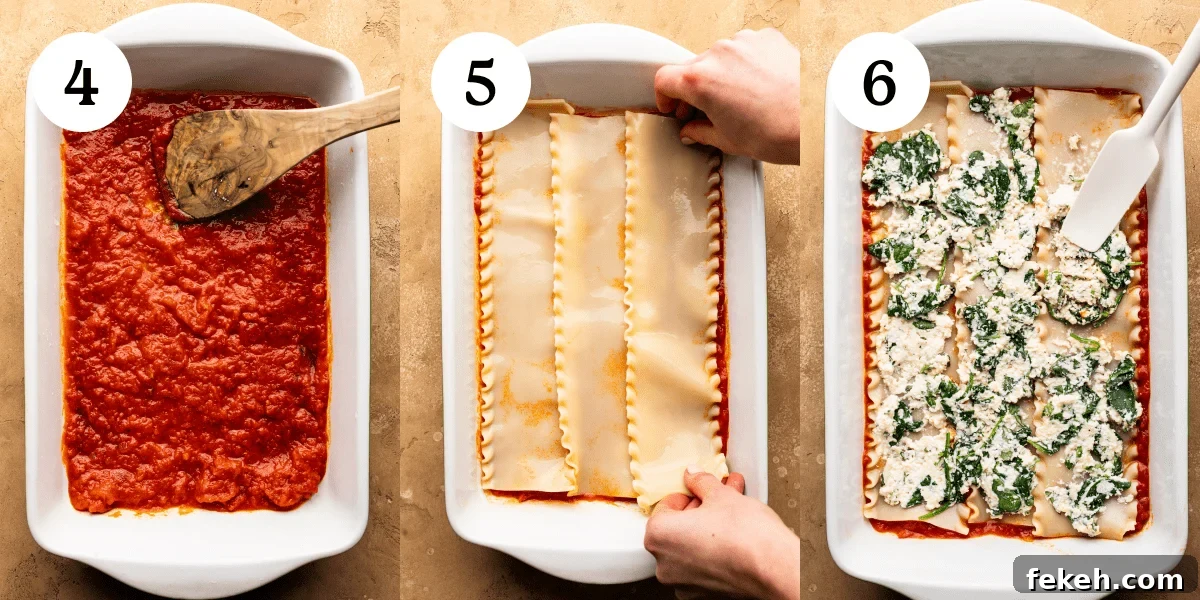
- Spread sauce on the bottom. In a 9×13-inch baking dish, spread a generous layer of marinara to cover the bottom.
- Layer the noodles. Place a single layer of noodles over the sauce. Trim noodles to fit if necessary.
- Add the ricotta filling. Spread about one-third of the ricotta-spinach mixture over the noodles.
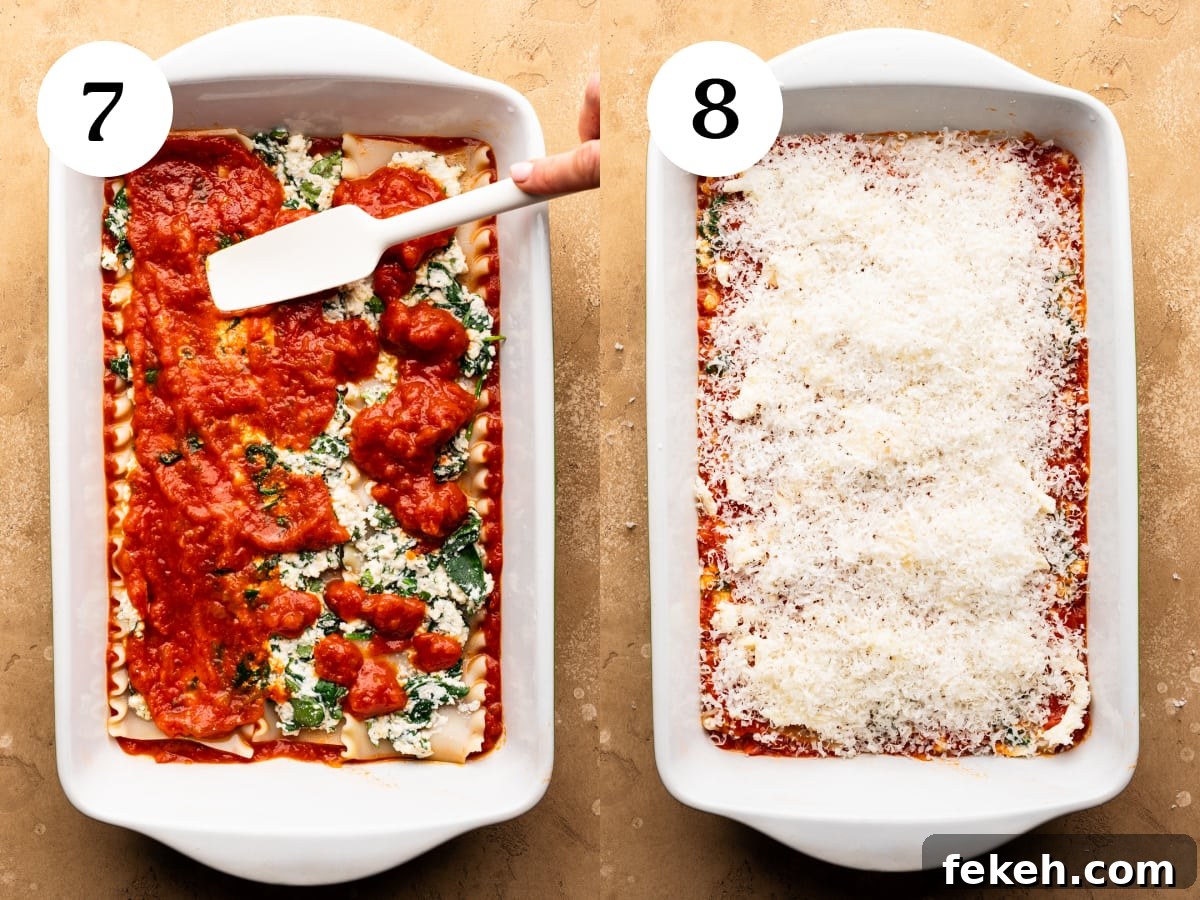
- Add more sauce. Spoon a thin layer of sauce over the ricotta layer.
- Sprinkle with cheese. Add a layer of shredded mozzarella and a sprinkle of Parmesan. Repeat the noodle, ricotta, sauce, and cheese layers to make three complete layers. Finish with a top layer of sauce and the remaining mozzarella and Parmesan.
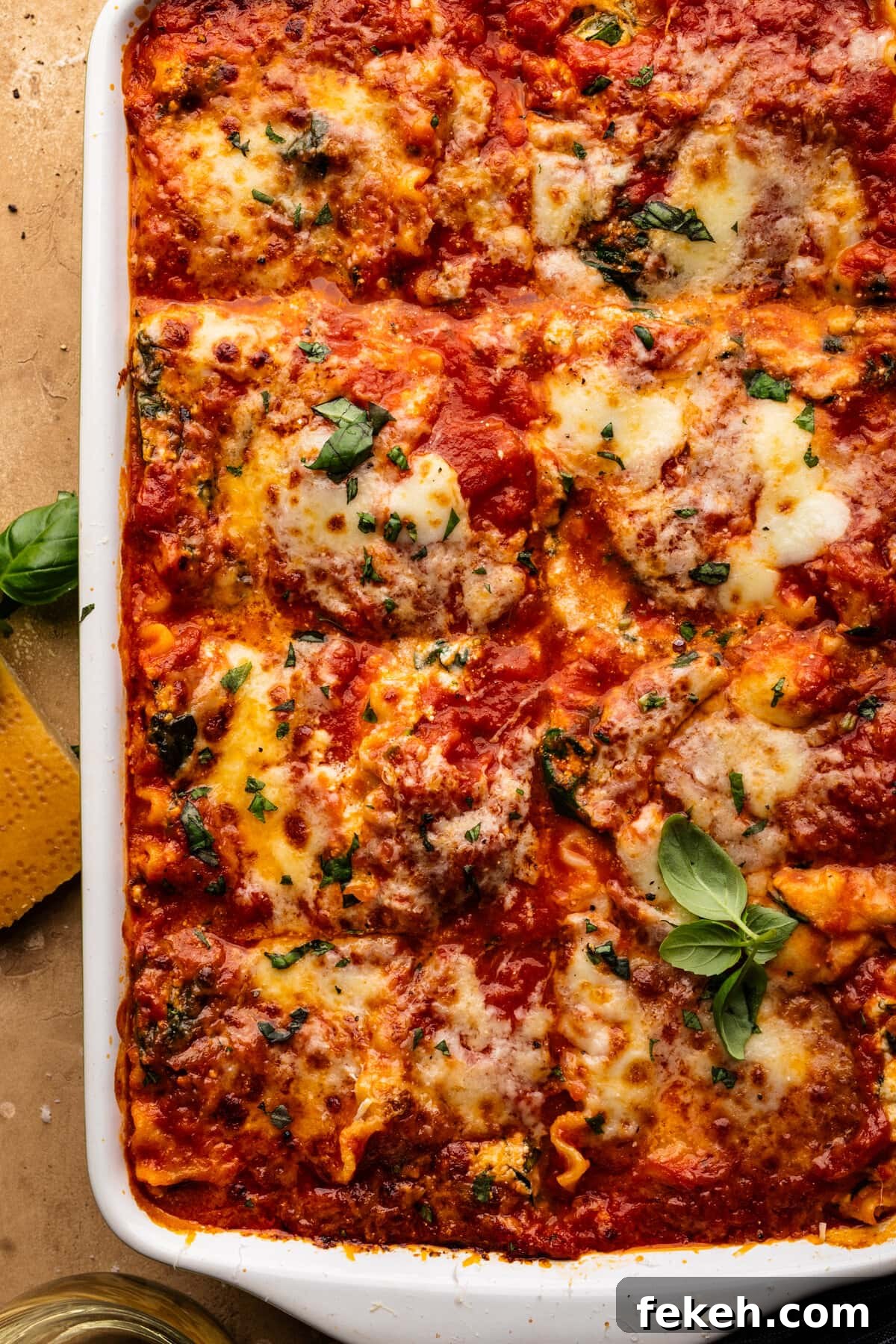
- Bake. Cover the dish with foil and bake at 375°F for 20 minutes. Remove foil and bake another 20 minutes until bubbly. Optionally broil for 30–60 seconds to brown the top. Let rest 8–10 minutes before slicing into nine pieces.
Special Lasagna Tips
Keep cooked noodles in cold water to prevent sticking. Drain and submerge cooked noodles in cold water if you won’t use them right away.
Use freshly shredded cheese. Freshly shredded mozzarella and Parmesan melt better and produce a creamier texture than pre-shredded varieties that include anti-caking agents.
Oven-ready noodles save time. No-boil noodles can be layered directly from the box, but they must be completely covered with sauce and tightly sealed with foil so they soften while baking.
Prefer fresh herbs. Fresh basil and oregano provide brighter, more authentic flavor than dried herbs.
Strain watery ricotta. If your ricotta is watery, drain it through a fine-mesh strainer to avoid a soggy lasagna.
Recipe variations. Add cooked ground beef, turkey, chicken, or Italian sausage for a meat version. For extra vegetables, include roasted peppers, mushrooms, carrots, or cauliflower.
Frequently Asked Questions
Can I make it gluten-free? Yes — substitute gluten-free lasagna noodles for regular ones.
What size dish is best? A 9×13-inch baking dish with 2–3 inches of depth works well for a three-layer lasagna.
Can I use frozen spinach? Yes. Thaw and squeeze out excess moisture before mixing it into the ricotta filling.
Can I make it ahead? Yes. Assemble and refrigerate up to 6–8 hours before baking.
How do I fix a watery lasagna? If it’s watery after baking, remove any cover and bake uncovered another 10–15 minutes to evaporate excess moisture.
Freezing & Reheating
Freezing: You can freeze lasagna assembled and unbaked (wrapped in plastic and foil) or fully baked and cooled. Store for up to 1–2 months.
Reheating: Thaw in the refrigerator before baking. Unbaked frozen lasagna should be baked as directed. For baked lasagna, reheat covered at 375°F until warmed through (about 20 minutes), uncovering near the end to refresh the top if needed.
What to Serve with Lasagna
Salad: A fresh green salad complements the richness of lasagna—think mixed greens, a simple vinaigrette, or a Mediterranean-style salad.
Bread: Crusty Italian bread or sourdough is perfect for sopping up sauce.
Roasted vegetables: Roasted asparagus, broccoli, or seasonal vegetables make a great side.
Classic Spinach Lasagna Recipe Card
Classic Spinach Lasagna
Ingredients
- 1 box lasagne noodles (boil or oven-ready via notes)
- 8 cups tomato sauce/marinara
- 4 cups shredded mozzarella
- 1/4 cup grated Parmesan
- 2 teaspoons olive oil
Ricotta Spinach Filling
- 1 1/4 cup ricotta cheese
- 2/3 cup grated Parmesan
- 3 heaping cups fresh spinach (about 1 cup cooked)
- 1/2 cup fresh basil, chopped
- 1 Tablespoon fresh oregano, chopped
- 1 egg
- 3–4 garlic cloves, minced
- 1/4 teaspoon salt & 1/4 teaspoon black pepper
Instructions
- Preheat oven to 375°F.
- Boil the noodles: Cook lasagna noodles in well-salted water to al dente. Drain. If not using immediately, place in cold water to prevent sticking.
- Cook the spinach: In a skillet, heat olive oil and cook spinach in batches until wilted. Cool and drain any excess liquid.
- Make the ricotta filling: Combine ricotta, cooked spinach, Parmesan, garlic, basil, oregano, egg, salt, and pepper.
- Assemble: Spread 1½ cups sauce in a 9×13 dish. Layer noodles, one-third of the ricotta filling, sauce, and cheeses. Repeat to make three layers. Finish with sauce and remaining cheeses on top.
- Bake: Cover with foil and bake 20 minutes. Remove foil and bake 20 more minutes. Broil 30–60 seconds if desired to brown. Let rest 8–10 minutes before slicing and serving.
Notes
No-boil noodle tip: If using oven-ready noodles, ensure they are fully covered in sauce and cheese and seal the pan tightly with foil so the noodles soften during baking.
Nutrition (per slice)
Calories: 425 | Carbs: 53.9 g | Protein: 31.9 g | Fat: 9 g