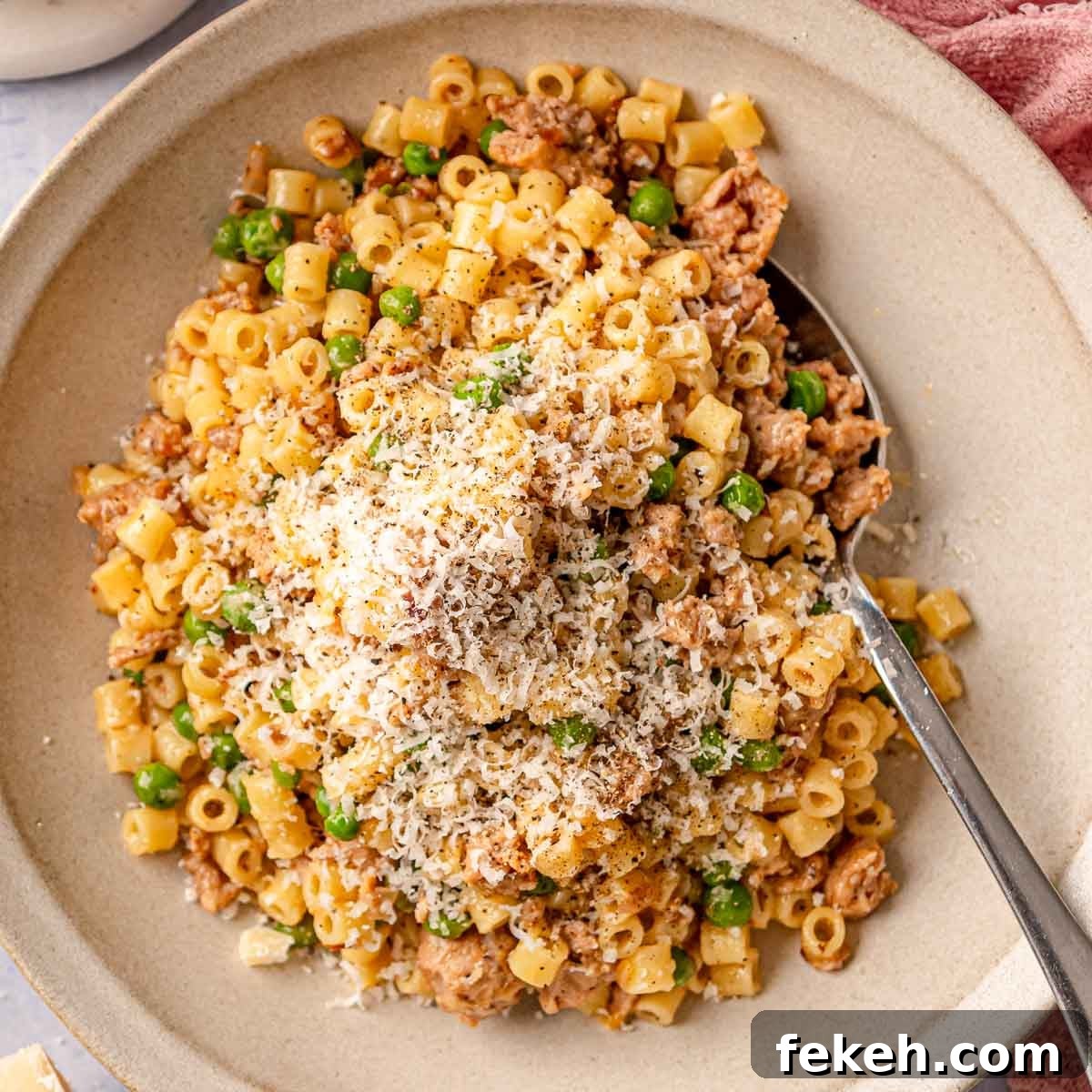
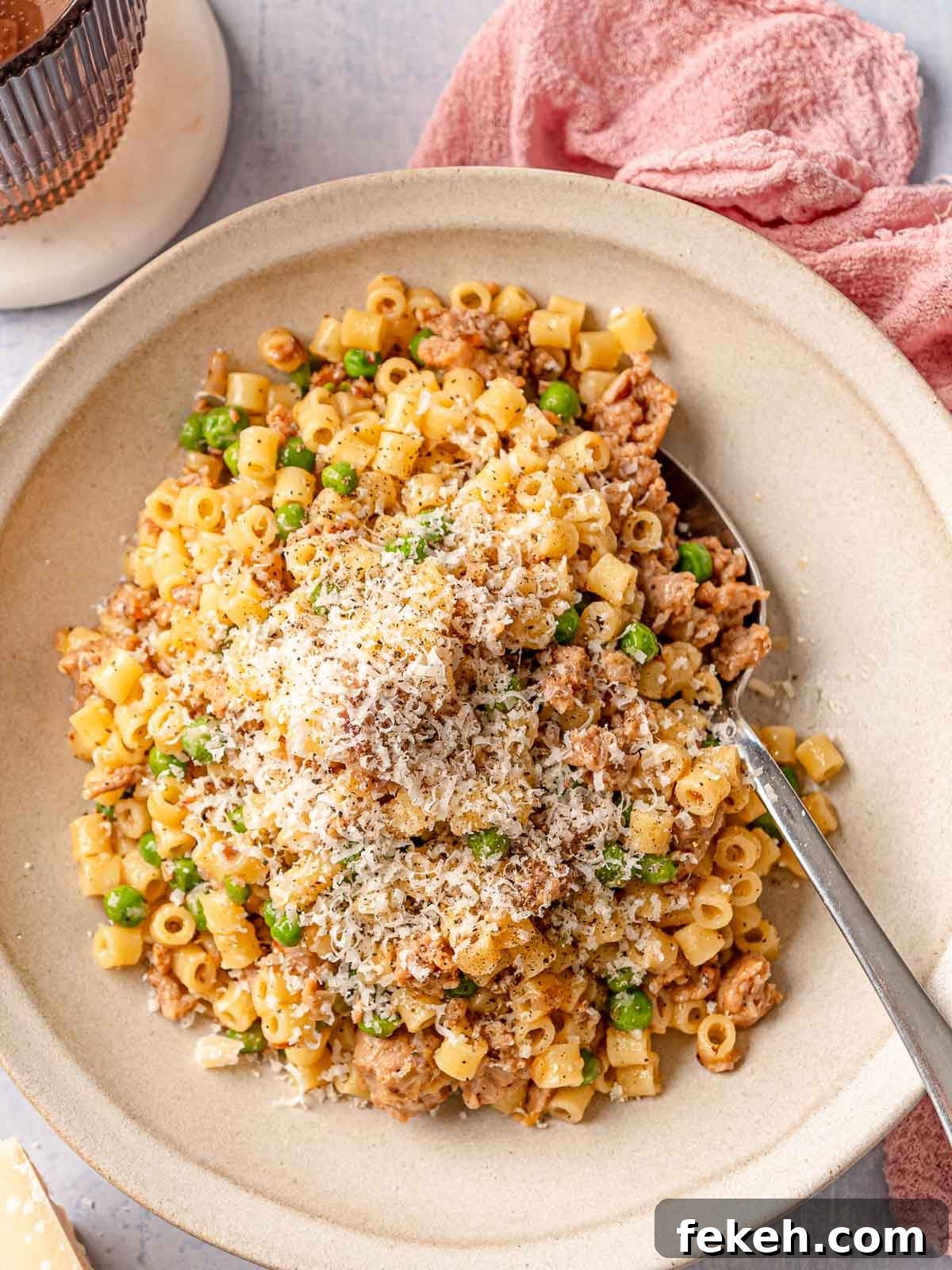
This ditalini with sausage and peas is an unfussy, flavor-packed pasta made with Italian sausage, sweet peas, and plenty of Parmesan. It comes together in one pan in roughly 30 minutes, making it ideal for a busy weeknight. The combination of buttery pasta, savory sausage, and salty cheese yields a rich, satisfying dish without the need for a heavy sauce.
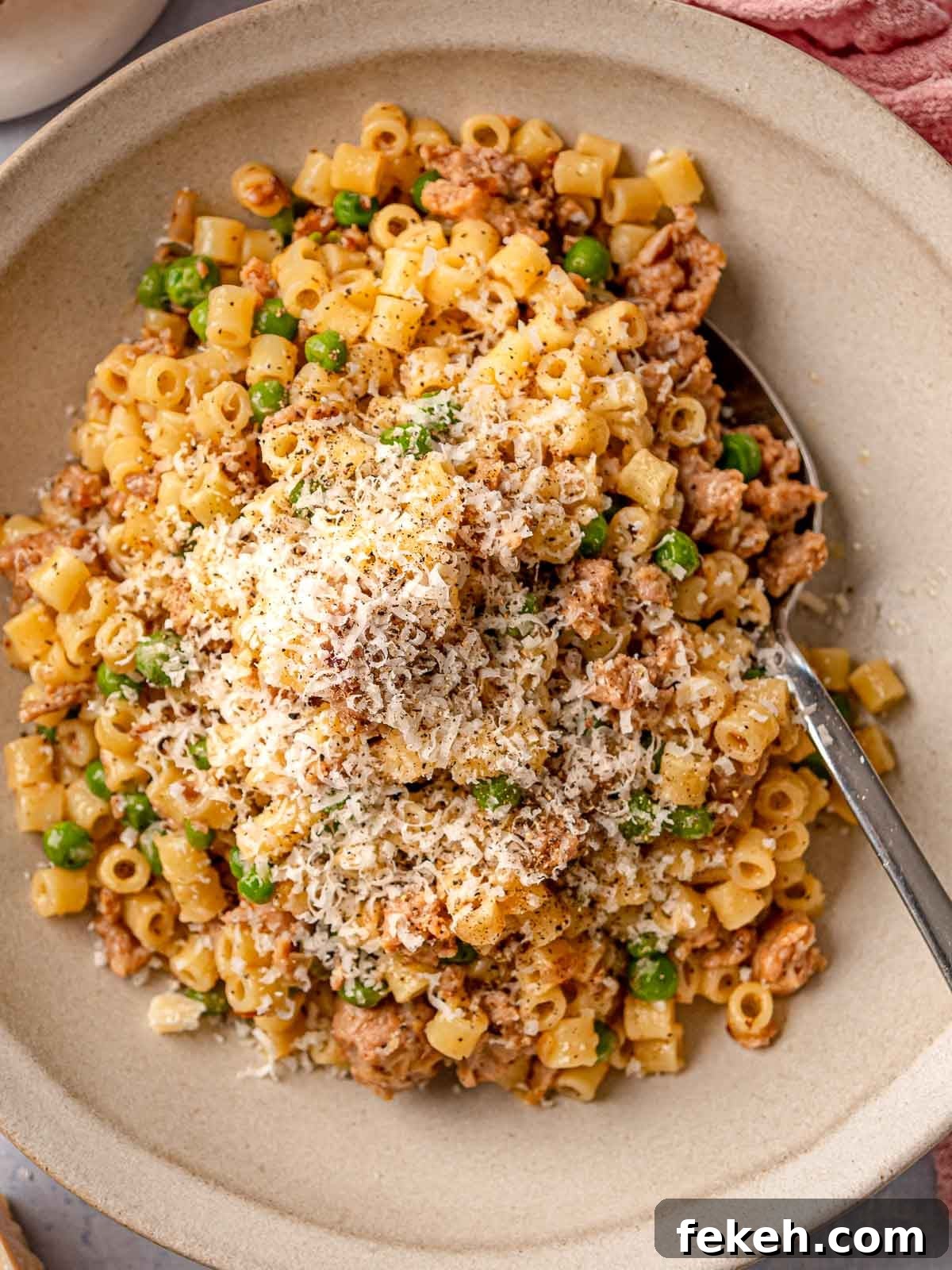
Simple, high-quality ingredients are at the heart of this recipe. The sausage creates a savory foundation while butter, garlic, and Parmesan combine with a splash of reserved pasta water to form a glossy, light sauce that clings to each piece of ditalini. The peas add a bright, sweet contrast and the whole skillet comes together quickly, delivering comforting flavor without fuss. It’s a reliable recipe I turn to when I want a satisfying dinner that’s easy to make.
Key Ingredients
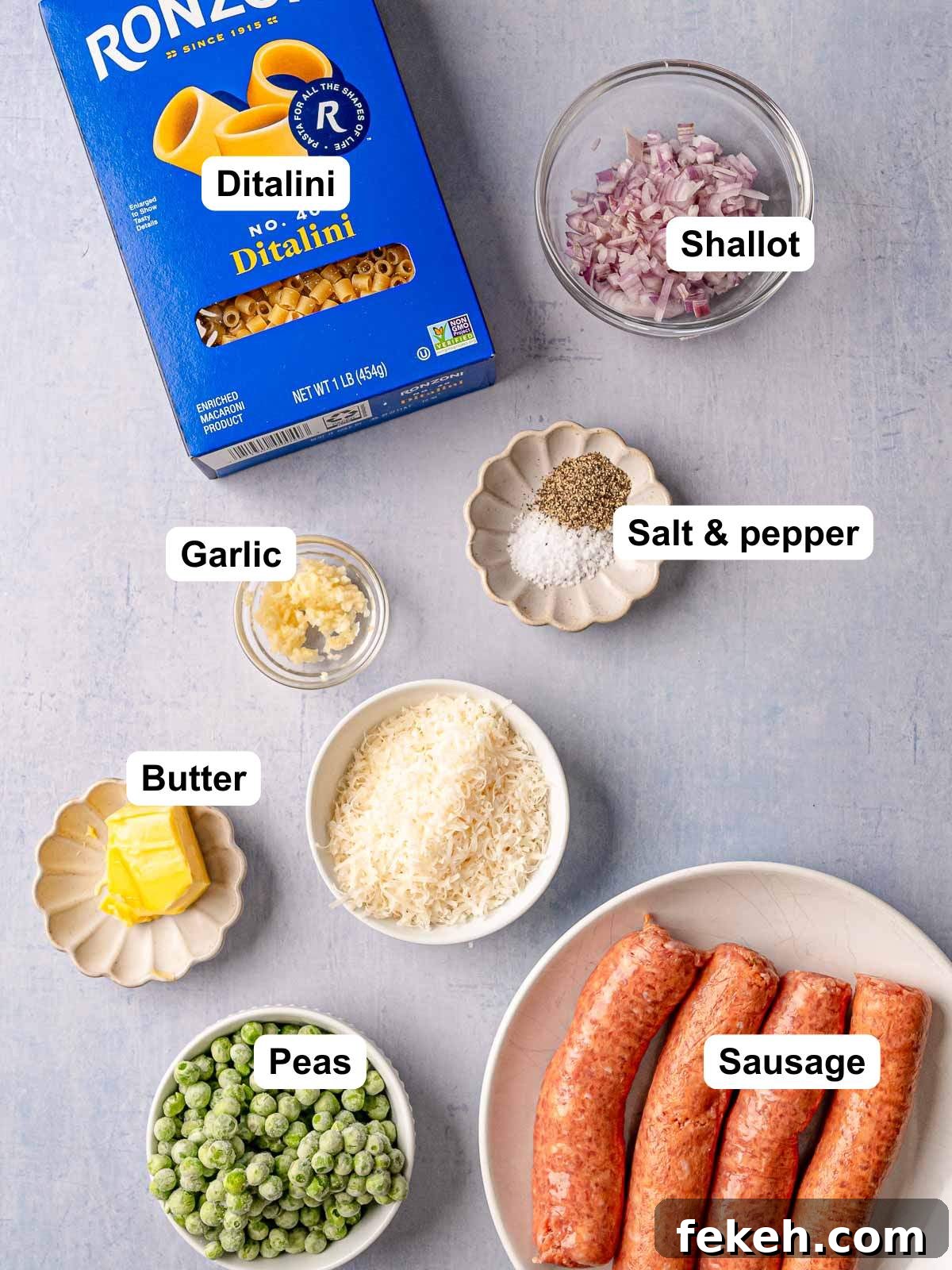
- Ditalini pasta. A small shape that captures sausage and peas in every bite.
- Italian sausage (sweet or hot). The primary flavor element; choose sweet for mildness or hot for heat. Turkey or chicken sausage work for a lighter option.
- Butter. Adds richness and helps form a glossy sauce with the pasta water.
- Shallot. Offers a gentle sweetness and subtler flavor than onion.
- Garlic. Adds aromatic depth—cook briefly so it doesn’t burn.
- Peas (frozen or fresh). Provide a sweet, fresh contrast to the sausage.
- Parmesan cheese. Melts into the dish to create a lightly creamy coating.
- Reserved pasta water. Essential for emulsifying the butter and cheese into a silky sauce.
See the recipe card below for exact quantities and the full ingredient list.
Instructions
Step 1
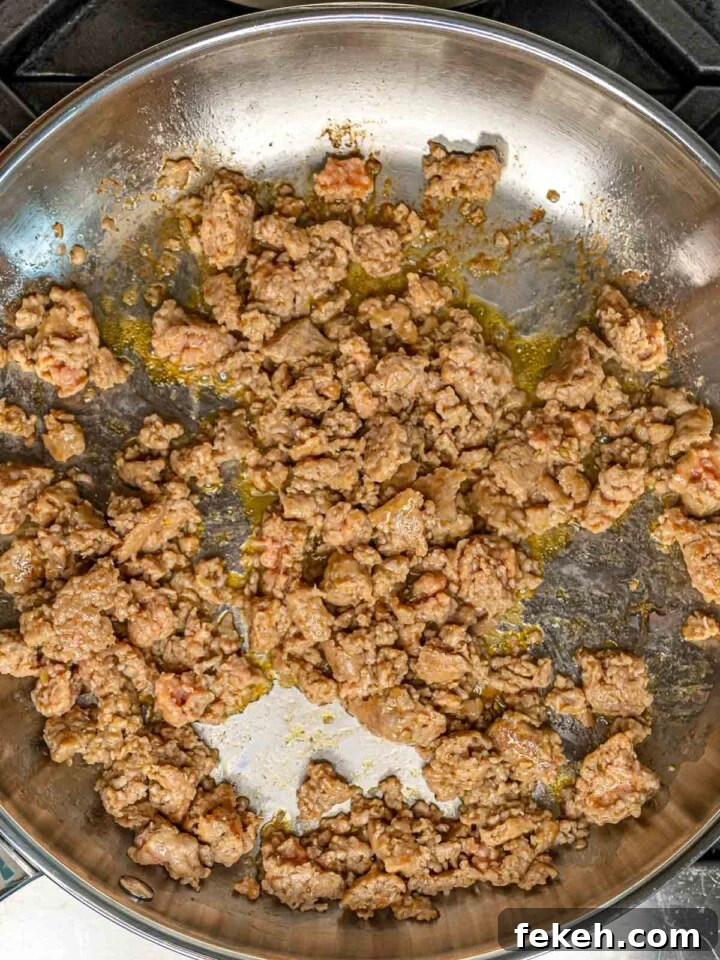
Bring a large pot of salted water to a rolling boil. Cook the ditalini until al dente. Reserve about ½ cup of the pasta water, then drain. In a large skillet over medium-high heat, melt 1 tablespoon butter and add the sausage, breaking it into small crumbles as it browns. Let the meat develop golden edges for the best flavor. When cooked through, transfer the sausage to a plate with a slotted spoon and discard most of the rendered fat, leaving a thin coating in the pan.
Step 2
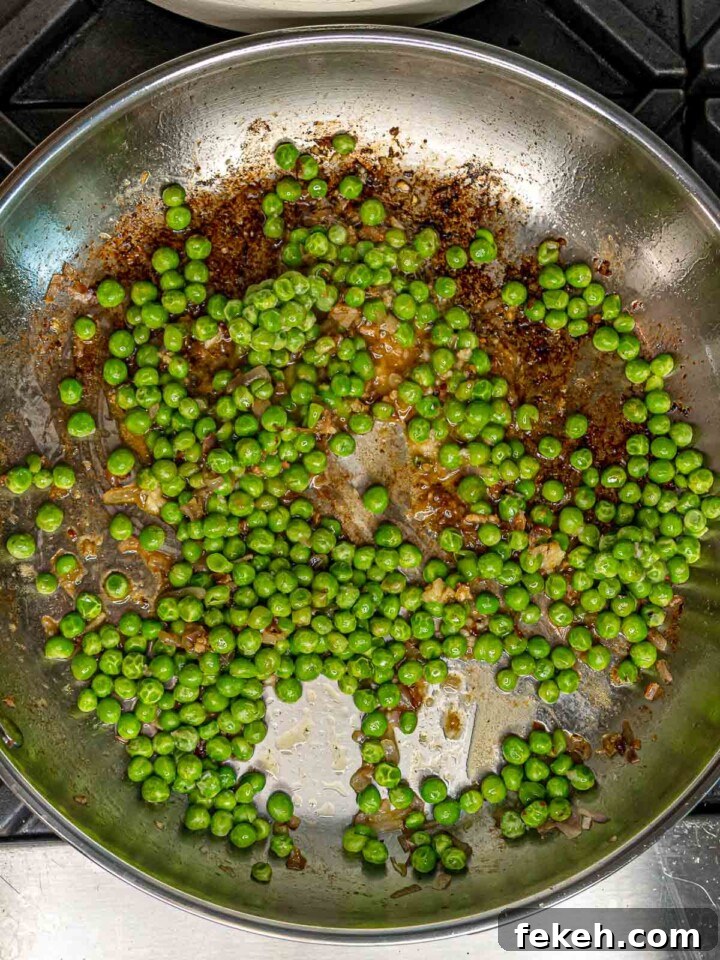
Lower the heat to medium and add another tablespoon of butter. Once melted, sauté the finely diced shallot until softened and translucent, about 2–3 minutes. Stir in minced garlic and cook just until fragrant, about 30 seconds. Add the peas and cook until warmed through and bright green.
Step 3
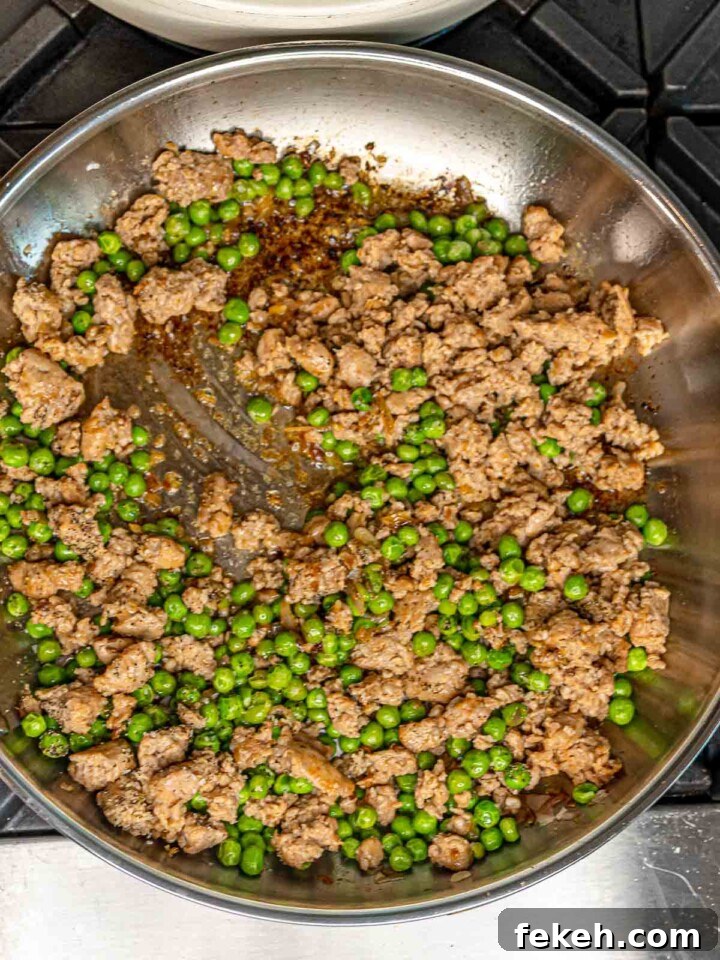
Return the cooked sausage to the skillet and toss gently to combine. Taste and season with a light sprinkle of kosher salt and freshly ground black pepper—remember the sausage and Parmesan already add saltiness.
Step 4
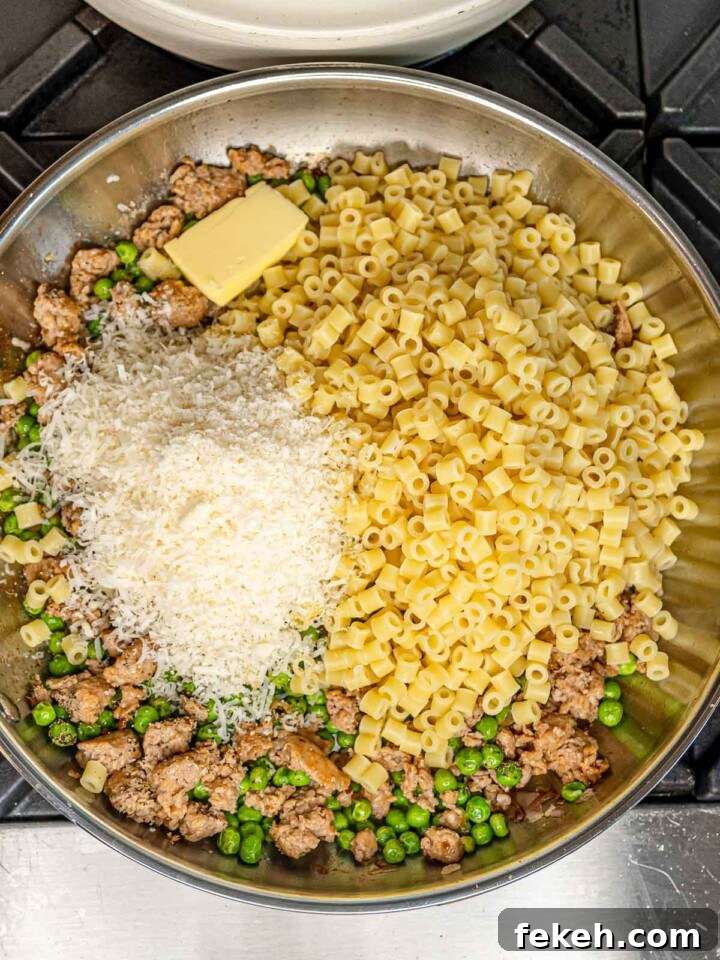
Add the drained ditalini to the skillet with the remaining butter, 1 cup grated Parmesan, and a splash of the reserved pasta water. Toss until the butter melts and the cheese begins to coat the pasta. The sauce should be glossy and cling to each piece; add more pasta water, a tablespoon at a time, if it needs loosening.
Step 5
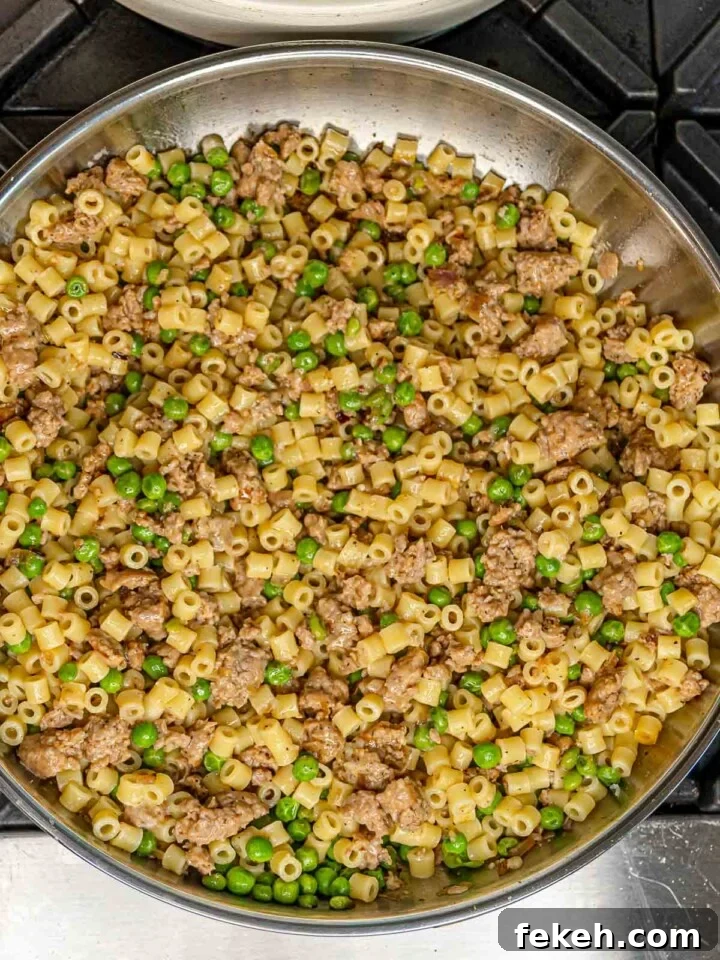
Toss everything until the sauce is silky and the cheese is well incorporated. Serve immediately with extra grated Parmesan and a grind of black pepper.
Sarah’s Top Tips
- Use pasta water to build the sauce, not dilute it. Add it gradually while tossing until you achieve a glossy, lightly creamy coating.
- Cook garlic briefly. Stop when it’s fragrant; browned garlic can taste bitter.
- Season thoughtfully. Wait until the end to add salt because the sausage and Parmesan contribute considerable saltiness.
- If the cheese clumps, finish off heat. Remove the pan from the burner and stir in a little pasta water to smooth the sauce.
Serving Suggestions
This dish works beautifully as a stand-alone weeknight dinner. Pair it with a simple arugula and spinach salad for brightness, or swap the peas for broccoli or asparagus if preferred. For an Italian-themed meal when entertaining, start with bruschetta or a light caprese-style bite to complement the pasta.
Storage & Reheating
Fridge: Prepare the sausage mixture up to 2 days ahead and store it separately. Leftovers keep well in an airtight container for 3–4 days.
Freezer: Freezing is not recommended—pasta can become mushy and the texture of the sauce may change after thawing.
Reheating: Gently rewarm on the stovetop with a splash of water or broth, stirring frequently until the sauce loosens and becomes glossy again.
Did you make this recipe? Leave a rating and a comment below — I’d love to hear how it turned out. Thank you!
Tap stars to rate!
Ditalini with Sausage & Peas
See the full post for extra tips and photos
Ingredients
- 8 ounces ditalini pasta
- 4–5 Italian sausages, casings removed (sweet or hot)
- 3 tablespoons butter, divided
- 1 small shallot, finely diced
- 2–3 garlic cloves, minced
- 1½ cups frozen or fresh peas
- Kosher salt, to taste
- Freshly ground black pepper, to taste
- 1 cup grated Parmesan cheese, plus more for serving
- ½ cup reserved pasta water, as needed
Instructions
-
Bring a large pot of salted water to a boil. Cook the ditalini until al dente. Reserve about ½ cup of pasta water, then drain.
-
Melt 1 tablespoon butter in a large skillet over medium-high heat. Add the sausage and cook, breaking it up, until browned and cooked through. Transfer to a plate and discard excess grease, leaving a light coating in the pan.
-
Reduce heat to medium and add another tablespoon butter. Sauté shallot until softened, about 2–3 minutes. Add garlic and cook 30 seconds until fragrant.
-
Add peas and cook 1–2 minutes until heated through. Return the sausage to the skillet and season with salt and pepper.
-
Stir in the cooked ditalini, remaining butter, Parmesan, and a splash of reserved pasta water. Toss until glossy and coated, adding more pasta water if needed.
-
Serve immediately with extra Parmesan and freshly cracked black pepper.
Sarah’s Tips
- Pasta swaps: Small shells, elbow pasta, or orzo work well—choose a small shape that captures the sausage and peas.
- Sausage options: Turkey or chicken sausage lighten the dish; because they’re leaner, you may want a touch more butter or pasta water for silkiness.
- Shallot substitute: ¼ of a small yellow onion is fine if you don’t have a shallot, though the flavor will be slightly stronger.
- Add red pepper flakes for heat or finish with a squeeze of lemon to brighten the flavors.
- Swap Parmesan for Pecorino Romano for a sharper, saltier finish, or stir in fresh herbs like parsley or basil at the end.
Tools I Use for This Recipe
- Large pot or Dutch oven
Jump to the comments to leave a review or tap the stars above!