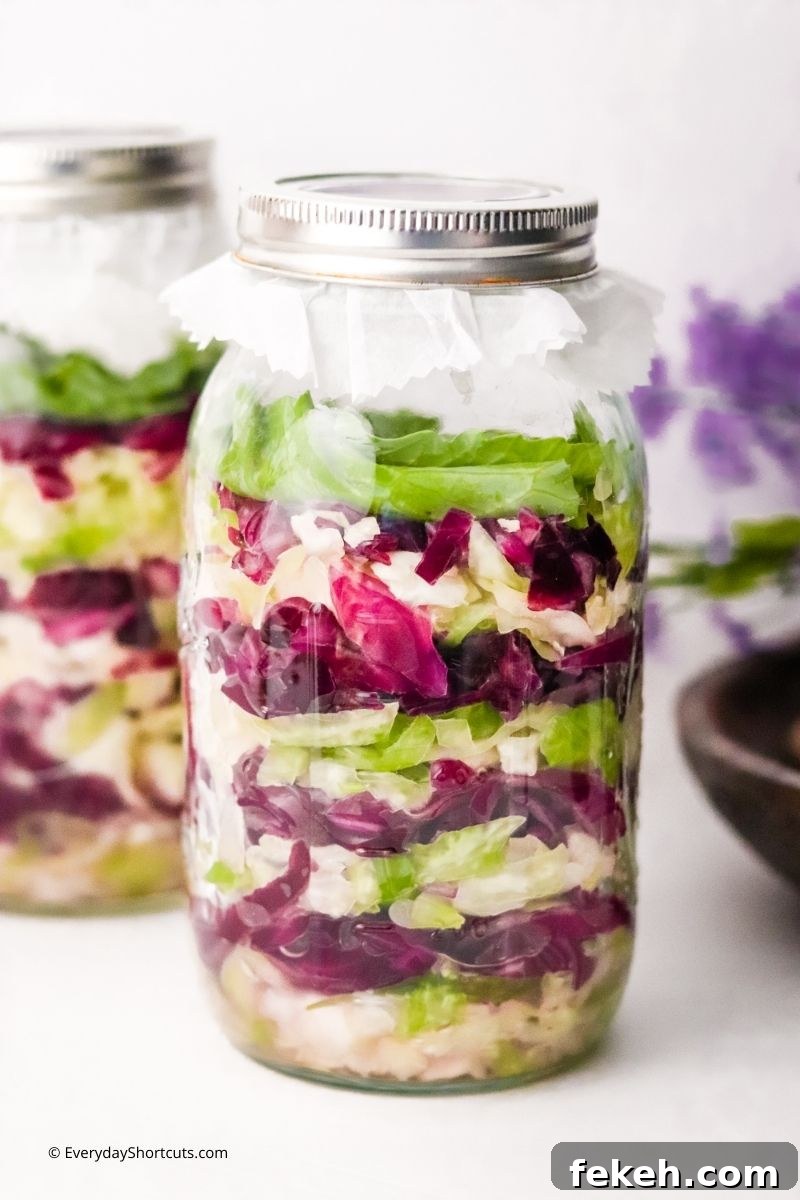
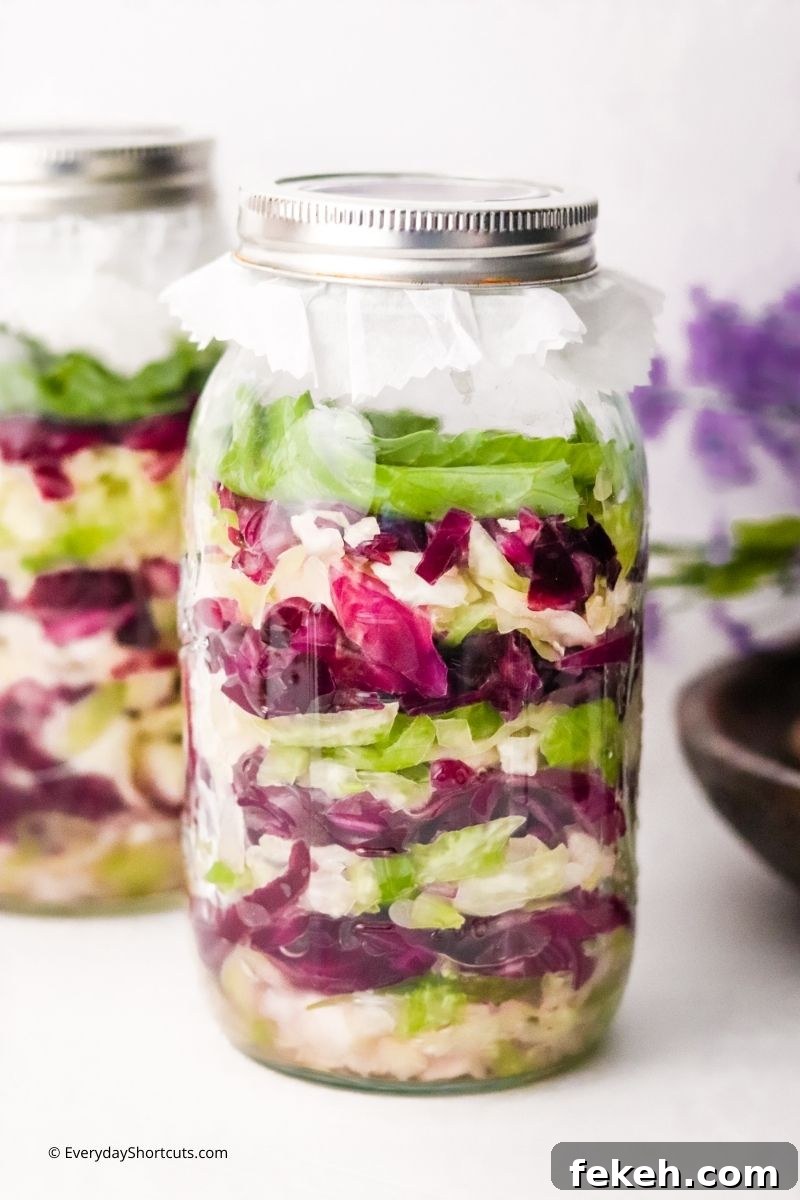
Making your own garlic sauerkraut at home is simple and rewarding. With minimal hands-on time, this crunchy, tangy ferment will develop over 3–5 weeks. Leave the jars on the counter during fermentation and watch the flavors deepen and mellow.
Easy Garlic Sauerkraut
This batch fills two quart jars. You can double the recipe if you want more; once fully fermented the sauerkraut will keep in the refrigerator for up to six months.
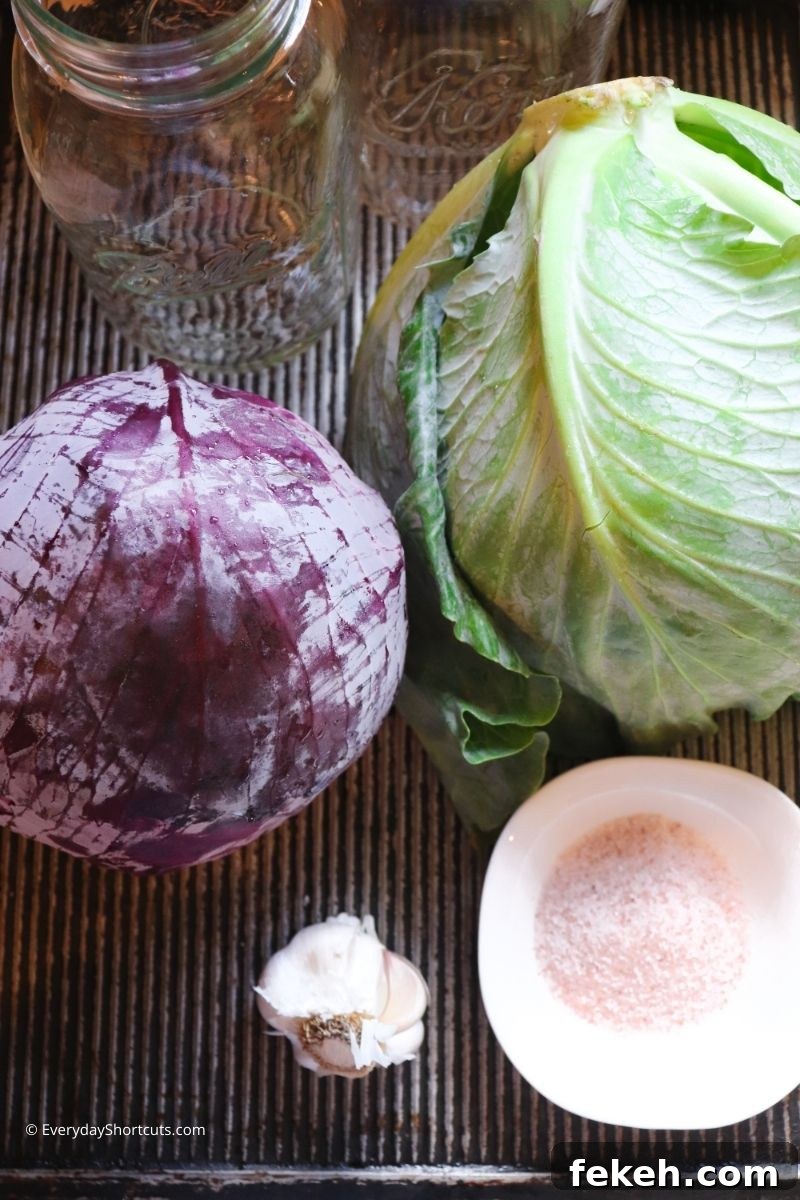
Garlic Sauerkraut Ingredients
4 lbs cabbage (about ½ large green cabbage and ½ large red cabbage)
2 cloves garlic
fine sea salt (see notes)
water — well, spring, or reverse osmosis preferred. If using city tap water, let it sit uncovered in a jar overnight to dissipate chlorine.
Supplies Needed
parchment paper
2 medium bowls
2 quart jars with rings
labels for identifying jars
How to Make Garlic Sauerkraut
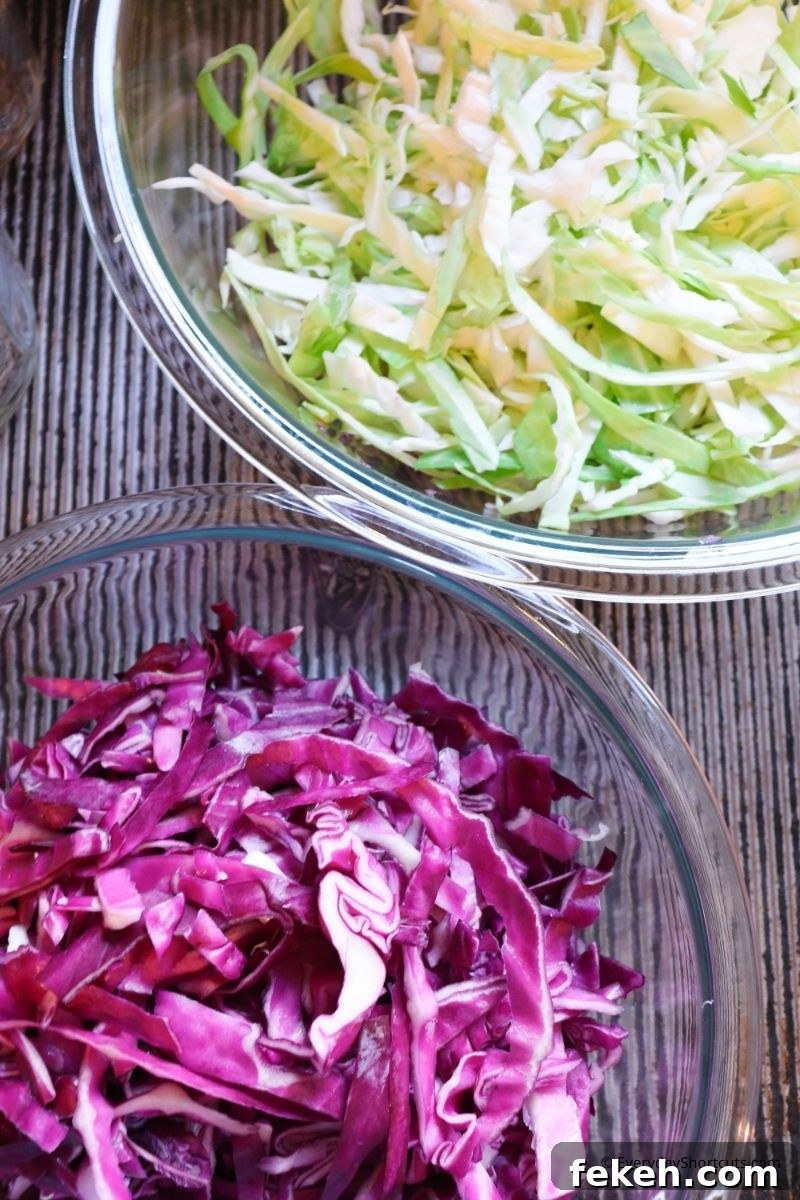
Remove the outer leaves from the cabbages and reserve two large green leaves. Rinse the cabbages, then slice and chop them. If you like a mix of textures, leave some longer strands. Place the red and green cabbage into separate bowls.
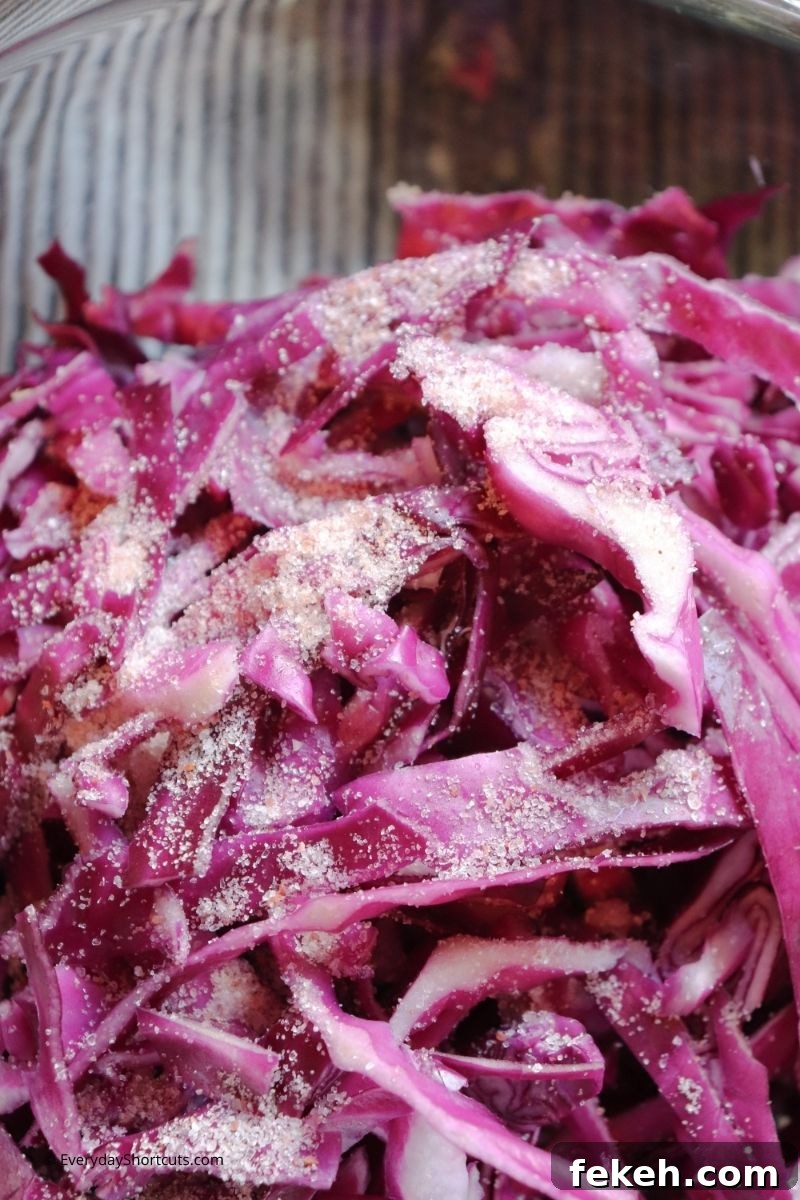
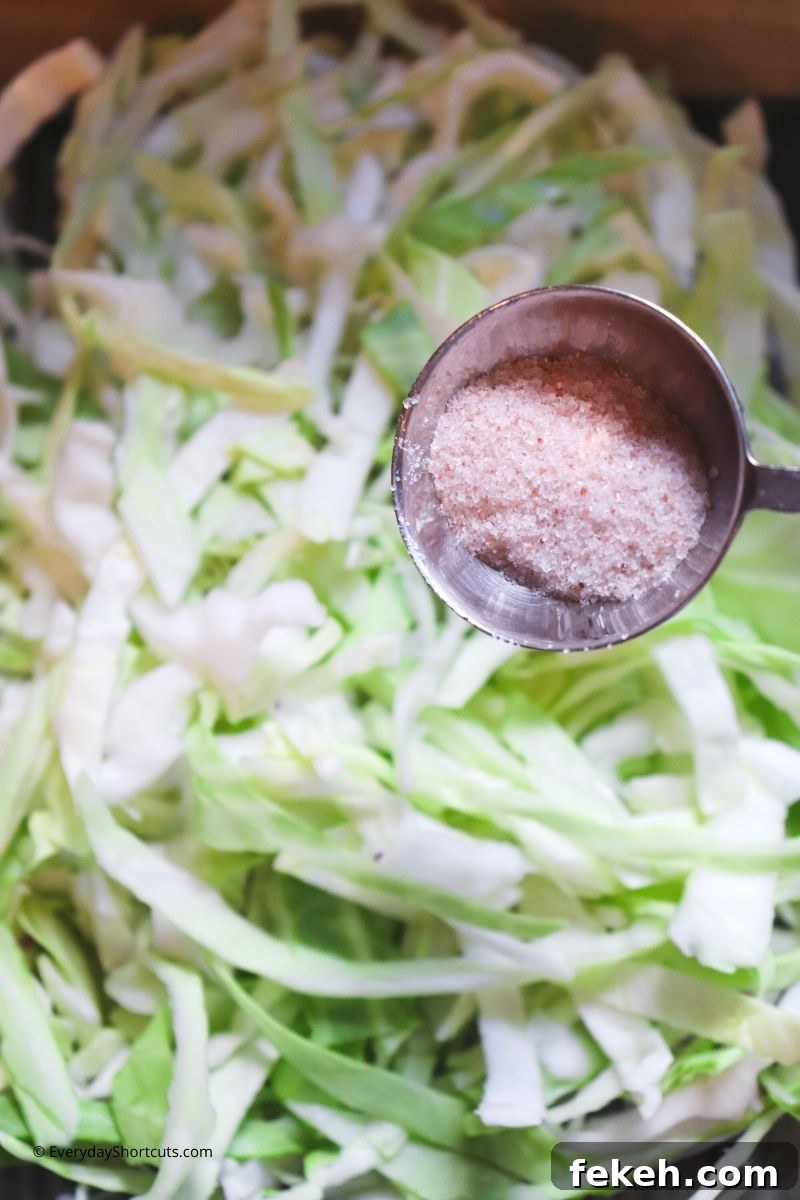
Sprinkle 1 ½ tablespoons of fine sea salt over each bowl of cabbage. Massage the salt into the cabbage by hand or with a pickle packer, squeezing firmly to help release the juices. Continue working the cabbage for several minutes until you see liquid beginning to collect.
Cover the bowls with a kitchen towel and let them rest for two hours to draw out more brine.
Taste a small amount of cabbage and adjust seasoning if needed, adding about ½ teaspoon of salt at a time until it suits your taste.
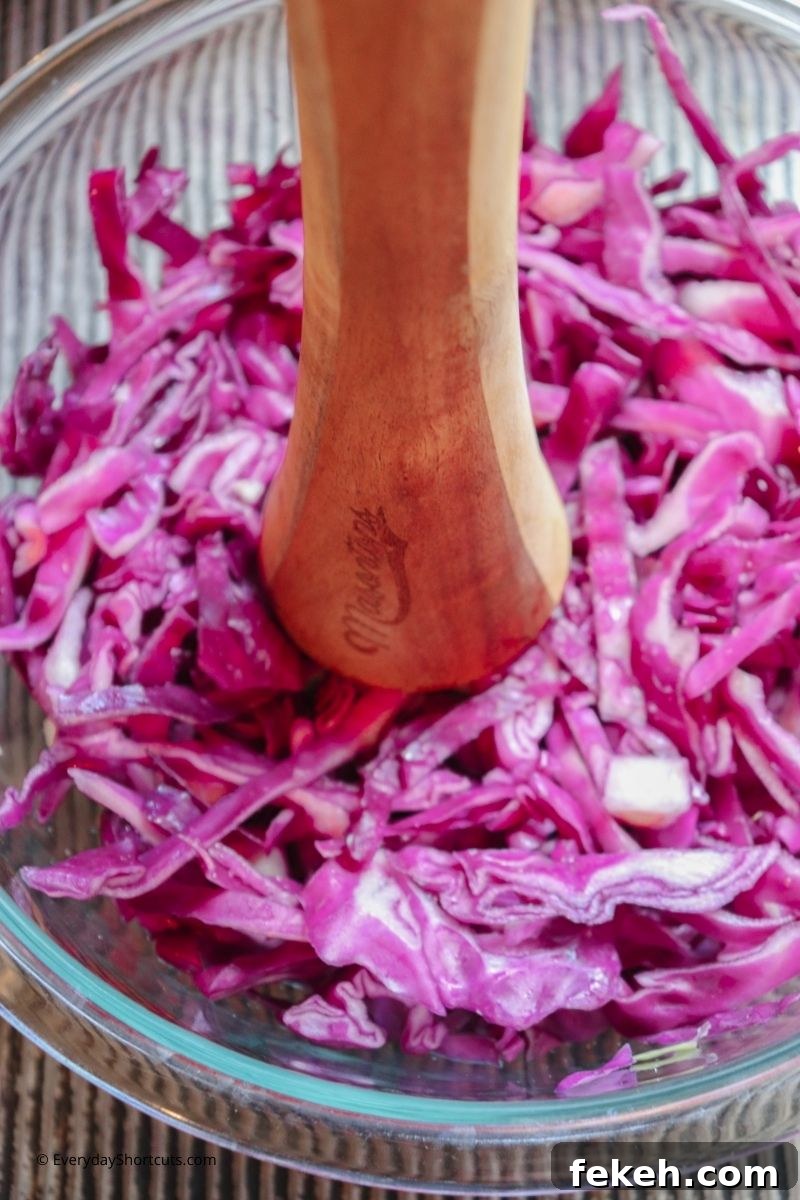
Chop the garlic and add one clove to each bowl, mixing thoroughly. Work the garlic into the cabbage so its flavor distributes evenly. You should notice more brine collecting in the bottom of the bowls.
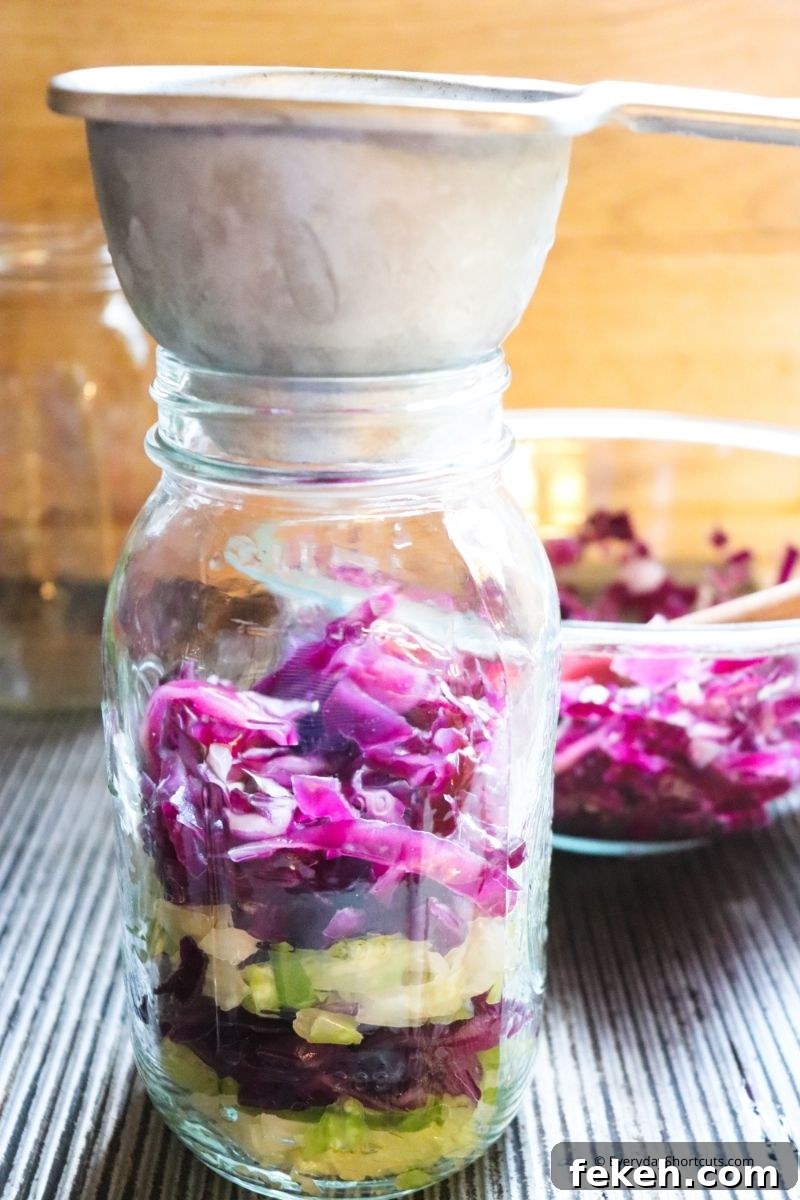
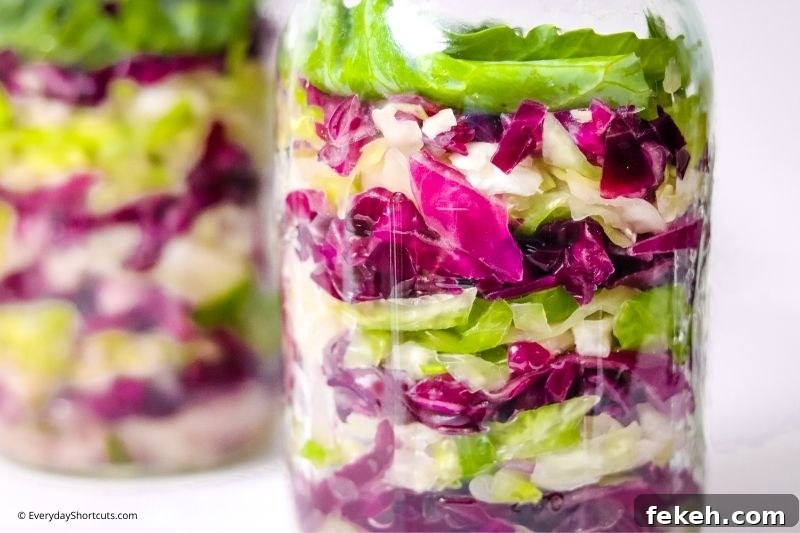
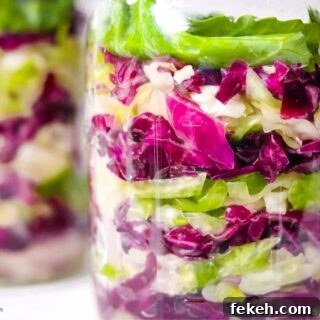
Layer the cabbage into each jar, alternating colors for a pretty presentation. A canning funnel makes filling easier. Use a pickle packer or spatula to press and pack the cabbage down firmly so the brine rises and covers the vegetables.
Pour any remaining brine from the bowls into the jars.
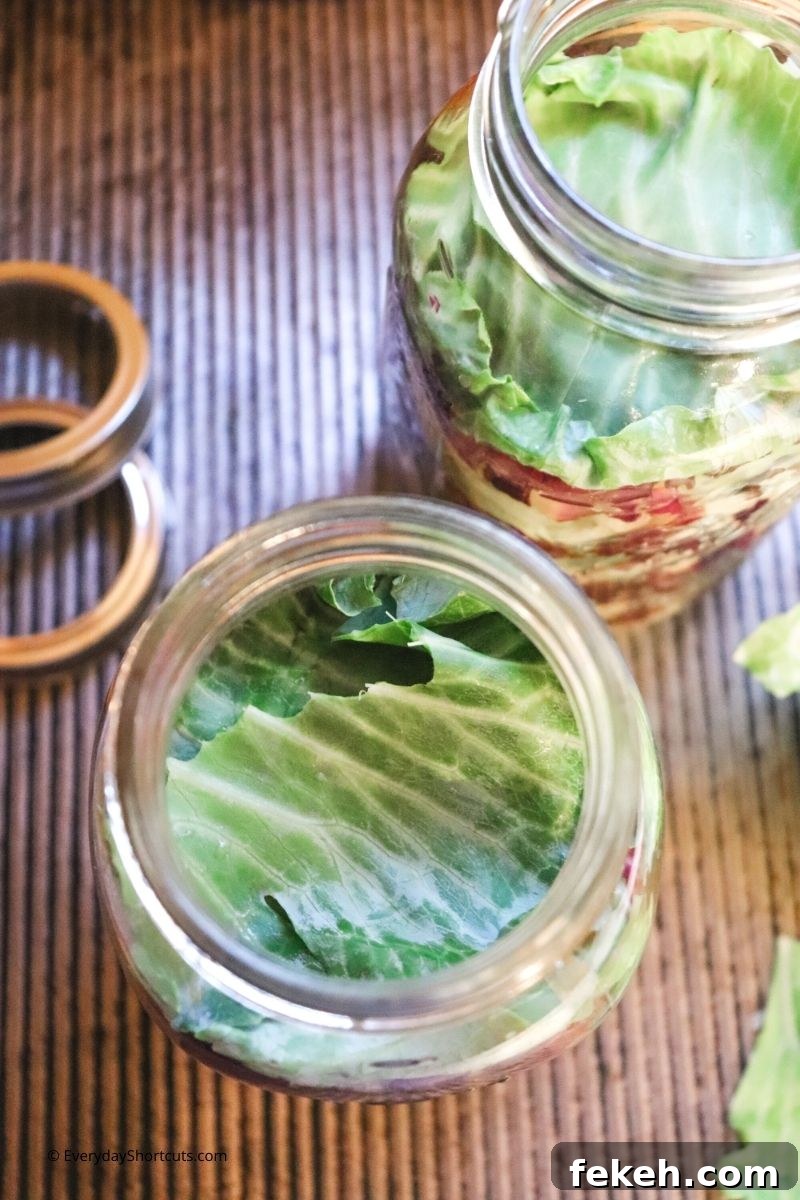
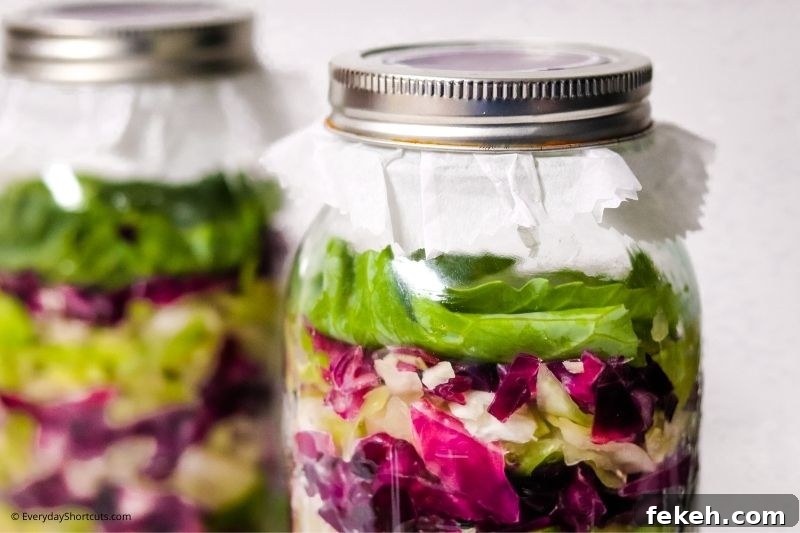
After the jars are packed, top each jar with one of the reserved cabbage leaves, tearing and folding it so it fully covers the shredded cabbage. The leaf acts as a barrier to help keep the shreds submerged.
Place a weight — a clean stone, a fermentation weight, or a “pickle pebble” — on top of the leaf to keep the cabbage below the brine and reduce the risk of mold.
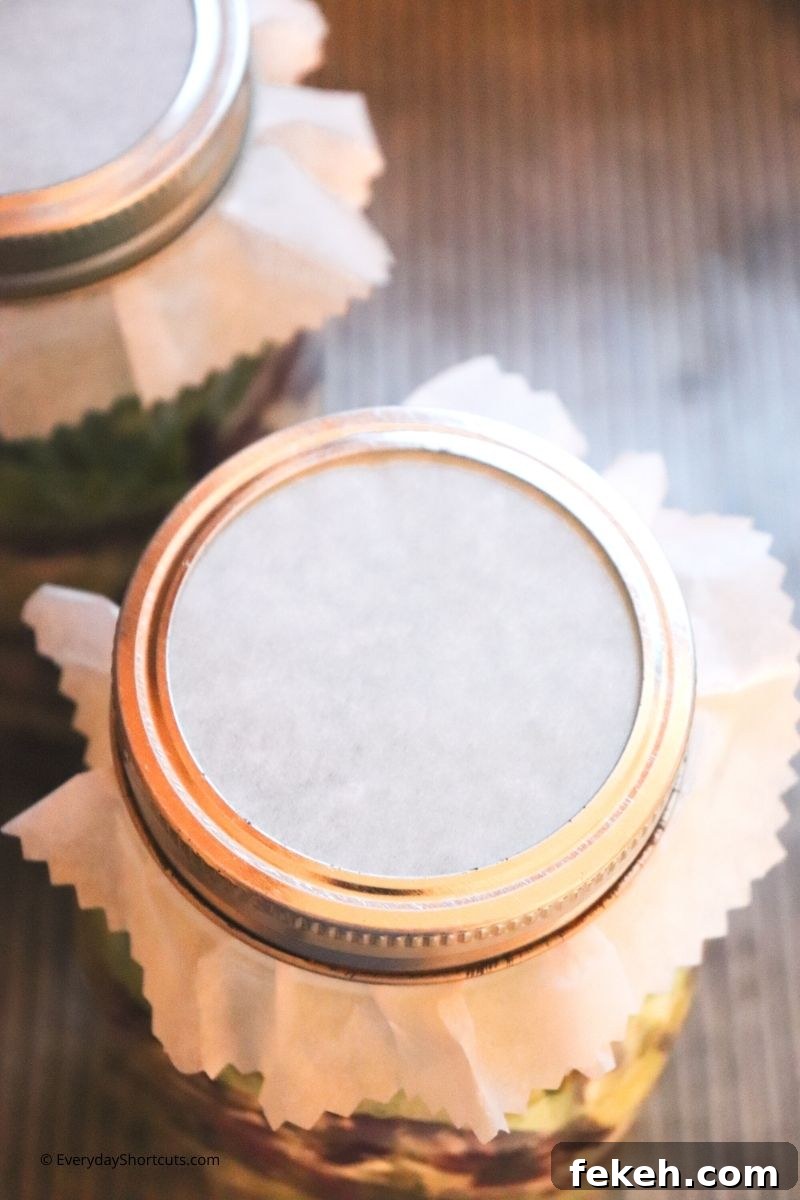
Cut circles of parchment paper about 6 inches across and place them over the jar mouths. Screw the jar ring on loosely so gases can escape during fermentation while keeping out dust.
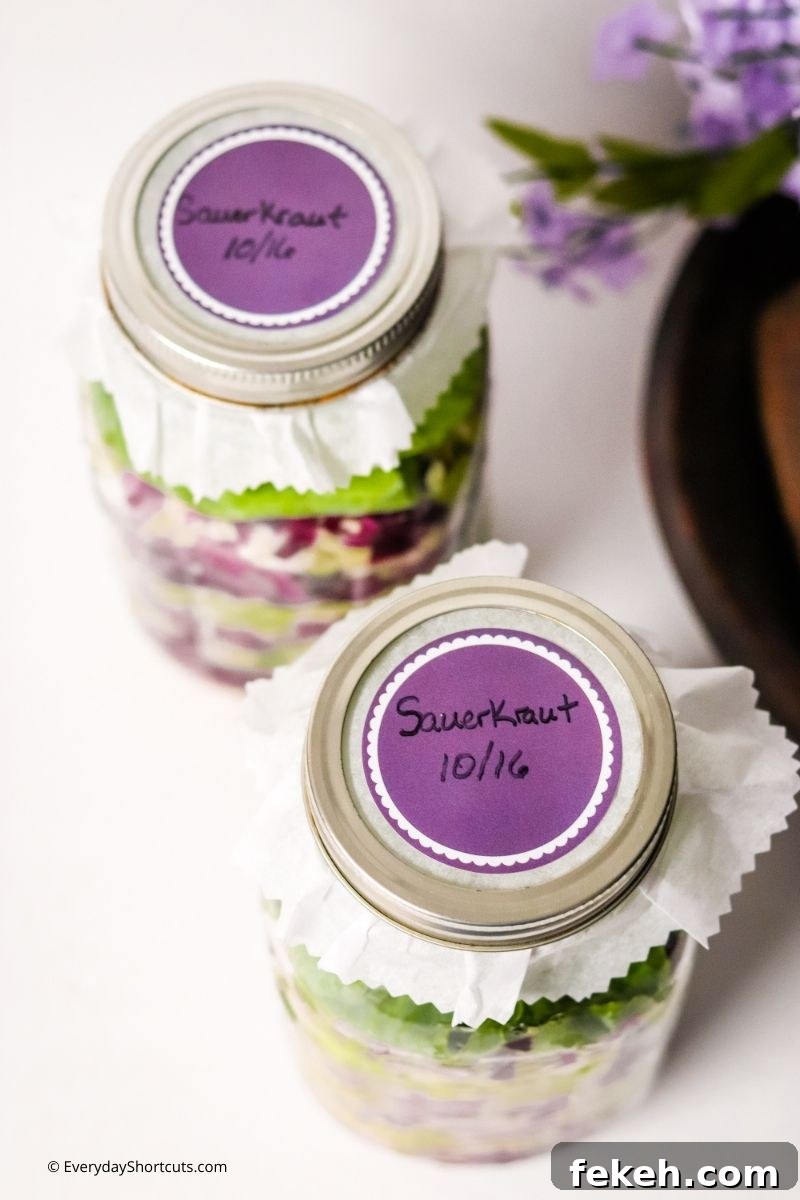
Label each jar with the contents, ingredients, and date so you can track fermentation progress.
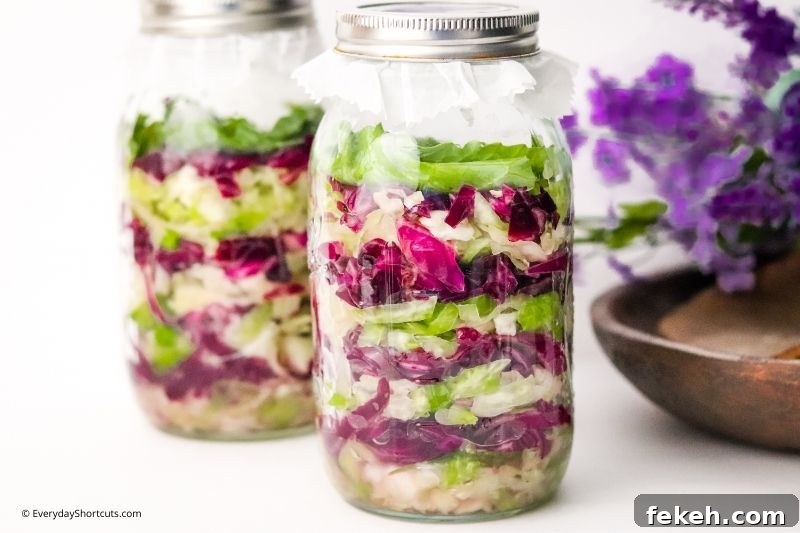
Store the jars on the counter in a spot that stays around 60–70°F (15–21°C). Check them every few days: open and smell, taste a little, and look for extra brine. If you see any surface mold, skim it away promptly. As the brine rises, press the cabbage down to keep it submerged.
Salt notes: Use fine sea salt or Himalayan salt for best fermentation results. Avoid iodized or anti-caking salts, which can interfere with the ferment.
Storing ferments: Keep your ferments in a cool, stable area between 60–70°F. The countertop is fine; avoid damp basements where mold spores and excess humidity can be a problem. Once the sauerkraut reaches the flavor and acidity you like (usually 3–5 weeks), move it to the refrigerator to slow fermentation and preserve the flavor.
Recipe
Red and Green Garlic Sauerkraut Recipe
EverydayShortcuts.com
Ingredients
- 4 lbs cabbage ½ large green and ½ large red
- 2 cloves garlic
- fine sea salt
- water well, spring, or reverse osmosis preferred; let city water sit overnight if needed
Supplies Needed
- parchment paper
- 2 medium bowls
- 2 quart jars with rings
- labels
Instructions
-
Peel and reserve two large outer green leaves, then wash and chop the cabbages. Separate red and green into two bowls.
-
Sprinkle 1 ½ tablespoons fine sea salt into each bowl and massage thoroughly until liquid appears.
-
Cover and let the cabbage sit for two hours to draw out brine.
-
Taste and adjust salt in ½ teaspoon increments if needed.
-
Add one chopped garlic clove to each bowl and mix well so the garlic is evenly distributed.
-
Layer the cabbage into jars, alternating colors. Press down to pack and pour any remaining brine into the jars.
-
Top with the reserved cabbage leaves, place a weight on top, and cover with parchment. Secure the ring loosely.
-
Label each jar with contents and date, then store at 60–70°F on the counter.
-
Check every few days: open, smell, taste, and remove any surface mold. Press the cabbage down if brine level falls. Fermentation typically takes 3–5 weeks.
-
Salt: Use fine sea salt or Himalayan salt. Avoid iodized or anti-caking salts that can hinder fermentation.
-
Storage: Once you like the flavor, refrigerate the sauerkraut to slow fermentation and preserve it. Keep jars in a cool, dry place during the active ferment—avoid damp basements.
Nutrition Disclosure
Nutritional facts are estimates provided as a courtesy. Use your own ingredient labels or tools to calculate precise values, as ingredient choices and amounts will change the results.