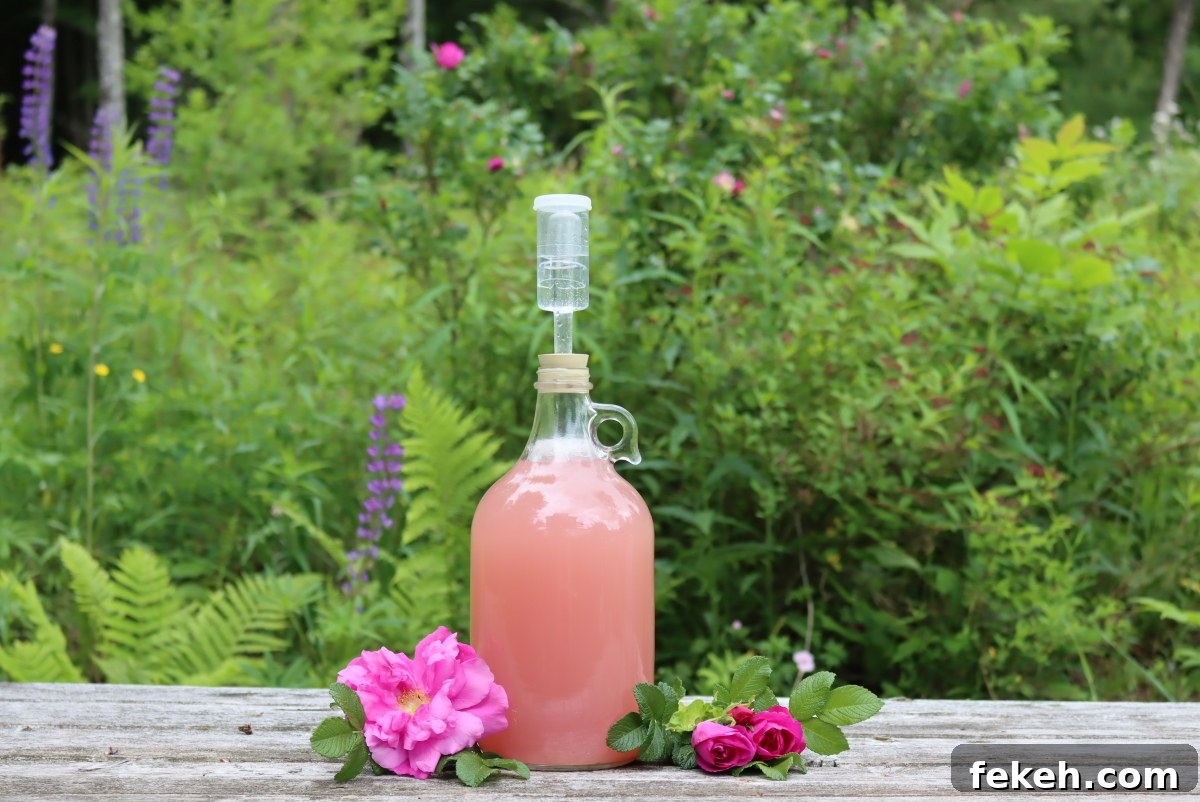
Rose petal wine captures the delicate floral aroma of fresh rose petals in a light, refreshing wine ideal for warm weather. Rose mead (rhodomel) offers a deeper, more complex character—rich and warming, a summer memory to enjoy in winter.
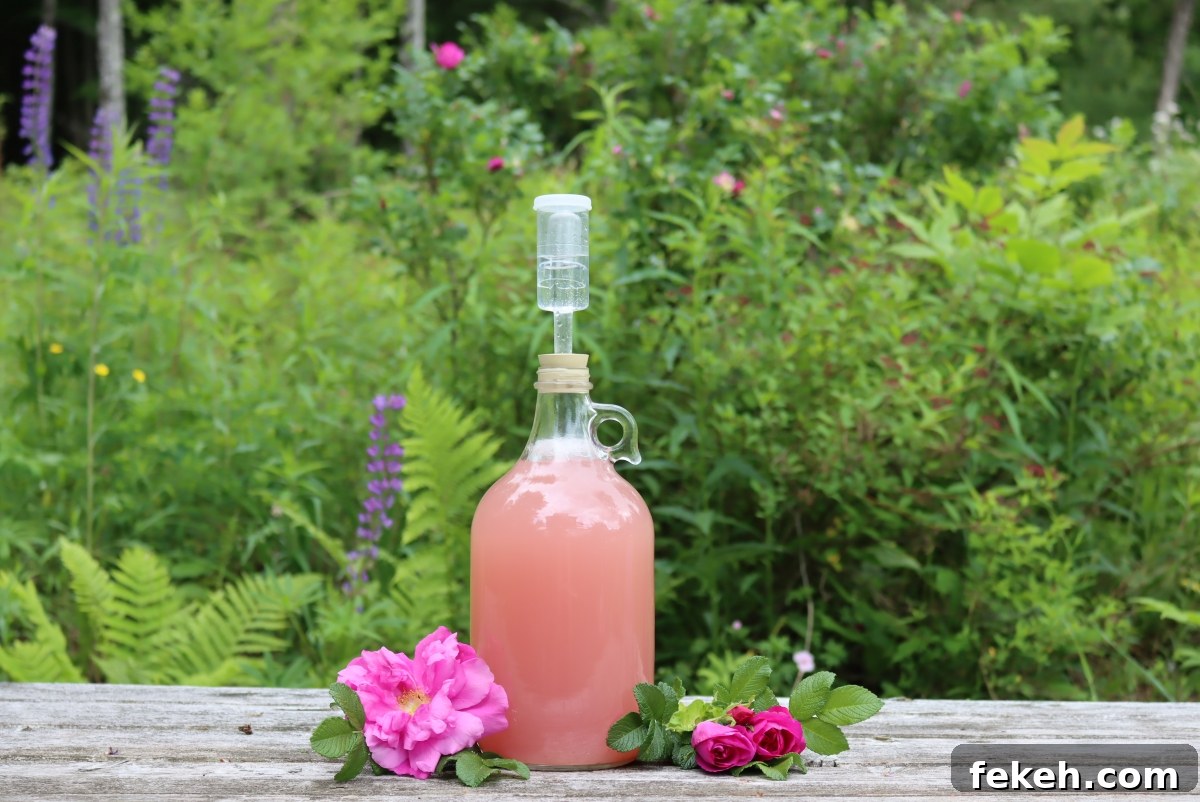
The scent of roses fills our yard each June, and every year I look for ways to preserve that fragrance. We make rose cordial and a non-alcoholic rose soda the kids adore, and occasionally I can a batch of rose jelly to join our collection of floral jellies. This year I wanted something more mature: beverages that bring me back to bright, warm days even when winter is deep.
I made both a rose petal wine and a rose mead this season. The wine is light and pink, made with white sugar and a portion of white grape juice to add body. The mead, fermented from honey, develops a darker color and a fuller, more complex mouthfeel. Both will benefit from some aging in the cellar, and each offers distinct qualities—choose the one that suits your taste.

Rose Wine or Rose Mead (Rhodomel)
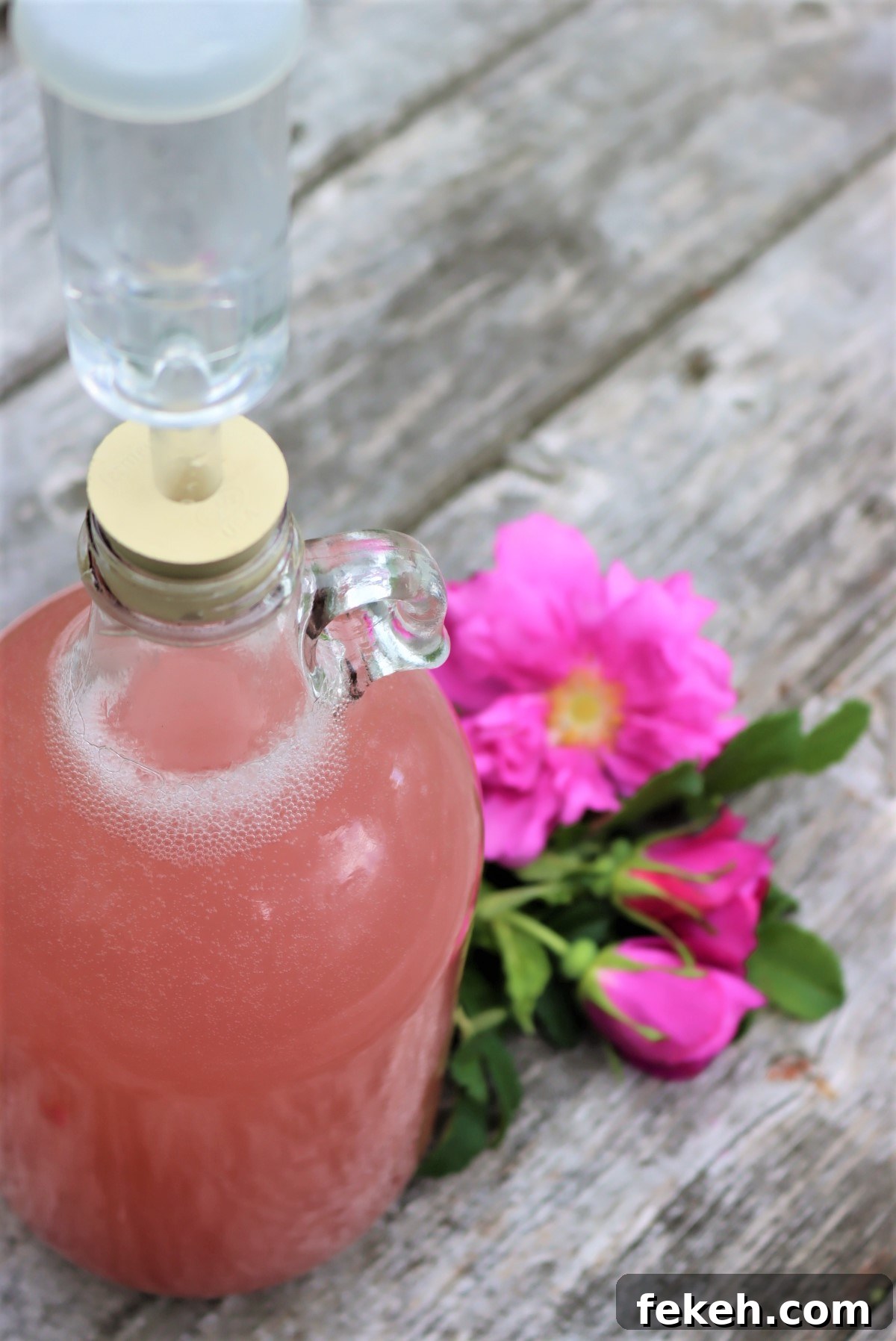
Although I have many country wine recipes, meads are my personal favorite. Mead takes longer to mature but develops a complex, full body that’s perfect for sipping in colder months. Fruit wines tend to be lighter and are best enjoyed chilled in summer. Honey is a costly ingredient, so meads are more expensive to produce, but their depth of flavor makes them worth the investment.
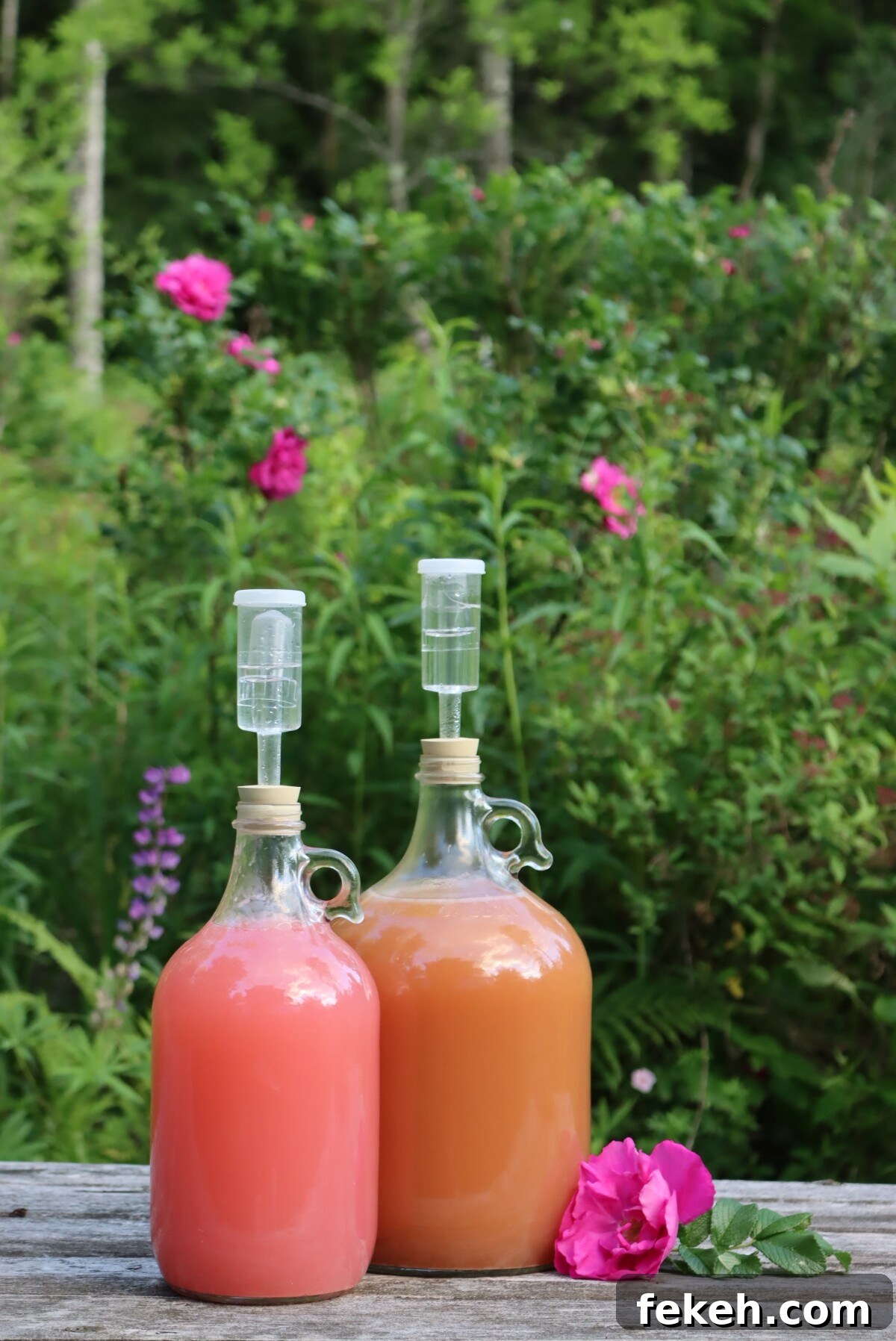
How to Make Rose Wine
Making rose wine follows the same basic steps as other country wines and many floral wines I’ve described before. The main variable is the petals themselves and the adjuncts you choose to complement them. For rose wine I use lemon juice for acidity and a touch of cardamom for warm spice. I also include white grape juice to add body and mouthfeel that floral-only wines can lack. For mead, skip the grape juice—honey provides substantial body on its own.
If you’re new to winemaking, consider reading a beginner’s guide to small-batch wines or a mead-making tutorial to understand the equipment and general process. The recipe here is standardized for a one-gallon batch but can be scaled up or down—remember a single packet of wine yeast is suitable for 1 to 5 gallons.
Any wine yeast works, but a strain like Red Star Premier Côte des Blancs yields fine, fruity aromatics and a moderate alcohol tolerance, leaving some residual sweetness. Champagne yeast ferments more vigorously and can produce a drier, higher-alcohol finish.
Basic ingredients you’ll need:
- Fresh rose petals (or food-grade dried rose petals)
- White sugar for wine, or honey for mead
- White grape juice (for the wine only, to add body)
- Yeast nutrient
- Tannin powder or a cup of strong black tea
- Acid blend or lemon juice
- Wine yeast
- A fermentation vessel (one-gallon carboy), water lock, siphon, and bottles for storage
Selecting Rose Petals for Rose Wine
Start with the most fragrant petals you can find. Color matters less than aroma, though pinks and reds contribute a nice hue. Use only unsprayed roses—many ornamental roses are heavily treated with pesticides that are unsafe to ingest. Wild or homegrown roses that haven’t been sprayed are ideal.
I harvest petals in the late afternoon after the bees have visited; they often smell their best then. Remove only the petals so the base of the flower and hips remain for later harvest. For a one-gallon batch, you’ll need about one quart of lightly packed fresh petals (roughly 3 ounces by weight). If using dried petals, use about 1.5 to 2 ounces (50 g).
To extract the rose flavor, place petals in about half a gallon of water in a covered saucepan and bring to a gentle simmer. After it reaches a simmer, remove from heat and let the petals steep for 15–20 minutes. The infusion will brighten when you add lemon juice.
While the infusion is hot, strain out the petals and dissolve sugar (or honey) into the liquid. Add the other winemaking ingredients except for the yeast, then transfer the mixture to your carboy and top with cool water to bring the temperature down to below 95°F before pitching yeast. If necessary, wait until it cools to room temperature—adding yeast to too-hot liquid will kill it.
Rehydrate the yeast in 1/4 to 1/2 cup of room-temperature water for about 10 minutes, then add it to the carboy. Fit the stopper and water lock and allow primary fermentation to proceed for 2–3 weeks.
When primary fermentation slows, there will be sediment (lees) on the bottom and reduced activity at the airlock. Rack the liquid into a clean carboy to separate it from the lees. Top with cooled rose infusion, grape juice, or water if needed. For rose wine, allow secondary fermentation for 6–8 weeks. Rose mead ferments and matures more slowly—expect a minimum of four months in secondary, preferably six to eight months.
Bottle in flip-top bottles for short-term storage or cork in wine bottles for longer aging. Allow bottled wine to condition at least two weeks before drinking; mead benefits from at least two months of bottle conditioning.
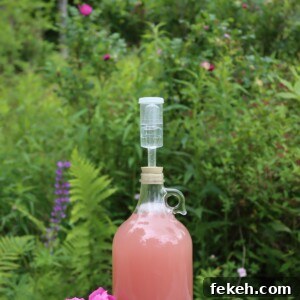
Rose Petal Wine (and Mead)
Equipment
-
Bottle Corker
-
Wine Corks
-
Winemaking Auto-Siphon
-
One Gallon Carboy
Ingredients
Rose Petal Wine
- 3 ounces fresh rose petals (about 3 oz fresh; 1.5–2 oz if dried)
- 2 1/2 lbs sugar (about 5 cups)
- 6 cups white grape juice (or 1 can concentrate and water)
- 1 tsp yeast nutrient
- 2 tsp acid blend (or 2 Tbsp lemon juice)
- 1/8 tsp tannin powder (or 1 cup strong black tea)
- 4–5 cardamom pods (optional)
- 1 packet wine yeast (Premier Côte des Blancs recommended)
Rose Petal Mead
- 3 ounces fresh rose petals (about 3 oz fresh; 1.5–2 oz if dried)
- 3 lbs honey
- 1 tsp yeast nutrient
- 2 tsp acid blend (or 2 Tbsp lemon juice)
- 1/8 tsp tannin powder (or 1 cup strong black tea)
- 4–5 cardamom pods (optional)
- 1 packet wine yeast (Premier Côte des Blancs recommended)
Instructions
- Choose wine or mead. Wine includes white grape juice for body; mead uses honey and omits grape juice. The instructions are the same, but mead requires longer aging.
- Place about 1/2 gallon of water and the rose petals (and cardamom pods if using) in a saucepan, cover, and bring to a simmer. Once simmering, remove from heat and steep 15–20 minutes.
- Strain the petals and, while the liquid is still hot, dissolve the sugar (or honey for mead). Stir until fully dissolved.
- Add yeast nutrient, acid blend (or lemon juice), tannin (or tea), and any optional spices. Stir to incorporate.
- Pour the mixture into your fermentation vessel and add cool water to nearly fill the carboy. Mead will need more top-up liquid since there’s no grape juice.
- Allow the must to cool to under 95°F, ideally to room temperature.
- Rehydrate the yeast in 1/4–1/2 cup room-temperature water for 10 minutes, then add to the fermentation vessel.
- Top up to the neck of the carboy if needed, seal with a stopper and water lock, and allow primary fermentation for 2–3 weeks.
- When activity slows, siphon the liquid to a clean carboy, leaving sediment behind. Re-seal with a water lock. For wine, allow 6–8 weeks in secondary; for mead, a minimum of 4 months, preferably 6–8 months.
- Bottle and allow to condition: wine at least two weeks, mead at least two months. Use flip-top bottles for short-term storage or cork wine bottles for long-term aging.
Winemaking Recipes
If you enjoy home winemaking, try these other recipes:
- Peach Wine
- Blackberry Wine
- Cherry Wine
- Strawberry Wine
- Rhubarb Wine
Mead Recipes
If honey wines appeal to you, consider:
- Elderberry Mead
- Lemon Balm Mead
- Rhubarb Mead
Fermented Beverages
Wine and mead are just the beginning—there are many fermented drinks to explore:
- How to Make Hard Cider
- How to Make Pear Cider
- How to Brew Beer at Home
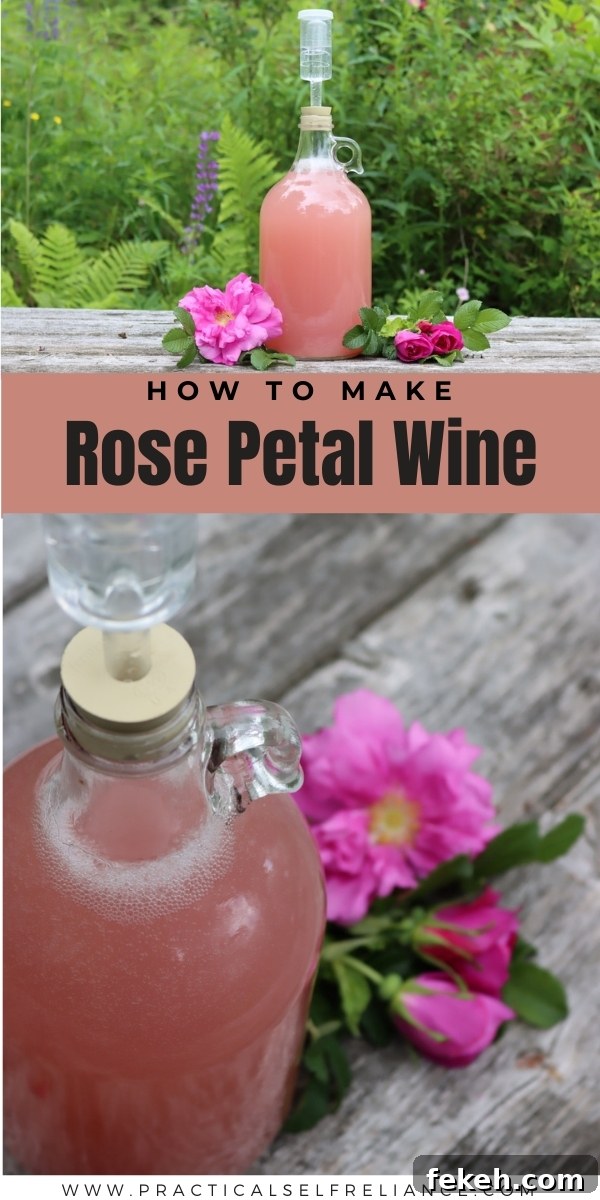
Enjoy experimenting—whether you choose the light floral wine or the rich rose mead, both capture the scent of roses and preserve summer in a bottle.